Trump’s Gaza Plan: A ‘Botched’ Peace – Achcar’s Critique | FRANCE 24
Trump’s Gaza Plan: A ‘Botched’ Attempt at Peace, Expert Warns
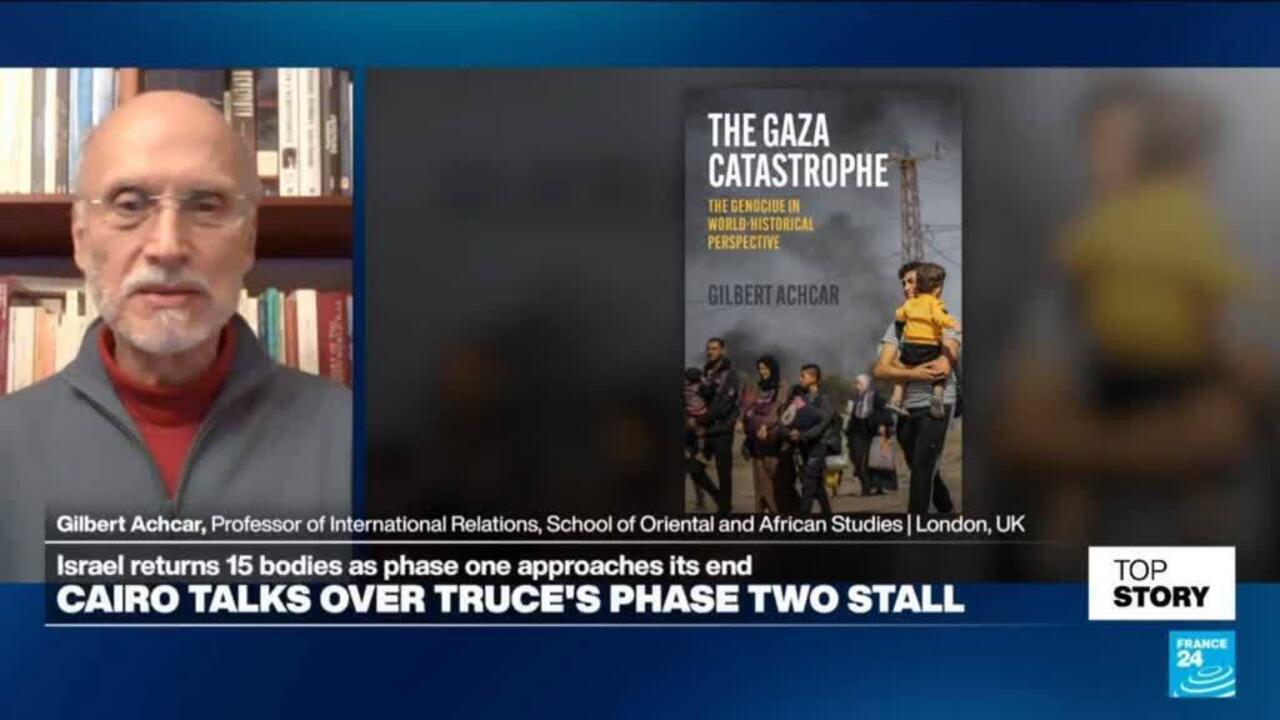
LONDON – A fragile ceasefire in Gaza barely holds as scrutiny intensifies on potential pathways to a lasting resolution. A recent analysis by Dr. Gilbert Achcar, Professor of International Relations at the School of Oriental and African Studies (SOAS) University of London, paints a bleak picture of former U.S. President Donald Trump’s proposed peace plan for the region, labeling it fundamentally flawed and likely to perpetuate conflict. The critique, delivered in a France 24 interview, arrives at a critical juncture, as international actors grapple with the aftermath of the recent hostilities and the urgent need for a sustainable political solution.
Achcar, author of “The Gaza Catastrophe,” doesn’t mince words. He argues the plan, unveiled in 2020, was “completely botched from the start,” built on structural weaknesses and political illusions that ignore the core realities of the Israeli-Palestinian conflict. The plan envisioned a future Palestinian state, but one drastically diminished in size and sovereignty, with significant portions of the West Bank annexed by Israel and Jerusalem remaining under Israeli control.
The Illusion of Economic Prosperity
A central tenet of the Trump plan revolved around substantial economic investment in a future Palestinian state, promising billions of dollars in funding. However, Achcar contends this economic focus was a deliberate distraction, a way to sidestep the crucial political issues at the heart of the conflict. “They were trying to buy peace, to offer economic incentives in exchange for political concessions that were unacceptable to the Palestinians,” he explained in the interview. This approach, he argues, fundamentally misunderstands the Palestinian desire for self-determination and a just resolution to their displacement and occupation.
The plan’s emphasis on economic development also lacked a credible framework for implementation, particularly given the ongoing political instability and the complex security situation. Critics pointed to the lack of genuine Palestinian participation in the plan’s formulation, further undermining its legitimacy. The U.S. State Department outlined the economic vision, but its political components were widely rejected by Palestinian leadership.
A Power Imbalance and the Question of Sovereignty
Achcar’s analysis highlights the inherent power imbalance embedded within the Trump plan. The proposed Palestinian state would have lacked full sovereignty, with Israel retaining control over key areas such as borders, airspace, and security. This, he argues, would have effectively created a Palestinian entity existing under permanent Israeli occupation, rather than a truly independent state.
This lack of sovereignty is a critical point. According to a United Nations report, approximately 5.7 million Palestinians are considered refugees, a figure that underscores the enduring impact of displacement and the urgent need for a just and lasting solution that addresses their right of return. The Trump plan offered no viable pathway for addressing this fundamental issue.
The Role of Regional Actors and Shifting Alliances
The plan also failed to adequately account for the complex regional dynamics at play. The normalization agreements between Israel and several Arab states – the Abraham Accords – brokered by the Trump administration, were presented as a key component of the peace process. However, Achcar argues these agreements were largely driven by shared strategic interests, particularly concerning Iran, and did not necessarily reflect a genuine commitment to resolving the Palestinian issue.
These shifting alliances have created a new geopolitical landscape in the Middle East, one where the Palestinian question risks being sidelined. The involvement of countries like Saudi Arabia and the United Arab Emirates, while potentially offering economic support, also raises concerns about their influence on the political process and their willingness to prioritize Palestinian interests.
Beyond the Plan: The Path Forward
Achcar stresses the need for a fundamentally different approach, one based on international law, genuine negotiations, and a commitment to Palestinian self-determination. He advocates for a two-state solution based on the 1967 borders, with East Jerusalem as the capital of a future Palestinian state. He also emphasizes the importance of addressing the root causes of the conflict, including the ongoing occupation, the blockade of Gaza, and the issue of Palestinian refugees.
The current situation demands a renewed focus on diplomacy and a willingness to engage with all parties involved. The international community, including the United States, the European Union, and the United Nations, must play a more active role in facilitating a just and lasting peace. Simply offering economic incentives or attempting to impose a solution from above will not suffice. As Achcar powerfully argues, a genuine peace requires addressing the fundamental political and moral issues at the heart of this decades-long conflict. The alternative, he warns, is a continuation of violence and instability, a grim prospect for both Israelis and Palestinians.