Sudan War: Evidence of Chlorine Gas Use as a Weapon | FRANCE 24
Sudan’s Silent Weapon: Chlorine Gas and a Shadowy Supply Chain
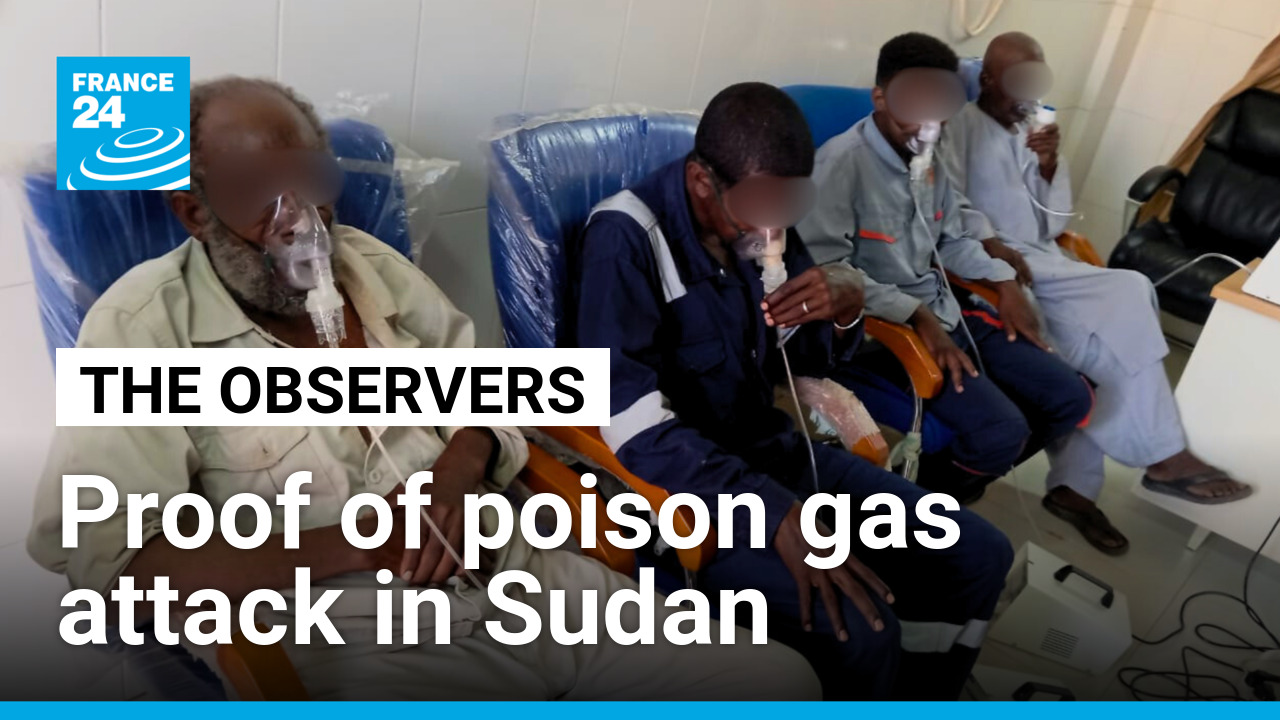
Khartoum, Sudan – The acrid smell of chlorine hung heavy in the air over Sudan’s Al-Jaili refinery in September 2024, a chilling indicator of a new and deeply disturbing tactic in the country’s brutal civil war. An investigation by the FRANCE 24 Observers team, and corroborated by multiple experts, reveals compelling evidence that the Sudanese army deployed chlorine gas against forces from the Rapid Support Forces (RSF) militia, attempting to regain control of the strategically vital facility north of the capital. The use of such a chemical agent, even one with ostensibly civilian applications, represents a significant escalation in the conflict and raises serious questions about the origins of the gas and the intent of those who deployed it.
A Refinery Recaptured, a Chemical Cloud Descends
The fighting for the Al-Jaili refinery, a key installation for Sudan’s dwindling fuel supplies, raged throughout September. On the 5th and 13th of the month, witnesses reported and documented what appeared to be aerial drops of large barrels. Analysis of videos and photographs, verified by five independent experts, strongly suggests these barrels contained chlorine gas. The distinctive pattern of dispersal and the effects observed are consistent with the deployment of this chemical agent as a weapon.
The Sudanese army is the only faction in the country possessing the air power capable of carrying out such attacks. While the army has not responded to requests for comment, the evidence points to a deliberate decision to utilize chlorine gas in an attempt to dislodge the RSF from the refinery. This isn’t simply a tactical maneuver; it’s a potential violation of international norms and treaties governing the use of chemical weapons.
The conflict in Sudan, which erupted in April 2023 between the army and the RSF, has already created one of the world’s largest humanitarian crises. According to the UNHCR, over 8.2 million people have been displaced, both within Sudan and across its borders. The introduction of chemical weapons into this already devastating situation adds another layer of complexity and horror.
From Water Purification to Weaponization: Tracing the Chlorine’s Journey
The investigation didn’t stop at identifying the use of chlorine gas. The FRANCE 24 Observers team painstakingly traced the supply chain, uncovering a network of companies and transactions that raise troubling questions about the intended purpose of the chemical. The trail leads to Chemtrade International Corporation, an Indian company that exported the chlorine to Sudan. Chemtrade maintains the shipment was solely for water treatment – a legitimate and crucial need in a country where nearly 17.3 million people lack access to safe drinking water.
The chlorine was received in Sudan by Ports Engineering Company, a Sudanese firm specializing in public works and, crucially, water treatment. However, further investigation by the FRANCE 24 team, utilizing commercial data from the American NGO C4ADS, revealed a more complex picture. Ports Engineering is also implicated in the import of military equipment and maintains commercial ties with an Emirati company that supplies uniforms and footwear to the Sudanese intelligence service. This connection casts a long shadow over the stated purpose of the chlorine import.
Since the start of the civil war, Chemtrade has shipped at least 125 chlorine gas cylinders to Sudan. The question remains: was this chlorine intended to purify water, or to be weaponized? Without transparency from Chemtrade, the Sudanese army, or the Sudanese government, a definitive answer remains elusive. The ambiguity is deeply concerning, particularly given the documented use of the gas as a weapon.
A Bitter Irony: Chlorine for a Nation Thirsty for Peace and Clean Water
The irony is stark. Sudan desperately needs chlorine for water purification. The country faces a severe water crisis, exacerbated by the ongoing conflict and displacement. The FRANCE 24 investigation highlights that a single barrel of chlorine, like those deployed at the Al-Jaili refinery, could have provided enough water purification for a million displaced people returning to Khartoum for three months. Instead, it was used to inflict harm.
The use of chlorine gas, while not classified as a Schedule 1 chemical weapon under the Chemical Weapons Convention (CWC) – meaning it has legitimate civilian uses – is still a violation of international humanitarian law when deliberately used to cause harm. The CWC prohibits the use of any chemical weapon, regardless of its classification. The incident in Sudan underscores the dangers of dual-use chemicals and the challenges of preventing their diversion for malicious purposes.
The international community must demand accountability for the use of chlorine gas in Sudan. A thorough and independent investigation is needed to determine the full extent of its deployment, identify those responsible, and ensure that such actions are not repeated. The focus must also be on strengthening export controls and monitoring mechanisms to prevent the diversion of chemicals that could be used as weapons. The people of Sudan deserve not only peace, but also access to the basic necessities of life, including clean water – not a weaponized cloud of chlorine.
The situation in Sudan is a stark reminder that the proliferation of even seemingly benign chemicals can have devastating consequences in conflict zones. The world must pay attention, and act decisively, to prevent further escalation and protect the vulnerable population of Sudan.