Montreal STM Strike: Quebec Minister Seeks Emergency Intervention, QS Refuses
Quebec Government Pushes for Emergency Powers Amid Escalating Montreal Transit Strike
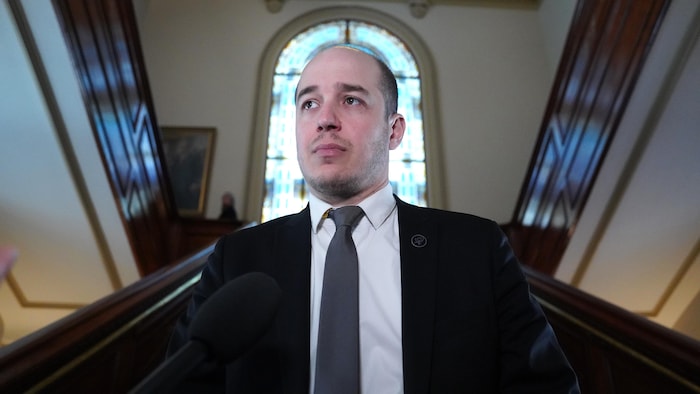
MONTREAL — Quebec’s Labour Minister, Jean Boulet, plans to introduce emergency legislation Wednesday to intervene in the escalating Montreal public transit (STM) strike, a move that could grant the government enhanced powers to limit service disruptions. The proposal, however, has ignited a political firestorm, with one opposition party refusing to provide the unanimous consent needed for an accelerated adoption.
The planned bill aims to fast-track the implementation of Bill 14, formally known as “An Act to better consider the needs of the population in the event of a strike or lockout,” which was adopted last May but is not slated to take effect until November 30. If enacted early, this law would significantly broaden the definition of essential services to include “the well-being of the population,” in addition to existing health and safety criteria, and empower the government to impose mandatory arbitration.
Political Divide Deepens Over Strike Intervention
Minister Boulet stated Tuesday that the conflict “must be resolved” and called on opposition parties to collaborate. “Advancing the application of our law would broaden the level of service to be maintained during pressure tactics, to better protect the population,” Boulet wrote. “If the conflict causes serious harm and mediation fails, we could also submit the dispute to arbitration.”
For the proposed bill to be adopted quickly without resorting to closure, it requires unanimous support from all opposition parties. While the Quebec Liberal Party (PLQ) has agreed to cooperate, and the Parti Québécois (PQ), led by Paul St-Pierre Plamondon, has reversed its earlier opposition, Québec Solidaire (QS) remains steadfast in its refusal.
Plamondon justified the PQ’s shift by saying that with the STM strike, “we are witnessing a true hostage-taking of the population by the unions.” He indicated his party would collaborate if no negotiated settlement is reached by Saturday.
However, Québec Solidaire’s labour spokesperson, Alexandre Leduc, criticized the government’s approach, arguing that it “throws oil on the fire.” Speaking on ICI Première, Leduc contended that the government should “live with the consequences” of Bill 14’s original implementation date. “The fact that it [Bill 14] applies at the end of the month precipitates the parties into a conflict,” Leduc said.
“The fact that it [Bill 14] applies at the end of the month precipitates the parties into a conflict.”
Alexandre Leduc, Québec Solidaire labour spokesperson
Leduc also challenged the government’s concern for public transit, stating, “I will not take lessons from Jean Boulet or anyone else about taking care of public transit” given QS’s long-standing advocacy for increased STM funding. He added, “If they [the Coalition Avenir Québec] want to make a special law – they have made eight special laws in the past and have never asked Québec Solidaire’s permission – well, let them deal with their problems.”
Mounting Frustration as Strike Disrupts Daily Life
The situation in Montreal is rapidly becoming “unsustainable,” according to Mayor-designate Soraya Martinez Ferrada. She pleaded with unions Tuesday to end their pressure tactics while continuing negotiations with the STM.
Maintenance workers have been on strike for eleven days, with their action scheduled to last until November 28. This has led to significant inconvenience for commuters, with services offered only during morning, late afternoon, and late evening rush hours.
Adding to the disruption, STM bus drivers, represented by the Canadian Union of Public Employees (CUPE), plan to launch their own strike this coming Saturday and Sunday. This could lead to a complete shutdown of Montreal’s public transit network, mirroring the widespread service paralysis experienced on November 1 when both groups walked off the job.

Mayor-designate Ferrada, whose father was an STM bus driver for years, emphasized her belief in unions’ mission to defend workers but also stressed their “responsibility to ensure a minimum of services and to demonstrate good faith in negotiations.” She denounced the “hostage-taking” of the population, which she said “paralyzes” the city.
Unions Call Government Move ‘Anti-Union’ Amid Mediation Efforts
Bruno Jeannotte, president of the STM union affiliated with the Confédération des syndicats nationaux (CSN), described Boulet’s proposed legislation as “anti-union.” He warned that while his members are currently targeted, “tomorrow, it will be nurses, then teachers, and all other union certifications.”
Jeannotte highlighted that the government’s attempt to include “well-being” in the definition of essential services “has not yet been decided.” He argued that the anticipation of Bill 14’s eventual enforcement is precisely why STM maintenance workers adopted such “massive” pressure tactics.
Despite the political maneuvering, a full day of mediation was scheduled for Tuesday at the Administrative Labour Tribunal (TAT). “If the employer is in good faith, we should be able to make things happen today,” Jeannotte said, indicating a willingness to negotiate late into the night. “If we have to sleep here, we’ll sleep here.”
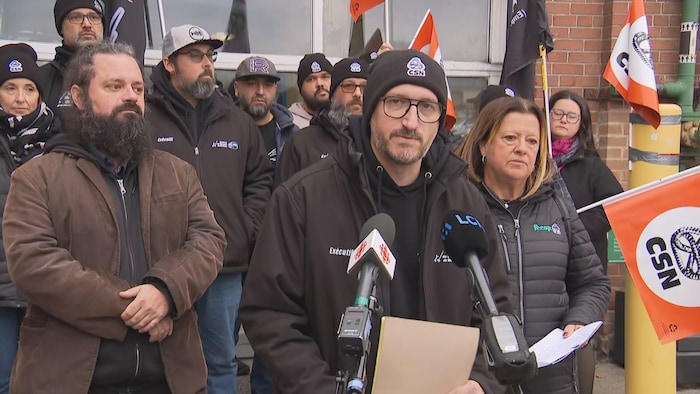
Salary discussions are central to the talks, with union members seeking a 17% to 20% increase, depending on the contract duration. “We know the pressure is at its maximum for all parties,” Jeannotte acknowledged.
As the legislative battle unfolds and mediation efforts intensify, Montreal residents face the prospect of severe transit disruptions, underscoring the broader implications of labour disputes on urban life and essential public services.