Indian Stocks Flat: Sensex & Nifty Trade Sideways | Market Update
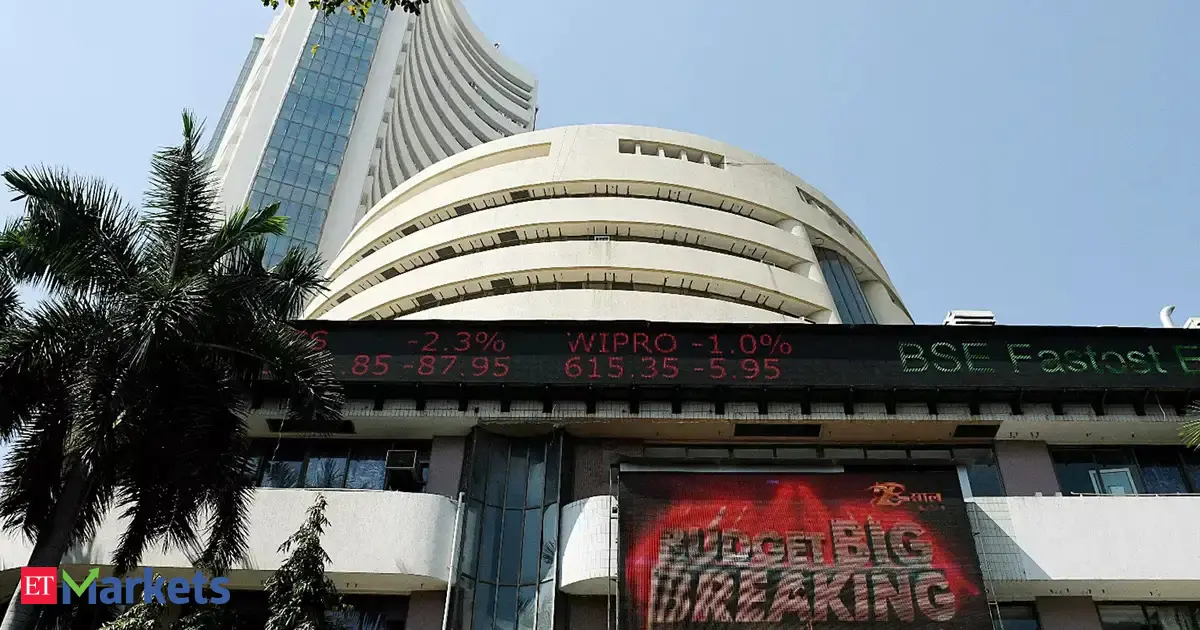
Indian Equities Pause After Record Run, Rate Cut Hopes Loom Large
Mumbai – Indian stock markets ended marginally lower Friday, pausing after a recent surge to all-time highs as investors cautiously booked profits while simultaneously assessing the potential for forthcoming interest rate reductions both domestically and in the United States. The subdued trading reflects a delicate balancing act between capitalizing on recent gains and factoring in evolving macroeconomic signals.
Profit-Taking Tempers Optimism
The S&P BSE Sensex, a benchmark of Indian stock market performance, edged down 13.7 points, or 0.02%, closing at 85,706.67. Similarly, the broader NSE Nifty 50 index slipped 12.6 points, or 0.05%, to finish at 26,202.95. Both indices traded within a narrow band throughout the session, a stark contrast to the previous day’s record-breaking performance. This consolidation suggests a period of digestion after a sustained rally fueled by strong corporate earnings and optimistic investor sentiment.
Analysts point to a natural inclination for profit-taking after such significant gains. “We’ve seen a remarkable run-up in Indian equities, and it’s not unusual to see investors locking in some profits, especially as markets approach what appear to be psychologically important levels,” explained Rohan Sharma, a market strategist at Axis Securities. “The key now is whether this is a temporary pause or the beginning of a more substantial correction.”
Global Rate Cut Expectations Drive Sentiment
A significant driver of market sentiment is the growing expectation of interest rate cuts by major central banks. In the U.S., the Federal Reserve has signaled a potential shift in monetary policy, hinting at possible rate reductions later this year, contingent on continued moderation in inflation. This prospect has boosted global risk appetite, benefiting emerging markets like India.
Domestically, the Reserve Bank of India (RBI) is also under pressure to ease monetary policy to support economic growth. India’s economic growth, while robust, faces headwinds from global uncertainties and uneven monsoon patterns. The RBI has maintained a cautious stance, but analysts believe a rate cut is increasingly likely in the coming months. According to the International Monetary Fund (IMF), India’s economy is projected to grow by 6.8% in fiscal year 2024/25, making it one of the fastest-growing major economies globally. However, the IMF also cautions that persistent inflationary pressures and geopolitical risks could dampen this outlook.
Domestic Growth Signals Offer Mixed Picture
Alongside global factors, investors are closely monitoring incoming domestic economic data. Recent indicators have presented a mixed picture. While manufacturing activity remains resilient, as evidenced by the latest S&P Global India Manufacturing Purchasing Managers’ Index (PMI), which registered 59.1 in April, indicating strong expansion, concerns linger about rural demand due to the delayed onset of the monsoon season.
The agricultural sector is crucial to the Indian economy, contributing approximately 18.8% to the nation’s Gross Domestic Product (GDP) as of 2023. A weak monsoon could negatively impact agricultural output, leading to lower rural incomes and reduced consumer spending. This potential downside risk is weighing on investor sentiment.
Regulatory Landscape and Market Stability
The Securities and Exchange Board of India (SEBI) continues to play a vital role in maintaining market stability and investor confidence. Recent regulatory measures aimed at enhancing transparency and corporate governance are viewed positively by the investment community. SEBI’s focus on protecting minority shareholders and preventing market manipulation is crucial for attracting long-term foreign investment.
Looking ahead, market participants will be closely watching the upcoming RBI monetary policy committee meeting for clues about the timing and magnitude of potential rate cuts. Furthermore, the progress of the monsoon season and global economic developments will continue to influence market direction. The current pause in the Indian equity market provides a valuable opportunity for investors to reassess their portfolios and prepare for the next phase of growth.
The Indian market’s resilience, despite global headwinds, underscores its long-term potential. However, navigating the current environment requires a cautious and informed approach, balancing the allure of potential gains with the inherent risks of a dynamic global economy.