India and Russia Finalize Agreements Ahead of Putin’s Visit
India and Russia Forge Ahead with Strengthened Ties Amid Global Volatility
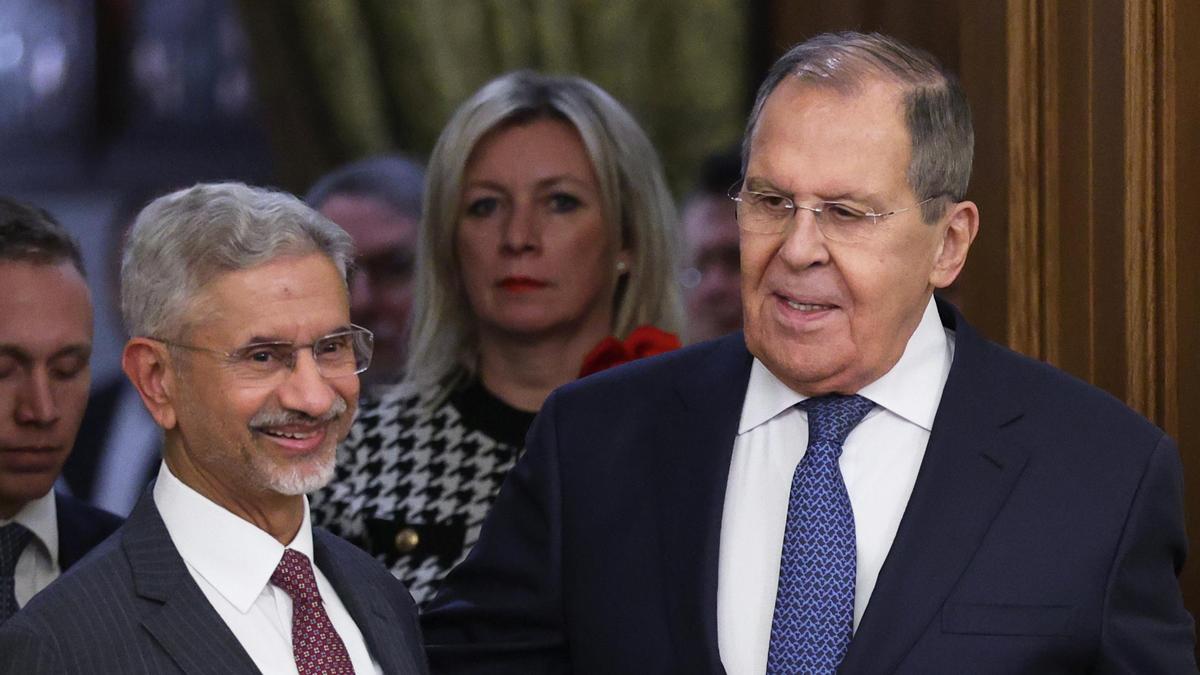
MOSCOW – As the world navigates a complex geopolitical landscape, India and Russia are deepening their long-standing strategic partnership, with Russian President Vladimir Putin scheduled to visit New Delhi on December 5 for the 23rd annual summit. This high-level meeting is expected to solidify numerous agreements and initiatives, underscoring the “Special and Privileged Strategic Partnership” between the two nations. The preparatory groundwork for this significant visit was laid during an extensive meeting in Moscow on Monday, November 17, 2025, between India’s External Affairs Minister S. Jaishankar and his Russian counterpart Sergey Lavrov.
Minister Jaishankar, in his opening remarks, highlighted the importance of the impending summit, stating, “This particular occasion, for me, is all the more important as we prepare for President Putin’s visit to India for the 23rd annual summit.” He further elaborated on the substantive discussions taking place, noting, “A number of bilateral agreements, initiatives and projects are under discussion in various fields. We look forward to their finalization in the coming days,” adding that these would “certainly add more substance and texture to our Special and Privileged Strategic Partnership.”
The discussions between Jaishankar and Lavrov covered a broad spectrum of international issues, reflecting the shared global outlook of both Moscow and New Delhi. A key point of discussion was the protracted Russia-Ukraine conflict, with India reiterating its support for peace efforts. “India supports recent efforts towards establishing peace. We hope that all parties approach that goal constructively,” Jaishankar commented, emphasizing, “An early cessation of the conflict and the ensuring of an enduring peace is in the interest of the entire international community.” This stance aligns with India’s consistent calls for diplomatic solutions and respect for international law.
A Time-Tested Alliance in a Shifting World Order
India and Russia’s relationship, often described as “time-tested,” has been a cornerstone of New Delhi’s foreign policy for decades. This enduring alliance has historically provided a degree of stability in international relations, a factor that both nations believe is crucial in the current volatile environment. “Its growth and evolution is not only in our mutual interest but also in that of the world,” Jaishankar remarked, underscoring the global implications of their bilateral cooperation.
The leaders also exchanged views on other pressing global and regional issues, including the situations in the Middle East and Afghanistan. This broad engagement signifies the depth of their strategic dialogue and their shared interest in regional stability and international security. The annual summit mechanism between the Indian Prime Minister and the Russian President provides a vital platform for these discussions, with 22 such meetings having taken place alternately in both countries. The last summit saw Prime Minister Narendra Modi travel to Moscow in July of the previous year.
The significance of this enduring partnership is further contextualized by global economic trends. According to data from the United Nations Conference on Trade and Development (UNCTAD), global foreign direct investment (FDI) flows experienced a notable decline of 18% in 2023, highlighting the challenging environment for international economic cooperation. Amidst this backdrop, the continued robust engagement between India and Russia, particularly in areas like energy and defense, demonstrates their commitment to maintaining a stable bilateral economic relationship. India’s energy imports from Russia have been a subject of international attention, with New Delhi navigating complex diplomatic pressures while securing its energy needs.
Dialogue and Diplomacy: The Path Forward
The upcoming summit between Prime Minister Modi and President Putin is poised to be a significant event, aiming to further enhance the already strong bilateral ties. Discussions are expected to revolve around expanding cooperation in critical sectors, reinforcing the strategic nature of their partnership. This includes exploring new avenues for collaboration in areas such as trade, technology, and defense, further solidifying the foundational pillars of their relationship.
External Affairs Minister Jaishankar’s visit to Moscow also served to coordinate India’s position on various international forums, including the Shanghai Cooperation Organisation (SCO). As reported by hindustantimes.com, Jaishankar’s presence in Moscow ahead of Putin’s visit underscores the proactive diplomatic engagement aimed at ensuring a successful summit.
The image accompanying reports of the meeting captured FM Lavrov and FM Jaishankar at Zinaida Morozova’s Mansion in Moscow, a symbolic venue for high-level diplomacy. The Russian Foreign Ministry itself shared a video of the encounter on X.com, reinforcing the official narrative of a strong and ongoing engagement between the two nations.
🤝 Russia’s Foreign Minister Sergey Lavrov greets Foreign Minister of India Dr Subrahmanyam Jaishankar at the Russian MFA Reception House in Moscow ahead of talks earlier today
🇷🇺🇮🇳 #RussiaIndia#DruzhbaDostihttps://t.co/QNQvN8lzxRhttps://twitter.com/mfa_russia/status/1990450245466304701?ref_src=twsrc%5Etfw
— MFA Russia 🇷🇺 (@mfa_russia) November 17, 2025
This proactive diplomatic engagement is crucial, particularly as India faces complex trade dynamics and international scrutiny over its energy imports. The reaffirmation of the “time-tested” relationship by Indian leaders, as noted by economictimes.indiatimes.com, signals a commitment to maintaining a balanced foreign policy that prioritizes national interests while contributing to global stability. The upcoming summit between Putin and Modi is therefore not just a bilateral event but a significant indicator of broader geopolitical alignments and India’s strategic maneuvering in a multipolar world.