US Designates Colombia’s Clan del Golfo as Foreign Terrorist Organization
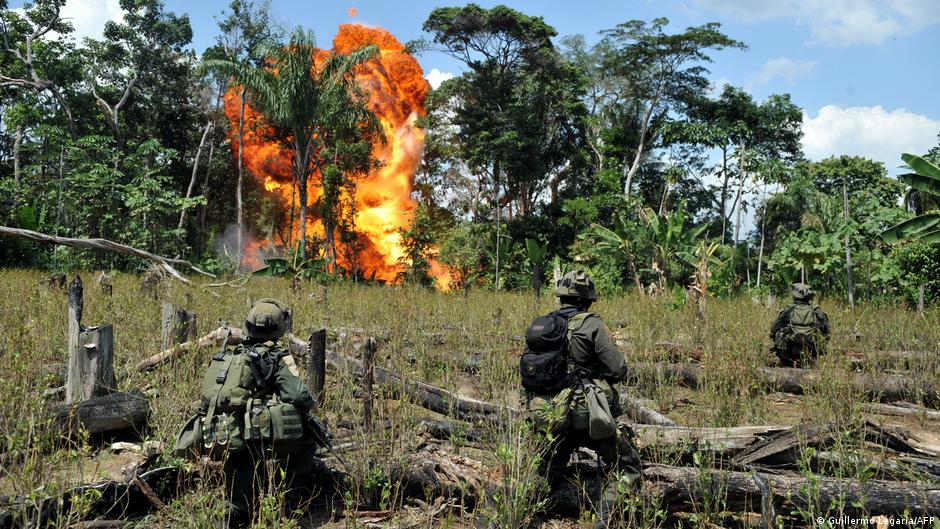
US Designates Colombian Crime Syndicate ‘Clan del Golfo’ as Terrorist Organization
Washington D.C. – The United States government has officially designated the Clan del Golfo, Colombia’s largest criminal organization, as a Foreign Terrorist Organization (FTO) and a Specially Designated Global Terrorist (SDGT), Secretary of State Marco Rubio announced Tuesday.
The move escalates pressure on the powerful syndicate, which authorities say is deeply involved in cocaine trafficking and uses the proceeds to fund widespread violence. The Clan del Golfo, also known as the Gaitanist Self-Defense Forces of Colombia (EGC), is estimated to have around 9,000 members and is considered a successor to the now-disbanded United Self-Defense Forces of Colombia (AUC) paramilitary group.
A Complex Situation Amid Peace Talks
The designation arrives at a sensitive juncture. The Colombian government, under President Gustavo Petro, is currently engaged in peace negotiations with the Clan del Golfo, initiated in Doha, Qatar, in September. These talks, mediated by Qatar, Spain, Norway, and Switzerland, aim to address the root causes of the conflict and potentially dismantle the organization.
“This organization criminal is violent and powerful with thousands of members,” Rubio stated in a press release. “Its primary source of income is cocaine trafficking, which it uses to finance its violent activities.”
The US action effectively criminalizes providing material support to the Clan del Golfo, subjecting individuals and entities to a range of legal consequences, including asset freezes and potential criminal prosecution. This includes indirect support, broadening the scope of potential legal repercussions.
Escalating Tensions with Colombia
The timing of the designation also coincides with heightened tensions between the US and Colombia. The deployment of US military forces in the Caribbean as part of President Donald Trump’s anti-drug campaign, extended to the Eastern Pacific, has drawn criticism from Petro, who views the strategy as ineffective and potentially destabilizing.
The US has increasingly taken a hard line on transnational criminal organizations, designating six major Mexican cartels – Sinaloa, Jalisco New Generation, Northeast, Gulf, United Cartels, and New Mexican Family – as terrorist entities since Trump’s return to office. Other groups added to the list include Venezuela’s Tren de Aragua, the Mara Salvatrucha (MS-13) and Barrio 18 gangs, and Ecuadorian organizations Los Lobos and Los Choneros. The Trump administration has even accused Venezuelan President Nicolás Maduro of leading the Cartel de los Soles, a claim Caracas vehemently denies.
Experts suggest the US strategy reflects a growing recognition that these criminal groups operate with the characteristics of terrorist organizations, employing violence and intimidation to control territory and populations, and posing a direct threat to regional stability.
Global Implications and Public Safety
The Clan del Golfo’s activities extend beyond drug trafficking, encompassing illegal mining and human smuggling. The group has been linked to attacks targeting public officials, law enforcement, military personnel, and civilians within Colombia. The US designation underscores the international scope of the threat posed by these organizations and the need for coordinated efforts to combat them.
According to the United Nations Office on Drugs and Crime (UNODC), cocaine production in Colombia reached a record high in 2022, with over 1,700 tons seized. This surge in production fuels the Clan del Golfo’s operations and contributes to escalating violence in the region.
The US designation is expected to significantly impact the peace talks, potentially complicating negotiations and raising questions about the future of the process. However, US officials maintain that the designation is intended to pressure the Clan del Golfo to dismantle its criminal enterprise and cease its violent activities.
(Reporting by gs, efe, afp, reuters)