UNESCO: New Day Celebrates Turkic Languages & Heritage
UNESCO Declares December 15 ‘International Day of Turkic Languages’
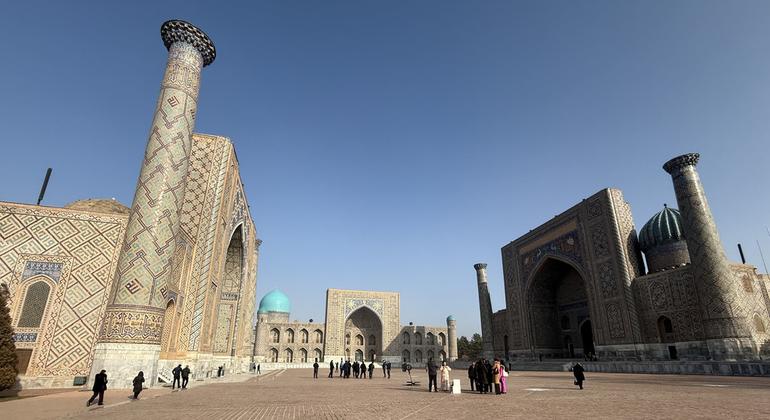
SAMARKAND, Uzbekistan – In a move celebrating a linguistic heritage spanning continents and connecting over 200 million people, UNESCO has officially designated December 15th as the ‘International Day of Turkic Languages.’ The decision, formalized following a joint proposal from Azerbaijan, Kazakhstan, Kyrgyzstan, Türkiye, and Uzbekistan, recognizes the profound cultural and historical significance of this widespread language family.
Unlocking the Past: A 19th-Century Breakthrough
The date itself isn’t arbitrary. December 15th marks the anniversary of a pivotal moment in linguistic history: in 1893, Danish linguist Vilhelm Thomsen successfully deciphered the Orkhon Inscriptions. These ancient texts, found in Mongolia, represent some of the earliest known written records of the Turkic languages, offering a crucial window into the origins and evolution of this linguistic group. Thomsen’s work wasn’t just an academic exercise; it unlocked centuries of history and laid the foundation for understanding the complex relationships between the diverse Turkic-speaking communities that exist today.
“This isn’t simply about celebrating languages; it’s about acknowledging a shared history and a vibrant cultural tapestry,” explains Dr. Alima Kadyrova, a professor of Turkic linguistics at Tashkent State University. “The Orkhon Inscriptions were a key that opened doors to understanding the migrations, beliefs, and societal structures of early Turkic peoples.”
A Linguistic Landscape Stretching Across Eurasia
The Turkic language family is remarkably diverse, encompassing languages like Azerbaijani, Kazakh, Kyrgyz, Turkish, Turkmen, and Uzbek, among others. These languages aren’t confined to a single nation; they are spoken across a vast geographical area – roughly 12 million square kilometers – stretching from the Balkans to Siberia and Western China. This widespread distribution reflects centuries of migration, trade, and cultural exchange.
But the story isn’t just about geographical reach. UNESCO highlights the rich oral traditions, compelling written heritage, and unique cultural practices embedded within these languages. These aren’t simply tools for communication; they are vessels of identity, repositories of knowledge, and expressions of artistic creativity.
The preservation of linguistic diversity is increasingly critical in a globalized world. According to a UNESCO report, approximately 40% of the world’s roughly 7,000 languages are endangered. This loss isn’t merely linguistic; it represents a loss of cultural knowledge, unique perspectives, and invaluable insights into the human experience. The International Day of Turkic Languages aims to counteract this trend by raising awareness and promoting proactive preservation efforts.
Beyond Recognition: A Push for Cooperation and Preservation
The proclamation of this day isn’t intended as a symbolic gesture alone. UNESCO emphasizes that the annual observance directly supports the UN’s broader multilingualism agenda, outlined in General Assembly resolution 71/328. The goal is to foster linguistic cooperation, encourage cultural exchange, and promote dialogue between civilizations.
Planned activities for the inaugural celebration include exhibitions showcasing Turkic art and calligraphy, academic conferences exploring the history and structure of the languages, literary events featuring Turkic poets and writers, and artistic performances highlighting traditional music and dance. These initiatives are designed to engage both experts and the general public, fostering a deeper appreciation for the richness and complexity of Turkic cultures.
“We see this as a platform for strengthening ties between Turkic-speaking nations and promoting a greater understanding of our shared heritage,” says Elmira Sultanova, a cultural attaché with the Azerbaijani embassy in Paris. “It’s an opportunity to showcase the dynamism and modernity of Turkic languages, demonstrating that they are not relics of the past but vibrant forces shaping the future.”
A Global Celebration of Identity
The International Day of Turkic Languages is more than just a date on the calendar. It’s a recognition of the vital role that language plays in shaping identity, preserving cultural heritage, and fostering understanding between people. It’s a reminder that linguistic diversity is not a challenge to be overcome, but a treasure to be celebrated and protected. As UNESCO aptly states, the commemoration is an opportunity to honor linguistic diversity as part of humanity’s common heritage and to strengthen international efforts to protect languages as essential vehicles of identity, knowledge and cultural expression.
The first official International Day of Turkic Languages will be observed on December 15, 2024, with events planned across numerous countries and online platforms. The hope is that this annual celebration will inspire a renewed commitment to linguistic preservation and cultural exchange, ensuring that the voices of Turkic-speaking communities continue to be heard for generations to come.