Trump Weighs Military Options Against Maduro in Venezuela
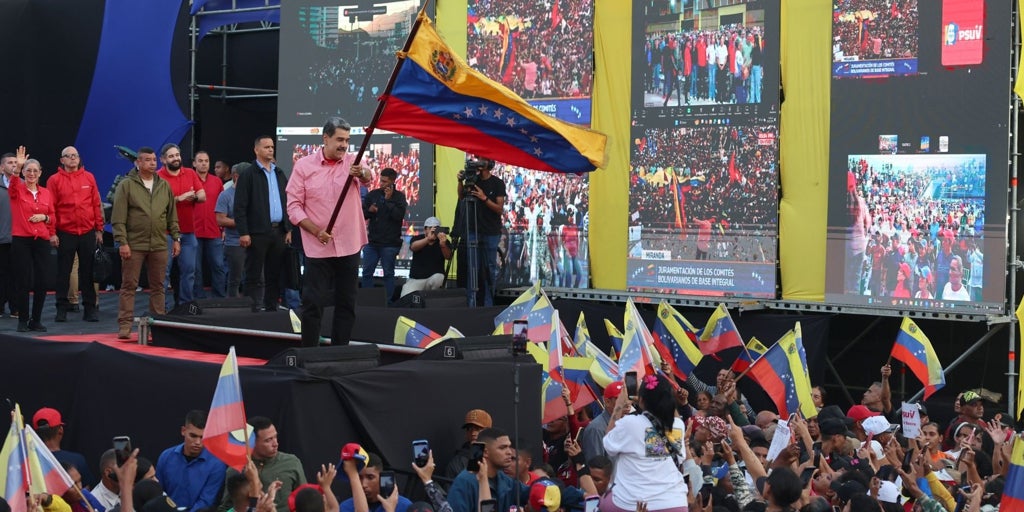
Trump Weighs Aggressive Military Options Against Maduro Regime
Top U.S. military brass have briefed President Donald Trump in recent weeks, presenting a spectrum of options for dealing with Venezuelan President Nicolás Maduro’s government. The discussions, held at Trump’s Mar-a-Lago residence in Florida, signal a critical juncture in U.S. policy towards Venezuela, marked by heightened military posturing in the Caribbean, diplomatic isolation of Maduro, and an unprecedented deployment of forces.
The core question facing the President is whether to translate this show of force—encompassing aircraft carriers, fighter jets, intelligence agencies, and regional allies—into direct action.
Direct Action and Precision Strikes
Among the discussed strategies is a highly aggressive option that involves direct action against Maduro himself. Described in internal documents as a “fast track” approach, this plan includes targeted strikes within Venezuelan territory and capture operations led by elite special forces units. The potential elimination of Maduro or his inner circle is also considered a possibility. To this end, the U.S. has reportedly prepared a discreet deployment of a specialized Delta Force detachment, a highly classified unit known for hostage rescue, counter-terrorism, and high-precision operations in hostile environments.
The legal justification for such an intervention hinges on existing federal indictments against Maduro for drug trafficking, with Washington labeling Venezuela a “narco-state” operating in league with Mexican and Colombian cartels. In this scenario, the U.S. could frame its actions as “collective self-defense” on behalf of regional partners like Colombia and Mexico, leveraging the existing Caribbean military deployment for punitive strikes—a drastic, albeit uncertain, course of action.
A less severe, yet still potent, option involves limited precision strikes within Venezuela. These would target military infrastructure, drug-trafficking hubs, or state facilities deemed integral to the narco-state apparatus. Such operations would not entail a ground invasion or prolonged presence, but rather short, targeted incursions designed to intensify internal pressure on the Maduro regime.
These limited strikes aim to erode Maduro’s inner circle, encourage defections, and convey vulnerability without escalating to open warfare. Covert CIA operations and special forces missions for specific objectives are also part of these contingency plans, as recently reported by The New York Times.
Sustained Pressure and Negotiation
A third avenue involves maintaining extreme pressure without direct land-based attacks. This approach, largely employed by the Trump administration in its initial months, includes sinking suspected drug-trafficking vessels, visible bomber patrols, joint maneuvers with regional allies, and increased judicial bounties. The objective is to intimidate, foment internal dissent within the Chavista structure, and sustain a perpetual sense of siege.
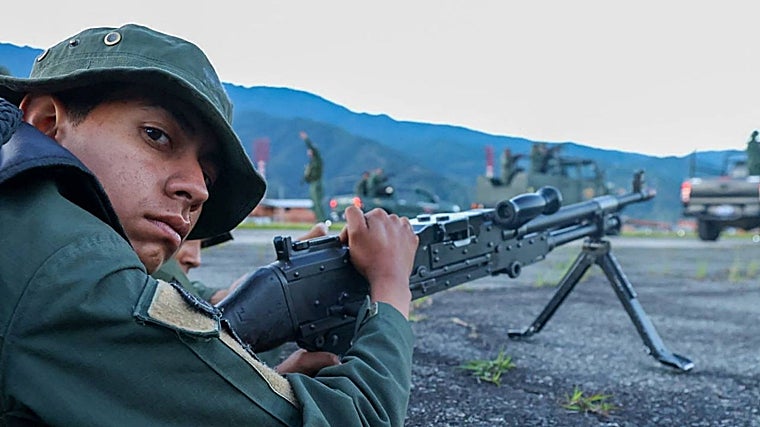
The White House is reportedly hopeful that a significant show of force—including an estimated 15,000 troops, an operational aircraft carrier, and F-35 fighter jets stationed in Puerto Rico—could trigger fractures within the regime, initiate discreet negotiations, or even lead to a negotiated exit without the need for military force on Venezuelan soil.
Since September 2nd, there have been 21 reported attacks on vessels suspected of drug trafficking in the Caribbean and Eastern Pacific, resulting in at least 80 fatalities. The frequency of these incidents escalated from weekly to nearly daily by late October, coinciding with the increased U.S. naval presence in the region.
The Diplomatic Track
The most probable outcome, according to sources, remains a negotiated exit. This strategy hinges on facilitating the exile of Maduro and his closest associates to a willing third country—with Turkey, Russia, Azerbaijan, and Cuba having been previously considered—as a means to avert a larger conflict. National Security Council sources have indicated to ABC that intermediaries from the Venezuelan regime have offered to discuss leadership changes and potential concessions from within the armed forces. However, both President Trump and his top diplomat have reportedly refused to consider replacements from the current regime, such as Jorge and Delcy Rodríguez.
While Democrats have advocated for a negotiated solution, proposing resolutions to prohibit the use of force, their preferred path involves dismantling the repressive system, stabilizing the economy with international aid, reforming the oil industry, and supporting a transitional government. This route, though longer and more complex, carries a lower military cost for the United States.
President Trump, however, remains keenly aware that the Biden administration previously engaged in negotiations with Maduro, offering concessions such as the release of a key associate and the resumption of oil licenses, only to see Maduro reinforce his power through electoral fraud and maintain a continental drug-trafficking network. Unlike his previous term, Trump has reportedly unified his cabinet behind this pressure campaign and has chosen to exclude the Venezuelan opposition, aiming to claim sole credit among Republicans for ending the Venezuelan dictatorship.
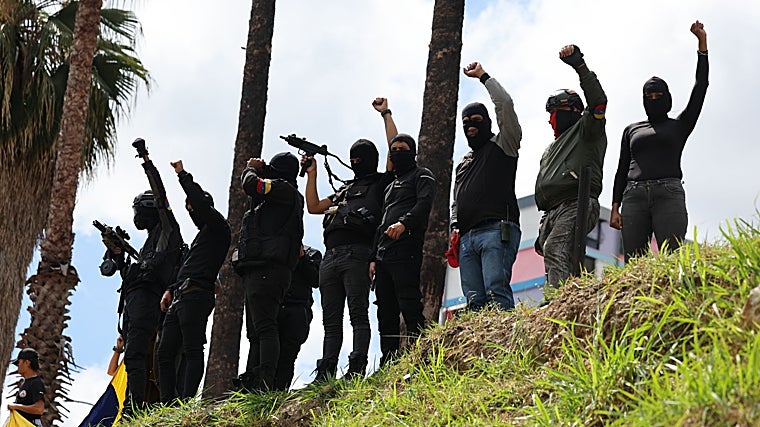
The role of civilian groups, referred to as “colectivos,” in supporting Maduro has also been noted. These groups, often described as paramilitary by human rights organizations, emerged during Hugo Chávez’s presidency and have reportedly participated in military exercises, underscoring the deep militarization and entrenched support networks around the current regime.