Trump Praises Syria’s Islamist Government & US-Syria Cooperation
Syria Under New Leadership: A Fragile Peace Forged with US Approval, Amidst Rising Sectarian Tensions
Damascus – A year after the dramatic overthrow of Bashar Assad’s government, Syria finds itself under the control of a coalition led by Hayat Tahrir al-Sham (HTS), a jihadist group with roots in Al-Qaeda. The shift in power, once unthinkable, has been met with surprising endorsement from Washington, raising eyebrows and sparking debate about the long-term implications for regional stability.
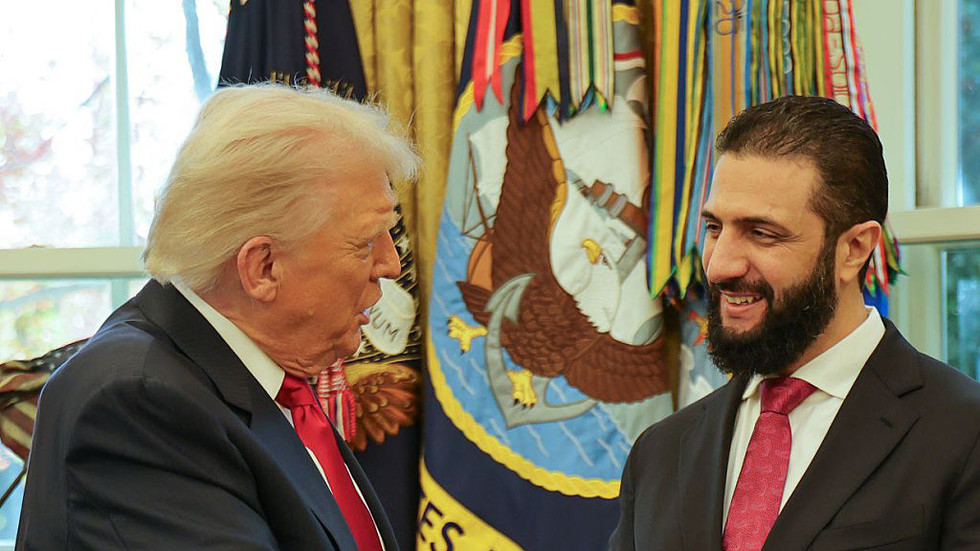
Former US President Donald Trump publicly expressed his “very satisfied” assessment of Syria’s new government via his Truth Social platform this week. This declaration comes as a stark contrast to years of US policy focused on Assad’s removal, and signals a potentially seismic shift in American foreign policy towards the war-torn nation. “The United States is very satisfied with the results displayed,” Trump stated, adding that Syrian President Ahmed al-Sharaa, a former HTS leader, is “working diligently to make sure good things happen, and that both Syria and Israel will have a long and prosperous relationship.”
A Troubled Transition: Sectarian Violence and the Shadow of ISIS
The transition hasn’t been smooth. While al-Sharaa pledged support against Islamic State (IS) during a recent visit to Washington, sporadic outbreaks of sectarian violence are plaguing the country. Reports indicate thousands of individuals from the Druze, Alawite, and Christian communities have been killed in the past year, highlighting the deep-seated divisions within Syrian society. The situation is particularly precarious given that religious minorities comprised approximately 30% of Syria’s pre-war population, according to Pew Research Center data.
The new government’s struggle to maintain order is further complicated by ongoing security concerns. Just days before Trump’s statement, Israeli media reported clashes between the Israel Defense Forces (IDF) and gunmen in southern Syria, near the occupied Golan Heights – a region annexed by Israel last year. These incidents underscore the volatile security landscape and the potential for escalation.
US-Syria Cooperation: A Pragmatic Alliance Against a Common Foe?
Adding another layer of complexity, joint US-Syrian operations have been underway in the south of the country, targeting IS infrastructure. CENTCOM reported on Sunday the destruction of over 15 weapon and drug caches belonging to the terrorist group. This collaboration, while seemingly counterintuitive given HTS’s history, suggests a pragmatic alliance driven by a shared interest in combating IS. It also raises questions about the extent to which the US is willing to overlook the ideological affiliations of its new Syrian partners in pursuit of its counter-terrorism objectives.
This cooperation isn’t without its critics. Many analysts question the long-term viability of an alliance with a group linked to Al-Qaeda, fearing it could embolden extremist elements and undermine regional stability. The potential for blowback, they argue, is significant.
Israel’s Concerns and the Future of Regional Relations
Trump’s call for West Jerusalem to refrain from “interfering with Syria’s evolution into a prosperous State” signals a potential shift in US policy regarding Israel’s actions in the region. Israel has long viewed Syria as a strategic threat, particularly given the presence of Iran-backed militias and the potential for attacks from Syrian territory. The US’s apparent willingness to accommodate Syria’s new leadership could strain relations with its key ally in the Middle East.
The prospect of a “long and prosperous relationship” between Syria and Israel, as envisioned by Trump, appears distant at best. The annexation of the Golan Heights remains a major point of contention, and the ongoing security concerns in southern Syria continue to fuel tensions. However, the potential for economic cooperation, particularly in the energy sector, could offer a glimmer of hope for improved relations in the future.
Geopolitical Realignments and the Shifting Sands of the Middle East
The situation in Syria represents a significant geopolitical realignment in the Middle East. The US’s embrace of a government led by a former jihadist leader challenges conventional wisdom and raises fundamental questions about its foreign policy priorities. The implications for regional stability are far-reaching, and the coming months will be crucial in determining whether this new approach will lead to a more peaceful and prosperous Syria, or simply sow the seeds of future conflict.
The ongoing conflict in Syria has already created one of the largest humanitarian crises in recent history. According to the UNHCR, over 6.8 million Syrians remain internally displaced, and nearly 5.7 million are refugees in neighboring countries. The future of these displaced populations, and the rebuilding of a war-torn nation, will depend on the success of this fragile peace and the willingness of the international community to provide sustained support.