Trump & Mamdani Meet: From ‘Communist’ & ‘Fascist’ to Productive Talks
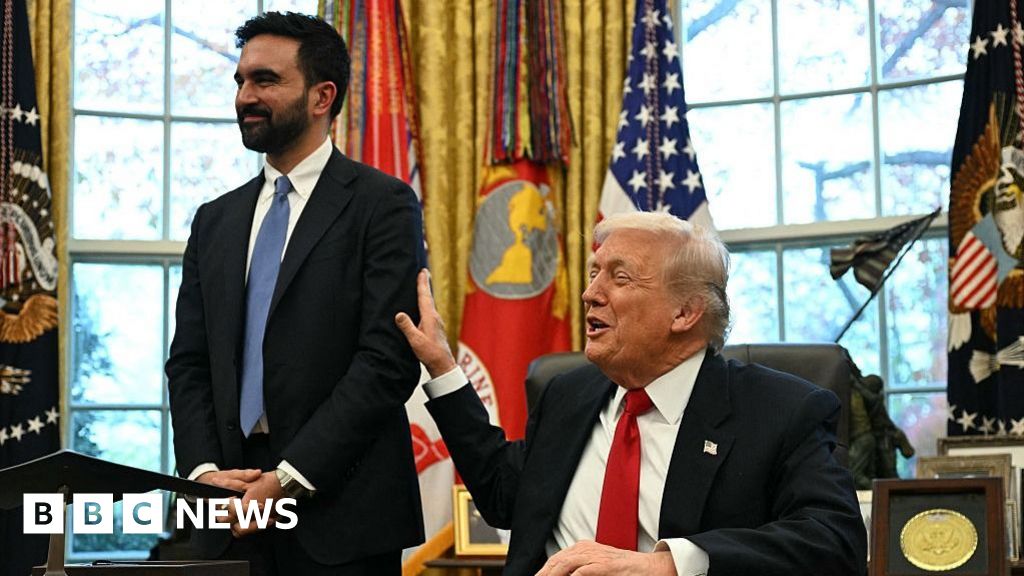
An Unlikely Détente: Trump and Congressman Mamdani Find Common Ground in Oval Office Meeting
WASHINGTON – In a stunning reversal of months of blistering public attacks, former President Donald Trump and New York Congressman Zohran Mamdani emerged from a meeting at the White House on Tuesday describing it as “productive” and “great.” The encounter, widely anticipated to be a contentious clash of ideologies, instead showcased a surprising degree of civility, raising eyebrows and prompting questions about the shifting dynamics of American politics.
For months, the relationship between the two men has been defined by sharply contrasting rhetoric. Trump has repeatedly labeled Mamdani, a progressive Democrat representing parts of Queens and Brooklyn, a “communist,” a familiar epithet he frequently deploys against political opponents on the left. Mamdani, in turn, has characterized Trump as a “fascist,” a condemnation rooted in concerns over the former president’s authoritarian tendencies and attacks on democratic institutions. The starkness of these accusations made the prospect of a cordial conversation seem remote, to say the least.
From Firebrand to Face-to-Face: A Shift in Tone
The meeting itself was initiated at Mamdani’s request, a move that initially drew skepticism from both sides of the aisle. Mamdani’s office stated the Congressman sought a direct dialogue with Trump to advocate for policies impacting his constituents in New York City. Specifically, the conversation focused on the pressing issues of affordability and housing, two areas where federal and local collaboration is crucial.
“We had a really good discussion about the challenges facing New York City,” Mamdani told reporters after the meeting. “We talked about the need to increase the supply of affordable housing, address the rising cost of living, and invest in infrastructure. I was surprised by the former president’s willingness to engage on these issues in a substantive way.”
The surprise wasn’t limited to Mamdani. Trump, known for his combative style, appeared uncharacteristically restrained. When pressed by journalists about his past disparaging remarks towards the Congressman, he offered a curious response. According to multiple accounts, Trump simply allowed Mamdani to reiterate his “fascist” label, offering no rebuttal. This unusual acquiescence has fueled speculation about Trump’s motivations and potential strategic calculations.
The Housing Crisis: A National Emergency
The focus on housing affordability is particularly timely. Across the United States, the availability of affordable housing is dwindling, placing an immense strain on families and communities. According to the U.S. Department of Housing and Urban Development, the national median rent reached $1,300 in 2023, a significant increase from previous years. This rise is disproportionately impacting low-income households and exacerbating existing inequalities.
Globally, the situation is equally concerning. The United Nations estimates that over 1.6 billion people worldwide lack adequate housing. This lack of access to safe and affordable shelter has far-reaching consequences, impacting health, education, and economic opportunity. In fact, a recent World Bank study found that housing affordability issues contribute to approximately 20% of income inequality in developing countries.
Mamdani’s push for federal investment in affordable housing aligns with a growing national consensus that addressing the housing crisis requires a multi-faceted approach. This includes increasing funding for programs like the Housing Choice Voucher Program (Section 8), incentivizing the construction of new affordable units, and implementing policies to protect tenants from eviction.
Beyond the Rhetoric: A Glimmer of Pragmatism?
The unexpected cordiality of the meeting raises questions about the future of political discourse in the United States. Could this be a sign that even in an era of deep polarization, there is room for pragmatic collaboration on issues of common concern? Some observers suggest that Trump, as he eyes a potential return to the White House, may be attempting to broaden his appeal by demonstrating a willingness to work with Democrats.
“Trump is a master of political maneuvering,” says Dr. Emily Carter, a political science professor at Georgetown University. “He understands the power of optics. Meeting with Mamdani, even if it’s just for show, allows him to portray himself as someone who is willing to listen to different perspectives and find common ground.”
However, others remain skeptical. They argue that Trump’s past behavior suggests that any display of civility is likely to be fleeting and opportunistic. “Don’t mistake a temporary truce for a genuine change of heart,” warns David Miller, a Democratic strategist. “Trump will revert to his divisive tactics as soon as it suits his political interests.”
What This Means for New York and Beyond
Regardless of the underlying motivations, the meeting between Trump and Mamdani represents a potentially significant moment. It demonstrates that even the most entrenched political divides can be bridged, at least temporarily, in the pursuit of practical solutions. The outcome of this dialogue – whether it leads to concrete policy changes or remains a symbolic gesture – will be closely watched by policymakers and citizens alike. For the residents of New York City, grappling with the daily realities of a housing crisis and a high cost of living, the prospect of federal assistance is a welcome, if unexpected, development. The coming months will reveal whether this unlikely alliance can translate into tangible benefits for those who need them most.