Tidal Heating in White Dwarf Binaries Reshapes Stellar Evolution
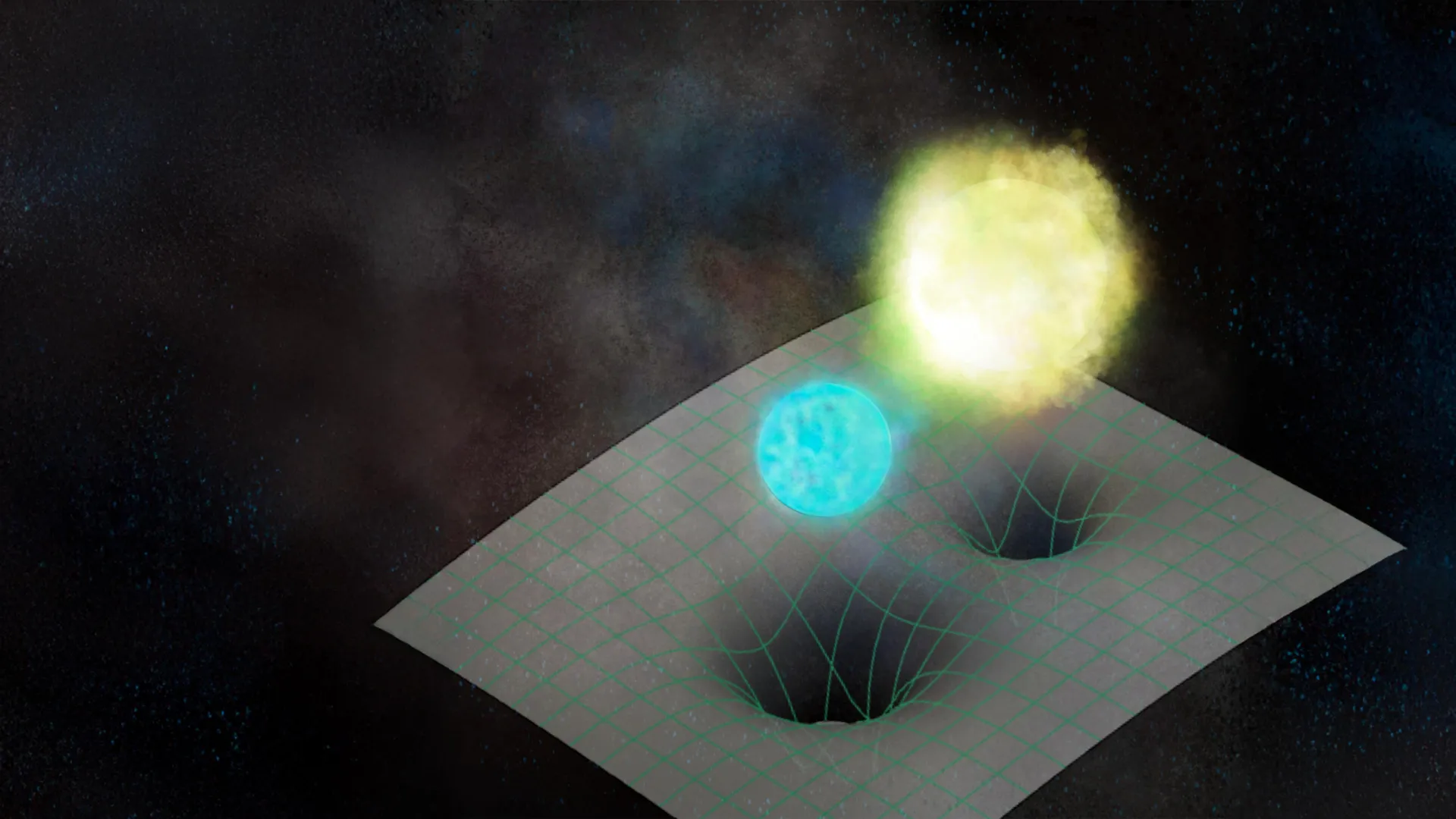
Unusual Stellar Pairings Could Rewrite Models for Rare Explosions, Impacting Space-Based Asset Risk
Kyoto, Japan – A new theoretical model developed by researchers at Kyoto University is challenging established understandings of white dwarf star behavior, with potential implications for the assessment of risk to space-based assets and the future modeling of Type Ia supernovae – events crucial for cosmological distance measurements. The findings, published this week, suggest these stellar remnants are significantly larger and hotter than previously estimated when locked in close binary orbits, a discovery that could reshape how scientists predict the frequency and characteristics of powerful stellar explosions.
The research focuses on white dwarfs, the incredibly dense cores of stars left behind after they exhaust their nuclear fuel. These “degenerate stars” are already known for their peculiar properties, shrinking in size as they gain mass. However, when found in binary systems – orbiting another star – their behavior becomes even more complex. While most such systems are ancient and cool, a growing number of recently observed pairs exhibit unexpectedly high temperatures and rapid orbital periods, completing a full orbit in under an hour.
“These fast-moving binaries simply didn’t fit the existing models,” explains Lucy Olivia McNeill, lead researcher on the project. “We needed to understand what was driving these discrepancies, and tidal heating emerged as a strong candidate.”
The Tidal Force Factor: A New Lens on Stellar Evolution
Tidal heating, a phenomenon familiar in the study of Jupiter’s moon Io, occurs when gravitational forces distort a celestial body, generating internal friction and heat. The Kyoto University team’s model demonstrates that this effect can be substantial in short-period white dwarf binaries. The gravitational pull of one white dwarf can significantly heat its companion, causing it to expand and reach temperatures exceeding 10,000 Kelvin – several times hotter than our sun’s surface.
This expansion is particularly significant because it alters the timing of “mass transfer,” the point at which the two stars begin exchanging material. The researchers believe these binaries are likely to begin this process at orbital periods three times longer than previously thought. This has a direct impact on calculations related to the eventual fate of these systems.
The implications extend beyond purely academic interest. Type Ia supernovae, which occur when a white dwarf reaches a critical mass and explodes, are used as “standard candles” in astronomy – objects of known brightness used to measure distances across the universe. Accurate modeling of these events is therefore vital for understanding the expansion rate of the universe and the nature of dark energy.
Space Asset Vulnerability: A Growing Concern
Beyond cosmology, the research highlights a growing concern for the burgeoning space economy. Type Ia supernovae are among the most energetic events in the universe, releasing immense bursts of radiation. While relatively rare, a nearby supernova could pose a significant threat to satellites and other space-based infrastructure.
According to the latest data from Statista, there are currently over 8,300 active satellites in orbit, a number projected to increase dramatically in the coming years. This increased density of assets elevates the risk posed by unpredictable cosmic events. A more accurate understanding of supernova precursors, like the binary systems studied by McNeill’s team, is therefore crucial for developing effective mitigation strategies.
“The more we understand about the conditions that lead to these explosions, the better we can assess the potential risks to our increasingly valuable space infrastructure,” says Dr. Emily Carter, an astrophysicist at the California Institute of Technology, who was not involved in the study. “This research provides a valuable piece of that puzzle.”
Regulatory Scrutiny and the Insurance Market
The potential for space weather events, including those triggered by supernovae, is already attracting attention from regulators. The National Oceanic and Atmospheric Administration (NOAA), for example, provides forecasts and warnings of space weather activity. However, the current regulatory framework largely focuses on solar flares and coronal mass ejections. The possibility of a supernova-induced event may necessitate a re-evaluation of these standards.
The insurance market is also taking note. Space insurance premiums have been rising in recent years, driven by increased launch activity and the growing awareness of potential risks. A more refined understanding of supernova hazards could further impact insurance rates and coverage options. According to a recent report by Reuters, space insurance premiums increased by as much as 30% in 2023.
Future Research: Carbon-Oxygen White Dwarfs and the Double Degenerate Scenario
McNeill’s team is now focusing on applying their model to binary systems composed of carbon-oxygen white dwarfs, the most common type. Their goal is to better understand the pathways leading to Type Ia supernovae, particularly the “double degenerate” scenario, where two white dwarfs merge.
“We want to determine whether our temperature predictions align with the conditions necessary for a double degenerate merger to occur,” McNeill explains. “This will help us refine our understanding of the frequency of these events and their contribution to the overall supernova rate.”
The research underscores the interconnectedness of fundamental astrophysics, space technology, and the global economy. As humanity’s presence in space expands, a deeper understanding of the universe’s most powerful events will be essential for protecting our investments and ensuring the long-term sustainability of space-based activities.