‘The Artist’ Review: Mandy Patinkin & Star Power in Absurdist Comedy
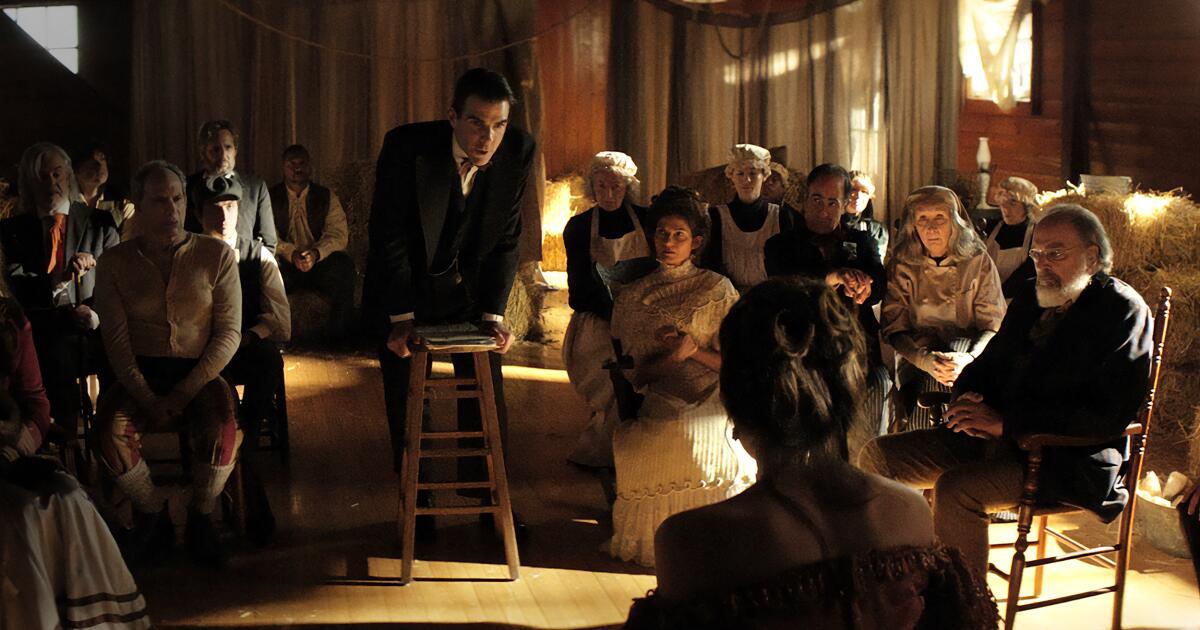
A Gilded Age Gone Wild: Aram Rappaport’s “The Artist” Debuts on The Network
Rhode Island, 1906. A robber baron found dead, rolled in a carpet and set ablaze like a Viking. A sprawling country estate teeming with eccentric staff living in tents. And a French Impressionist painter, Edgar Degas, inexplicably commissioned to paint…French poodles? These are just a few of the opening notes in “The Artist,” a six-part comedy series from writer and director Aram Rappaport, now streaming on The Network, the ad-supported streaming service Rappaport founded.
A Star-Studded Cast Embraces Absurdity
Rappaport, known for his previous series “The Green Veil” on the same platform, doesn’t shy away from ambition. “The Artist” boasts a truly remarkable ensemble cast, including Mandy Patinkin, Janet McTeer, Danny Huston, Hank Azaria, Patty Lupone, and Zachary Quinto. The sheer volume of recognizable talent initially suggests a serious period drama, but the show quickly subverts expectations, leaning heavily into the absurd.
The series centers around Norman Henry (Patinkin), a character loosely based on the era’s burgeoning venture capitalists – and seemingly in desperate need of funding. The narrative unfolds through the journal entries of his wife, Marian (McTeer), who warns the audience that discerning fact from fiction will be a key challenge. This meta-narrative device immediately signals the show’s playful, unreliable nature.
Historical Figures Reimagined – and Recontextualized
Rappaport takes significant liberties with historical accuracy, placing real-life figures in wildly improbable scenarios. Huston’s portrayal of Edgar Degas, for example, bears little resemblance to the actual artist, beyond a hint of bad eyesight and muttered French phrases. He’s depicted as a financially struggling painter, more concerned with getting paid than artistic integrity. This isn’t presented as a malicious distortion, but rather as a form of playful commentary.
The show’s willingness to bend history extends beyond Degas. Upcoming episodes promise appearances from Thomas Edison (Azaria), pitching a primitive virtual reality device called a Kinetophone, and Evelyn Nesbit (Ever Anderson) and her mother (Jill Hennessy), fleeing the fallout from the infamous shooting involving Nesbit’s husband, Harry K. Thaw, and architect Stanford White. The Nesbit-Thaw scandal, a sensationalized crime of passion, gripped the nation in 1906, becoming a symbol of the era’s societal anxieties.
A Feminist Undercurrent in a Gilded Cage
Beneath the surface of the comedic chaos, “The Artist” explores themes of power, manipulation, and female agency. Marian Henry, despite her seemingly constrained position as the wife of a wealthy man, is a complex and compelling character. She engages in boxing as an outlet for aggression, openly despises her husband, and navigates a world dominated by patriarchal structures.
The series subtly highlights the limited opportunities available to women during the Gilded Age. According to the Bureau of Labor Statistics, in 1900, only 18.7% of women were employed outside the home. “The Artist” portrays women actively seeking ways to exert control and influence within these constraints, whether through manipulation, accommodation, or outright defiance. This feminist current adds a layer of depth to the show’s otherwise outlandish premise.
A Return to Absurdist Comedy?
“The Artist” feels deliberately anachronistic, evoking the spirit of absurdist comedies from the late 1960s and early 1970s, reminiscent of the work of Robert Downey Sr. or William Klein. It’s a loud, often profane, and visually striking series that doesn’t shy away from shocking or unsettling imagery. The gratuitous use of profanity, while jarring to some, contributes to the show’s overall sense of heightened reality.
Rappaport’s decision to release “The Artist” on The Network, a platform he controls, likely afforded him the creative freedom to pursue his vision without external interference. The show’s unconventional style and challenging themes might have struggled to find a home on more traditional networks or streaming services. Whether it’s “good” or “bad” is almost beside the point; it’s undeniably a singular and uncompromising work of art. The final three episodes, featuring Lupone and Quinto, promise to further complicate – or perhaps clarify – the narrative, and will ultimately determine whether “The Artist” fully realizes its ambitious potential. It’s a show that demands attention, and is certainly unlike anything else currently on offer.