Supreme Court Case Could Expand Presidential Power – FTC, Fed in Focus
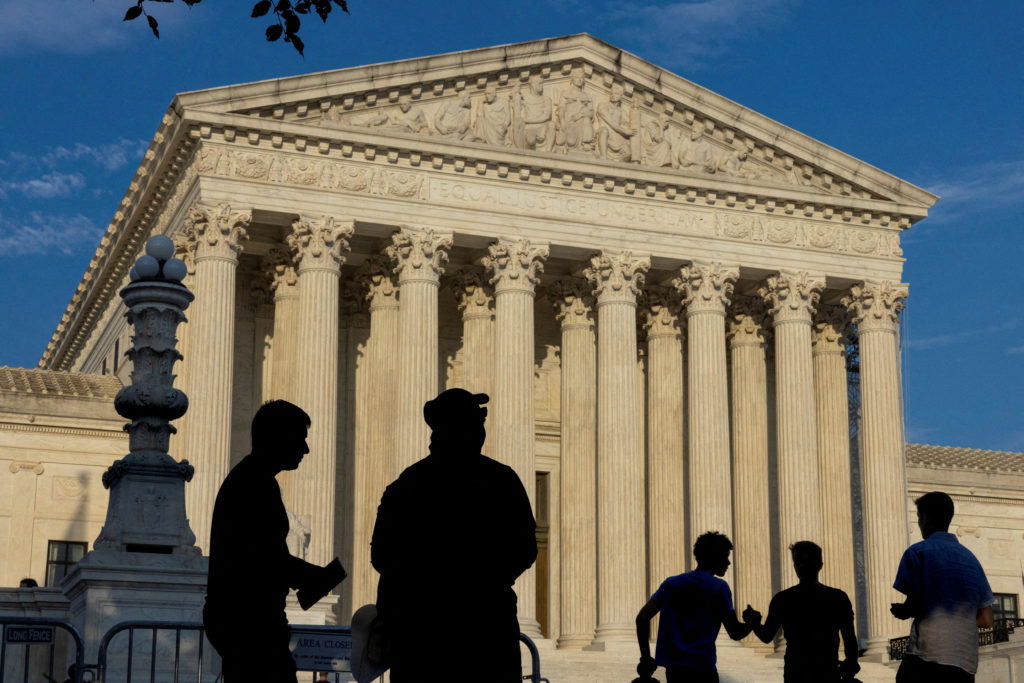
Supreme Court Poised to Remake Presidential Power, Challenging Decades-Old Precedent
WASHINGTON – The Supreme Court is set to hear arguments Monday in a case that could dramatically reshape the balance of power between the presidency and independent federal agencies, a move legal scholars say represents the culmination of a decades-long effort by conservatives to expand executive authority. At the heart of the dispute is a 1935 ruling, Humphrey’s Executor, which established limits on a president’s ability to remove the heads of independent agencies without cause. The case, stemming from a challenge to the firing of a Federal Trade Commission (FTC) official, Rebecca Slaughter, has ignited a fierce debate over the scope of presidential control and the future of the administrative state.
A Long Game for Executive Authority
Chief Justice John Roberts has, according to observers, overseen a steady erosion of restrictions on presidential power since 2010. This isn’t a recent phenomenon tied solely to the Trump administration, but rather a consistent trend, predating Donald Trump’s presidency by years. The current case builds on a series of rulings that have increasingly favored the executive branch, allowing presidents to exert greater control over agencies designed to operate with a degree of independence.
Justice Elena Kagan, a member of the court’s liberal wing, noted in September that the conservative justices appeared “raring to take action” on this front. And they have. During Trump’s second term, the court permitted the removal of numerous officials from agencies like the National Labor Relations Board, the Merit Systems Protection Board, and the Consumer Product Safety Commission. Only Lisa Cook, a Federal Reserve governor, and Shira Perlmutter, a copyright official, have so far avoided removal, though even Cook’s position is now under scrutiny.
The Unitary Executive Theory and Its Critics
The legal battle centers around the “unitary executive” theory, a concept embraced by conservative legal circles that posits the president, as the head of the executive branch, should have complete control over all agencies and their leaders. Proponents argue that this interpretation aligns with the original intent of the Constitution. As Justice Antonin Scalia famously wrote in a 1988 dissent, “this does not mean some of the executive power, but all of the executive power.”
However, this view is not without its detractors. Legal historians, including Caleb Nelson of the University of Virginia School of Law, who previously clerked for Justice Clarence Thomas, contend that the historical record doesn’t support such a sweeping interpretation of presidential power. “Both the text and the history of Article II are far more equivocal than the current Court has been suggesting,” Nelson has written. Jane Manners, a Fordham University law professor, and other historians have filed briefs with the court, offering historical context that challenges the unitary executive theory.
Beyond Slaughter: The Fate of Independent Agencies
The immediate case concerns Rebecca Slaughter’s firing from the FTC, but the implications extend far beyond a single personnel decision. A ruling in favor of the administration could significantly weaken the independence of numerous federal agencies responsible for regulating critical sectors of the economy, from labor relations to consumer protection. The Justice Department, represented by Solicitor General D. John Sauer, argues that limits on the president’s removal power are “egregiously wrong” and hinder the president’s ability to execute their agenda.
Adding another layer of complexity, the court is also considering a separate question: whether judges have the authority to reinstate an employee who was illegally fired. Justice Neil Gorsuch has suggested that back pay may be an appropriate remedy, but reinstatement is unlikely. This could have significant consequences for Lisa Cook, the Federal Reserve governor, whose firing is also being challenged. The court has expressed concern about the potential economic disruption that could result from allowing a president to freely remove leaders of the central bank.
A Global Context: The Rise of Executive Power
The trend towards expanding executive power isn’t unique to the United States. Across the globe, there’s been a noticeable shift in recent decades towards stronger executive branches, often at the expense of legislative oversight and judicial independence. According to a World Bank report, approximately 60% of countries worldwide have experienced a decline in the rule of law since 2010, often linked to increased executive interference in judicial and legislative processes. This global trend underscores the importance of maintaining checks and balances within democratic systems.
The Supreme Court’s decision, expected in the coming months, will not only determine the fate of Slaughter and potentially Cook, but will also set a precedent that could reshape the relationship between the presidency and the administrative state for generations to come. It’s a case that speaks to fundamental questions about the structure of American government and the limits of presidential power – questions that resonate far beyond the walls of the courtroom.