Stimulus payment December 2025, IRS direct deposit relief payment & tariff dividend fact check
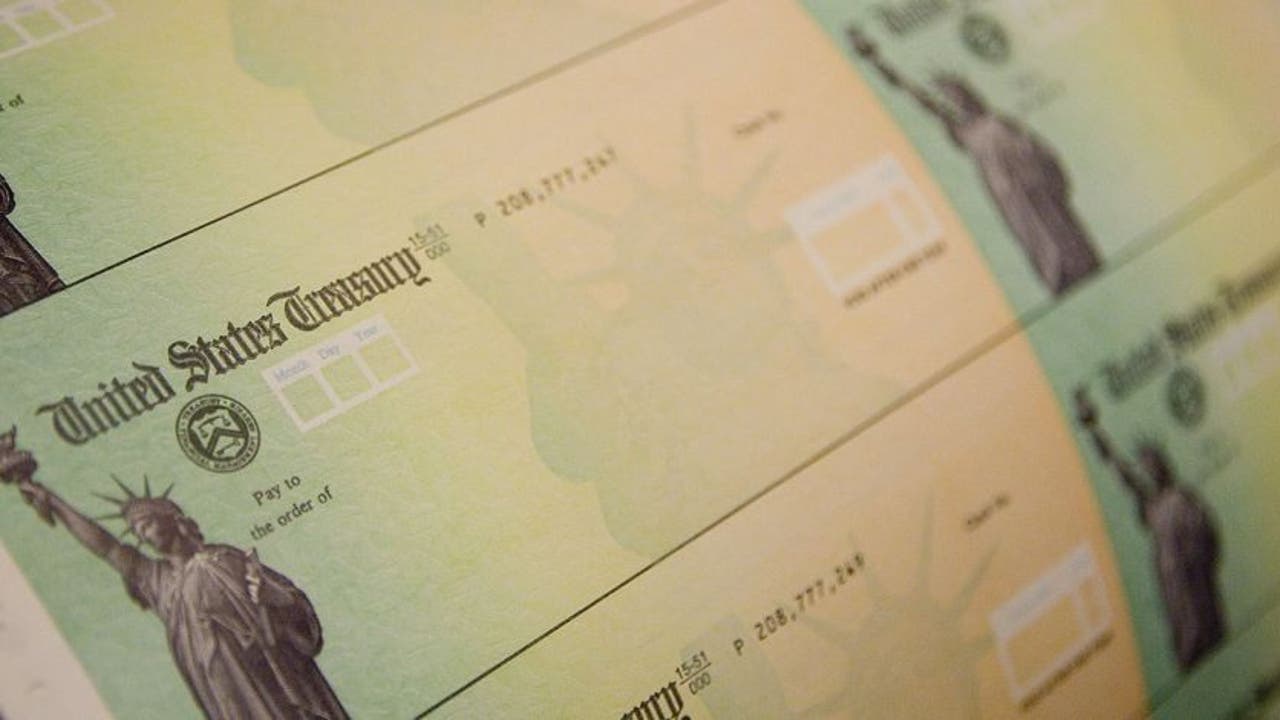
Rumors of Stimulus Checks Swirl as Trump Revives Tariff Dividend Talk
WASHINGTON – As the holiday season approaches, a familiar refrain is echoing online: the promise of stimulus checks. But amidst the hopeful chatter, a dose of reality is needed. While former President Donald Trump has once again floated the idea of distributing funds collected from tariffs directly to citizens, and online rumors of new payments gain traction, neither plan has materialized into concrete action.
The Current Landscape: No Approved Payments
Currently, Congress has not approved any new stimulus payments, and the Internal Revenue Service (IRS) has not announced any forthcoming checks. The last round of economic impact payments were issued in 2021, a lifeline for many during the height of the COVID-19 pandemic. Any future payments would require new legislation, a process fraught with political hurdles.
The IRS did recently complete a round of “catch-up” payments in late 2024 and early 2025, automatically sending refunds to eligible taxpayers who hadn’t claimed the Recovery Rebate Credit on their 2021 tax returns. These payments, capped at $1,400 per person, required no action from recipients, who were notified by mail. However, the deadline to claim the credit through a 2021 tax filing – April 15, 2025 – has passed.
Trump’s Tariff Dividend: A Recurring Promise
The renewed buzz around potential payments stems largely from statements made by former President Trump. During a cabinet meeting on December 2nd, Trump asserted that the U.S. is collecting “trillions of dollars” in tariffs and intends to return this money to citizens in the form of “dividend-style refund checks.” He envisions this as a way to both reduce national debt and provide a financial boost to Americans.
This isn’t a new concept for Trump. He first proposed a “tariff dividend” in November via his Truth Social platform, suggesting payments of “at least $2000 a person” (excluding high-income earners). However, experts are skeptical. Erica York, vice president of federal tax policy at the nonpartisan Tax Foundation, told the Associated Press that “the numbers just don’t check out.”
Even within the current administration, there appears to be uncertainty. Treasury Secretary Scott Bessent, in a recent interview on ABC’s This Week, admitted he hadn’t discussed the dividend plan with Trump and suggested it might take the form of tax cuts rather than direct checks. Reporting from NOTUS journalist Violet Jira in November indicated the administration initially suggested the payments would be targeted towards middle and low-income individuals earning $100,000 or less, but the plan’s viability remains unclear.
The Reality of Tariffs and Revenue
The idea of distributing tariff revenue is appealing, but the economics are complex. Tariffs, taxes imposed on imported goods, are ultimately paid by businesses and consumers. While they do generate revenue for the government, they also increase the cost of goods, potentially harming economic growth. According to the World Bank, global trade experienced a slowdown in 2023, partially attributed to increased trade restrictions and geopolitical tensions, impacting global economic growth.
Furthermore, the amount of revenue generated by tariffs is often overstated. Much of the revenue is offset by the economic costs associated with higher prices and reduced trade. The Congressional Budget Office (CBO) has consistently cautioned against relying on tariff revenue as a stable source of funding for large-scale programs.
Protecting Yourself from Scams
As rumors of stimulus checks circulate, so do scams. The IRS is actively warning taxpayers about fraudulent messages attempting to steal personal information. Scammers often impersonate the IRS through email, text, or social media, requesting sensitive data or demanding immediate payment.
Here’s how to identify a scam:
- The IRS never initiates contact via email, text, or social media.
- Legitimate IRS communication begins with an official letter or notice.
- IRS agents will not demand immediate payment or threaten arrest.
- If contacted by someone claiming to be from the IRS, verify their identity through the official IRS website.
You can find more information about protecting yourself from IRS scams online.
A Broader Context: Global Economic Uncertainty
The discussion around stimulus and tariff revenue unfolds against a backdrop of global economic uncertainty. As of November 2024, the Bureau of Labor Statistics reported a U.S. unemployment rate of 3.9%, a slight increase from previous months, signaling a potential cooling of the labor market. This, coupled with ongoing inflation and geopolitical instability, underscores the need for cautious economic policy and responsible fiscal management.
While the prospect of extra funds is always welcome, it’s crucial to approach these rumors with a healthy dose of skepticism. For now, the most reliable advice is to remain informed, protect yourself from scams, and focus on sound financial planning.
ARTICOL ORIGINAL:
WASHINGTON – Hold off on that purchase! Online rumors of new stimulus checks by year’s end are out there.
But Congress has not approved any new payments, and the IRS has not confirmed checks in the coming weeks.
Here’s a quick look at the facts:
Federal stimulus payments for December 2025?
What we know:
The last round of economic impact payments was issued in 2021, and any future checks would require new legislation from Congress.
In 2024, the Internal Revenue Service announced automatic payments for eligible taxpayers who had not claimed the Recovery Rebate Credit on their 2021 returns. The maximum payment was $1,400 per person.
No action was required to receive the payments, which were sent by direct deposit or check between December 2024 and January 2025. Recipients were also notified by letter.
The final chance to claim the $1,400 credit was by filing a 2021 tax return before April 15, 2025. That deadline has passed, with no extensions available.
READ MORE: IRS direct deposit relief payment in November? Here’s what we know

Trump $2000 tariff dividend proposals?
What we know:
During a cabinet meeting on December 2, President Donald Trump said the U.S. is collecting “trillions of dollars” from tariffs and that this money would be returned to citizens as dividend-style refund checks.
“Next year is projected to be the largest tax refund season ever, and we’re going to be giving back refunds out of the tariffs,” he said. “We’re going to be giving a nice dividend to the people in addition to reducing debt. We, as you know, inherited a lot of debt, but it’s peanuts compared to the kind of numbers we’re talking about. So, we’re going to be making a dividend to the people.”
This is not the first time Trump has promised what he calls a generous tariff dividend, first floated in November on his Truth Social platform. He posted that tariffs are generating so much revenue that “a dividend of at least $2000 a person (not including high income people!) will be paid to everyone.”
Budget experts dismissed the idea, recalling the administration’s short‑lived plan for DOGE dividend checks tied to billionaire Elon Musk’s proposed budget cuts. “The numbers just don’t check out,” said Erica York, vice president of federal tax policy at the nonpartisan Tax Foundation, according to the Associated Press.
READ MORE: $2000 tariff dividend check update: Trump says dividend refund checks coming in 2026
Even Treasury Secretary Scott Bessent appeared caught off guard. On ABC’s This Week Sunday last month, he said he had not discussed the dividend with Trump and suggested it might not mean direct checks from the government. Instead, he said, the rebate could take the form of tax cuts.
FOX 5 also spoke with NOTUS reporter Violet Jira in November about the likelihood of payments. She said it was hard to predict.
“At the White House press briefing, Karoline Leavitt was asked, is the Trump administration committed to sending these checks to the American people? And their answer was yes,” Jira said.
“Since that Truth Social post from Trump, we’ve gotten more details. For example, he said that the checks would be going to middle to low-income people. Treasury Secretary Scott Bessent indicated that would be individuals or families who make $100,000 or less,” Jira added. “So we’re getting more details about the plan, but as for whether or not this actually comes to fruition, it’s a bit difficult to tell. There’s a couple of factors at play that have made some people skeptical.”
READ MORE: $2000 tariff dividend? Here’s what President Trump said about the payments
Stimulus scams and rumors
Recurring online claims of $1,702 payments or $1,390 checks can often be tracked back to state-level programs, such as Alaska’s Permanent Fund Dividend, or are scam posts.
READ MORE: $1702 stimulus payment? Here’s what we know
IRS stimulus warnings
What you can do:
The IRS is warning taxpayers about fake stimulus payment messages aimed at stealing personal information.
Here’s how to tell if the IRS is contacting you – or if it’s a scammer.
- The IRS never makes contact through email, texts, or social media; scammers often use fake accounts or links.
- The IRS begins communication with an official letter or notice, which can be verified through a secure IRS Online Account or customer service.
- Agents may call after sending a notice, but they will not leave threatening, pre-recorded messages or demand payment.
- Private agencies may contact taxpayers only after written notice, and all legitimate collection notices include a matching Taxpayer Authentication Number.
- The IRS has ended most unannounced visits by revenue officers to improve safety for taxpayers and employees.
- More info from the IRS online.
READ MORE: Stimulus payment November 2025, IRS direct deposit relief payment & tariff dividend fact check
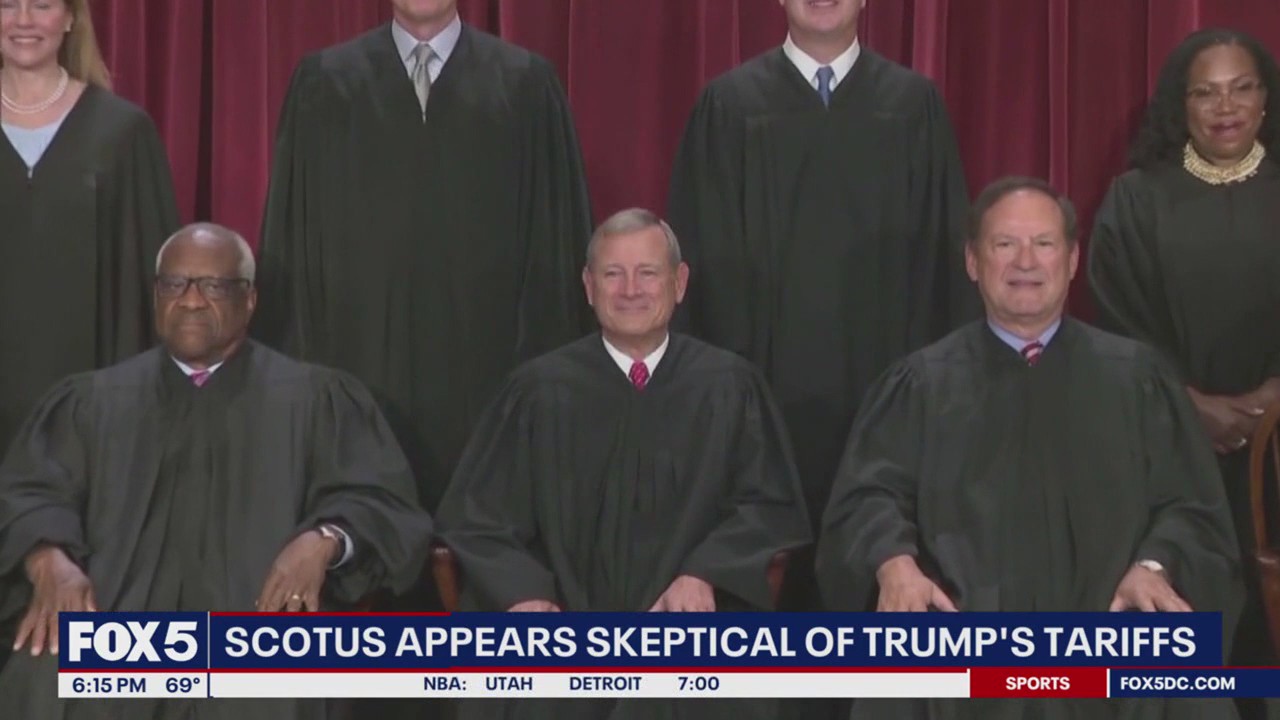
Supreme Court appears skeptical on legality of Trump’s tariffs
The Trump administration defended its sweeping global tariffs against a highly skeptical Supreme Court on Wednesday. The tariffs put in place by President Donald Trump are broad and the administration’s decision to place tariffs on nearly every country in the world — sometimes over 100% — affects how much you pay for many things, from electronics to clothes to car parts. FOX 5’s Katie Barlow explains.
The Source: Information in this article comes from the Associated Press, the IRS and previous FOX 5 reporting.