Rotenberg’s Finnish Villa Seized Over Unpaid Taxes | Russia Sanctions
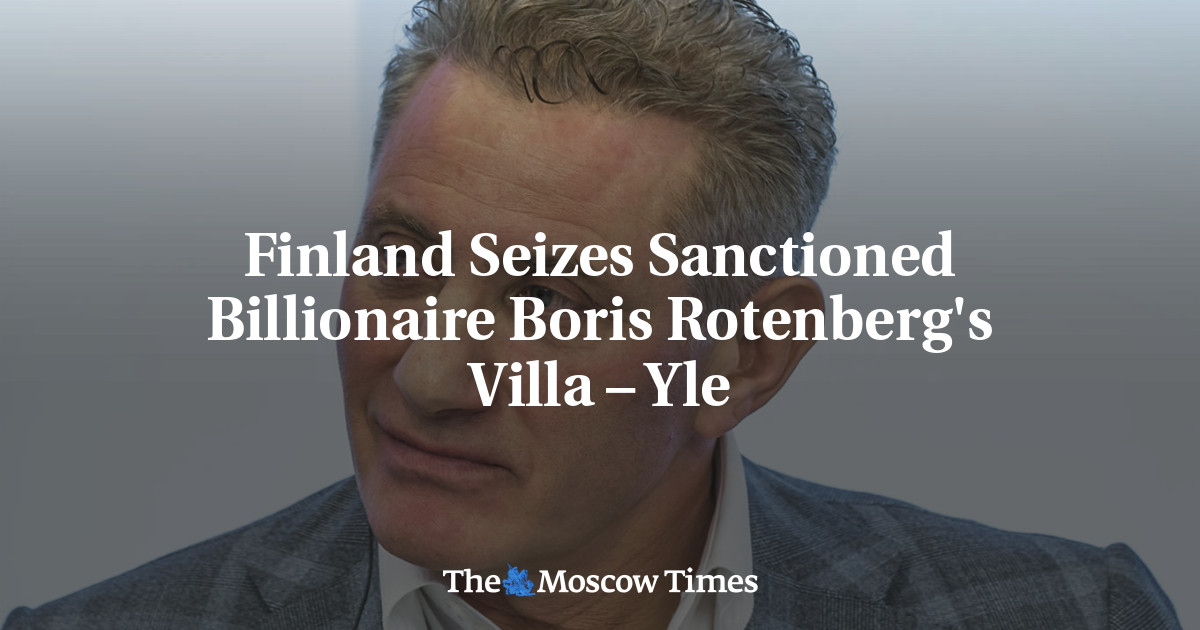
Kremlin-Linked Billionaire Loses Finnish Villa Over Unpaid Taxes
Hanko, Finland – A seaside villa belonging to Boris Rotenberg, a Russian billionaire with close ties to President Vladimir Putin, has been seized by Finnish authorities due to unpaid property taxes. The move, reported Wednesday by Finnish public broadcaster Yle, underscores the escalating financial pressure on sanctioned Russian oligarchs holding assets abroad, even for relatively minor debts.
The villa, located in the coastal town of Hanko, is subject to a forced sale to cover a tax bill amounting to “several thousand euros,” according to enforcement registry records cited by Yle. While the sum itself isn’t astronomical for a man Forbes estimates to be worth $1.3 billion as of April 2025, the seizure represents a significant escalation beyond simply freezing assets. It demonstrates a willingness by Finnish authorities to actively liquidate property to settle outstanding obligations.
Beyond the Freeze: A Shift in Enforcement
Since Russia’s full-scale invasion of Ukraine in 2022, Rotenberg’s assets in Finland have been frozen as part of the European Union’s sanctions regime. Asset freezes prevent the sale, mortgaging, or transfer of ownership, but a seizure goes further, allowing authorities to sell the property and use the proceeds to satisfy debts. This distinction is crucial. It’s one thing to prevent an oligarch from accessing wealth; it’s another to actively diminish it.
This isn’t an isolated incident. Yle previously reported that a company linked to Rotenberg faced similar action over unpaid utility bills for a commercial property in Helsinki, totaling over 27,000 euros. However, that situation was resolved after the debt was paid in full, according to Mikko Mantere, Rotenberg’s lawyer, who told Yle the Hanko villa case is “under review” and expects the restrictions to be lifted. As of the beginning of this week, however, the seizure remained in force.
A Complicated History: Citizenship and Security Concerns
Rotenberg’s connection to Finland runs deeper than just property ownership. He moved to the country in 1991 with his then-wife, before returning to St. Petersburg in 1998. He later obtained Finnish citizenship in the early 2000s. This citizenship has recently come under scrutiny. Yle reported in 2023 that his citizenship may have been granted without the necessary approval from Finland’s security intelligence service – a potentially serious oversight given his close association with Putin.
The timing of this revelation, coupled with the aggressive enforcement of tax obligations, suggests a growing determination within Finland to distance itself from individuals perceived as enabling the Kremlin. Finland shares a 1,340-kilometer border with Russia and, following the invasion of Ukraine, dramatically shifted its long-held policy of military non-alignment, joining NATO in April 2023.
The Broader Impact: Sanctions and Global Wealth
The case of Boris Rotenberg highlights the complexities of enforcing sanctions against wealthy individuals with intricate international holdings. While the EU and other nations have imposed sweeping sanctions on Russian oligarchs, tracking down and seizing assets is a laborious and often frustrating process. According to a Reuters analysis, as of February 2024, authorities have frozen or seized an estimated $33 billion in Russian assets globally, but the actual amount available for potential use in Ukraine’s reconstruction remains significantly lower.
This is partly due to legal challenges, jurisdictional issues, and the sheer difficulty of identifying and valuing hidden wealth. Furthermore, a recent report by the OECD estimates that tax evasion costs governments worldwide between $410 and $600 billion annually, demonstrating the scale of the challenge even *without* considering sanctions-related asset recovery.
A Signal to Others?
The Finnish authorities’ decision to seize the Hanko villa, even over a relatively small debt, sends a clear message to other sanctioned individuals: no asset is truly safe, and even seemingly minor financial obligations will be pursued. It’s a demonstration of principle, a signal that Finland is committed to upholding the sanctions regime and holding those linked to the Kremlin accountable. The case also underscores the growing trend of governments using all available legal tools to pressure those who benefit from, or enable, geopolitical conflict. It’s a quiet but potent form of economic warfare, playing out in the quiet coastal towns and upscale villas of Europe.
The situation with Rotenberg’s citizenship and the scrutiny surrounding its approval also raises broader questions about due diligence and security protocols within EU member states. As geopolitical tensions continue to rise, the need for robust vetting processes and a proactive approach to identifying and mitigating potential risks is more critical than ever.