Rory McIlroy: PGA Tour merger with ‘irrational’ LIV Golf unlikely
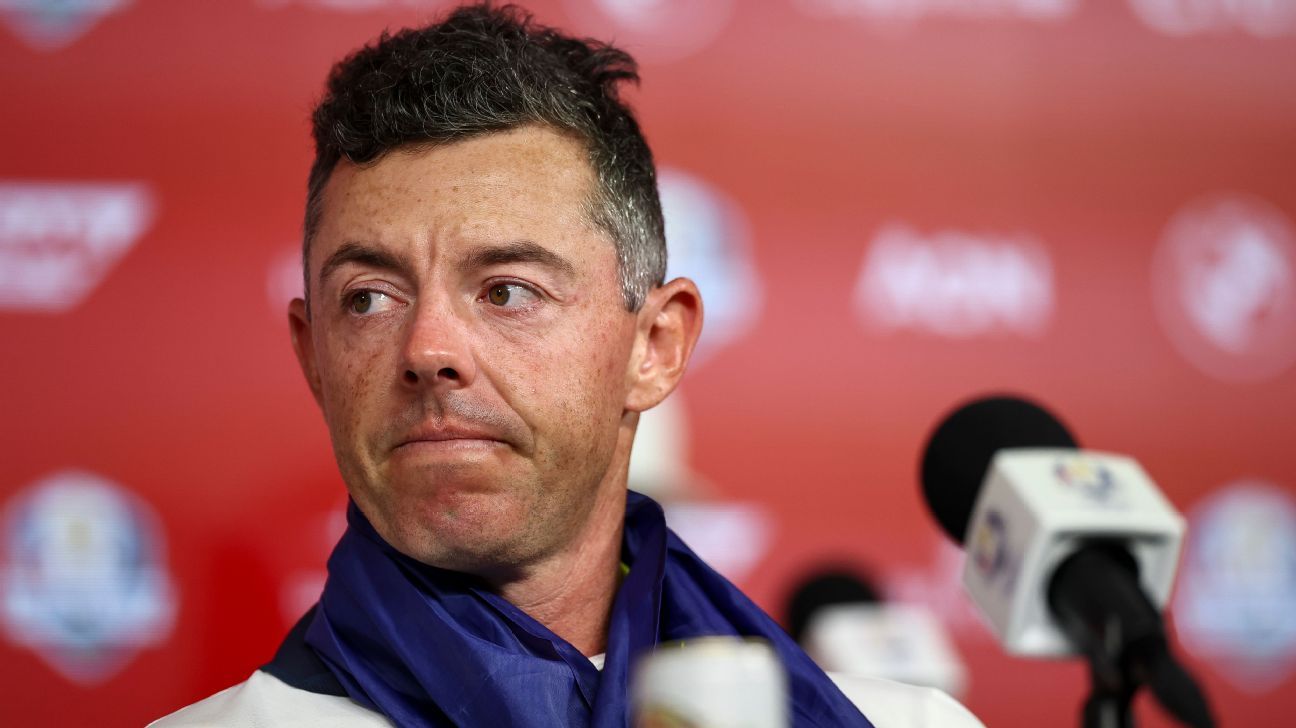
Fractured Fairways: McIlroy Sees Dim Future for Golf Unification
SOUTHPORT, UK – Rory McIlroy, one of golf’s most prominent figures, has expressed growing pessimism about the possibility of bridging the deep divide between the PGA Tour and LIV Golf, the Saudi-backed breakaway league. Speaking at the CNBC CEO Council Forum this week, McIlroy suggested the “irrational” financial commitments of LIV Golf have created an insurmountable gap, making a unified future for the sport increasingly unlikely.
The schism in professional golf began in 2021 when LIV Golf began aggressively recruiting top players with lucrative, guaranteed contracts, funded by Saudi Arabia’s Public Investment Fund. The move sent shockwaves through the established golf world, prompting suspensions and legal battles. Hopes for reconciliation briefly flickered in 2023 with the announcement of a framework agreement for a potential merger, but over eighteen months later, concrete progress remains elusive.
The Weight of Billions: An Unsustainable Model?
McIlroy’s concerns center on the sheer scale of LIV Golf’s spending. He likened the current situation to long-standing fractures in other sports, citing boxing and the historical rivalry between IndyCar and NASCAR in the United States as examples of divisions that have proven difficult to heal. “I think for golf in general it would be better if there was unification,” McIlroy stated, “But I just think with what’s happened over the last few years, it’s just going to be very difficult to be able to do that.”
He emphasized that LIV Golf has already spent an estimated $5-6 billion USD, and anticipates needing to invest a similar amount simply to maintain its current roster and operations. “A lot of these guys’ contracts are up. They’re going to ask for the same number or an even bigger number,” McIlroy explained. This ongoing financial burden, he believes, creates a dynamic where compromise becomes increasingly difficult.
The financial disparity is stark. According to data from the Statista, LIV Golf generated an estimated $250 million in revenue in 2023, a figure dwarfed by the billions invested. This highlights the league’s reliance on external funding rather than self-sufficiency.
Beyond the Money: A Clash of Philosophies
The conflict extends beyond mere financial considerations. McIlroy, a staunch supporter of the traditional PGA Tour structure, believes that negotiations have been hampered by a fundamental difference in approach. “As someone who supports the traditional structure of men’s professional golf, we have to realize we were trying to deal with people that were acting, in some ways, irrationally, just in terms of the capital they were allocating and the money they were spending.”
This sentiment is echoed by Bryson DeChambeau, a prominent LIV Golf player, who acknowledged the significant obstacles to a resolution. “I wish something major would happen but I don’t think it’s going to in the immediate future,” DeChambeau told Fox News. “I think there are too many wants on both sides and not enough gives on the other. We’re just too far apart on a lot of things.”
DeChambeau, however, remains optimistic about the long-term health of the game, suggesting that international growth will continue regardless of unification efforts. This perspective reflects a broader trend: the increasing globalization of golf, with tournaments and players emerging from diverse regions around the world. The World Golf Championships, for example, have played a key role in fostering this international expansion.
The Geopolitical Undercurrents
The involvement of Saudi Arabia’s Public Investment Fund in LIV Golf has inevitably introduced geopolitical considerations into the debate. Critics have pointed to Saudi Arabia’s human rights record and its use of “sportswashing” – using sports to improve its international image – as reasons to question the motives behind the investment.
The Amnesty International has consistently called for greater transparency and accountability regarding Saudi Arabia’s involvement in sports, urging governing bodies to prioritize human rights concerns.
What’s at Stake for the Future of Golf?
The ongoing division in golf has implications that extend beyond the professional ranks. The fragmentation of the sport could impact grassroots development, sponsorship opportunities, and fan engagement. According to a 2024 report by the United Nations Department of Economic and Social Affairs, sports contribute approximately 3% to the global economy, highlighting the significant economic impact of even minor disruptions within the industry.
McIlroy’s candid assessment reflects a growing sense of realism within the golf community. While the desire for a unified future remains, the financial and philosophical obstacles appear increasingly daunting. The coming months will be crucial in determining whether a path towards reconciliation can be forged, or if golf is destined to remain a fractured landscape for the foreseeable future.
The situation is a stark reminder of the complex interplay between money, politics, and tradition in the world of professional sports. And for fans, it leaves a lingering question: will the game they love ever truly be whole again?
ARTICOL ORIGINAL:
Rory McIlroy doubts the fracture in golf will be repaired as the “irrational” spending of the LIV series has created such a gulf in the sport.
There had been hopes the acrimonious split, which occurred when the Saudi breakaway league lured away many of the top stars with huge contracts in 2021, could be healed when a merger was proposed.
But more than 2½ years after that was mooted, the two parties appear to be no closer to a resolution.
“You see some of these other sports that have been fractured for so long,” McIlroy told CNBC’s CEO Council Forum. “You look at boxing for example, or you look at what’s happened in motor racing in the United States with Indy and NASCAR and everything else, I think for golf in general it would be better if there was unification.
“But I just think with what’s happened over the last few years, it’s just going to be very difficult to be able to do that.
“As someone who supports the traditional structure of men’s professional golf, we have to realize we were trying to deal with people that were acting, in some ways, irrationally, just in terms of the capital they were allocating and the money they were spending.
“It’s been four or five years and there hasn’t been a return yet, but they’re going to have to keep spending that money to even just maintain what they have right now.
“A lot of these guys’ contracts are up. They’re going to ask for the same number or an even bigger number. LIV have spent five or six billion U.S. dollars, and they’re going to have to spend another five or six just to maintain where they are.
“I’m way more comfortable being on the PGA Tour side than on their side but who knows what’ll happen?”
LIV golfer Bryson DeChambeau admits the two parties are currently too far apart.
“I wish something major would happen but I don’t think it’s going to in the immediate future,” he told Fox News.
“I think there are too many wants on both sides and not enough gives on the other.
“We’re just too far apart on a lot of things. It’s going to take some time, but ultimately, I do think the game of golf will grow internationally.”