René Lévesque: Legacy, Identity & Immigration Debate in Quebec
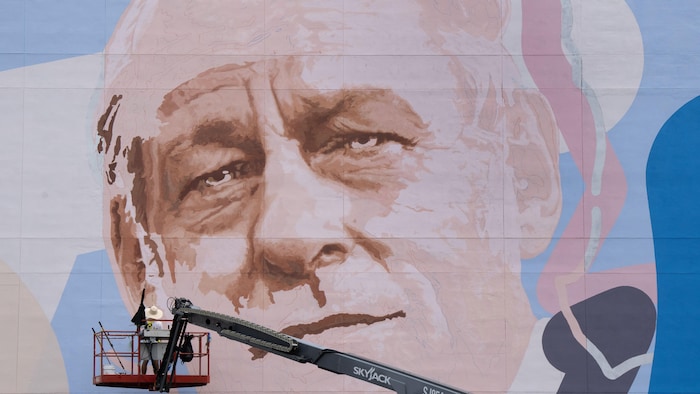
René Lévesque’s Legacy: A Quebec Icon Reclaimed and Reinterpreted
More than three decades after his death in 1987, the political figure of René Lévesque continues to resonate in Quebec, prompting both reverence and selective appropriation. The former Premier, known affectionately as “ti-poil” for his directness, is now viewed with respect across the political spectrum – from ardent separatists to staunch federalists, and from left to right.
This widespread recognition, however, has opened the door to political maneuvering, with individuals and groups attempting to align themselves with Lévesque’s legacy – often by selectively quoting him or presenting his views out of context.
A ‘Proud Quebecer’ Who Embraced Openness
Former Quebec Premier Pauline Marois recently weighed in on the debate, arguing for a nuanced understanding of Lévesque’s views, particularly regarding immigration and Quebec identity. Speaking on the radio program Tout peut arriver, Marois emphasized the importance of understanding the historical context of his statements.
Marois, who served as a cabinet minister under Lévesque from 1981 to 1985, recalled how he personally encouraged her to join the fledgling Parti Québécois in the 1970s. She described him as a man of “great integrity” and a “great democrat,” albeit one who was more comfortable addressing large crowds than engaging in one-on-one conversations.
“He was someone of great integrity, a great democrat. And not always someone easy to approach! He was more at ease in front of 500 people than in front of 2 people.”
Pauline Marois, on Tout peut arriver
Marois highlighted Lévesque’s pioneering role in officially recognizing Quebec’s 11 First Nations (and the Inuit) as the province’s original peoples – a significant step towards reconciliation.
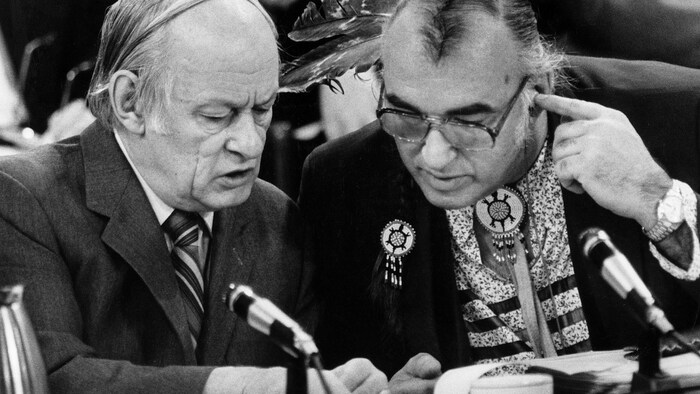
In a letter published in Le Devoir, Marois recounted her discussions with Lévesque on immigration, asserting that he believed in a balance between pride and inclusion. “He believed that affirming our nation meant affirming the equality of all its citizens, regardless of their origins or beliefs,” she stated.
Context Matters: Reinterpreting Lévesque’s Words
Marois’s intervention comes amidst a broader debate sparked by author and commentator Mathieu Bock-Côté, who recently argued on the talk show Tout le monde en parle that Lévesque was more focused on identity politics than commonly acknowledged. Bock-Côté cited a 1970 quote where Lévesque likened Quebec’s immigration ministry to one designed to “drown” the province’s identity, and another to “record the drowning.”
However, Marois swiftly countered that the quote was taken out of context. Lévesque made the statement in response to then-Premier Jean-Jacques Bertrand, a federalist, regarding the newly created Quebec immigration ministry. At the time, Lévesque was in opposition and criticizing Bertrand’s policies.
“If you use him out of context, you have to explain what era and what moment it was. Because yes, René Lévesque said that. But if he said it in 1970, it’s not the same as if he said it in 1981… That was before Bill 101.”
Pauline Marois, on Tout peut arriver
Marois emphasized that Lévesque’s vision of Quebec sovereignty was rooted in a shared territory, culture, and collective will, rather than the origins of individual citizens. This distinction is crucial, she argued, in understanding his legacy.
The debate over immigration thresholds in Quebec continues to be a sensitive issue. Marois believes it’s “healthy” to discuss these matters, provided the focus remains on policies and not individuals.
“Those who come here, whether they are part of 200,000 or 150,000 people, it is our policies and laws that have allowed them to come here. So, we have nothing to blame them for,” she asserted.
The ongoing re-evaluation of René Lévesque’s legacy underscores the complexities of Quebec’s political identity and the enduring relevance of his vision in a rapidly changing world. With immigration levels across Canada reaching record highs – Statistics Canada reported over 473,000 new permanent residents in 2023 – the questions he raised about balancing cultural preservation and inclusivity remain profoundly pertinent.