Rasmussen Poll: Most Democrats Back Continuing Government Shutdown
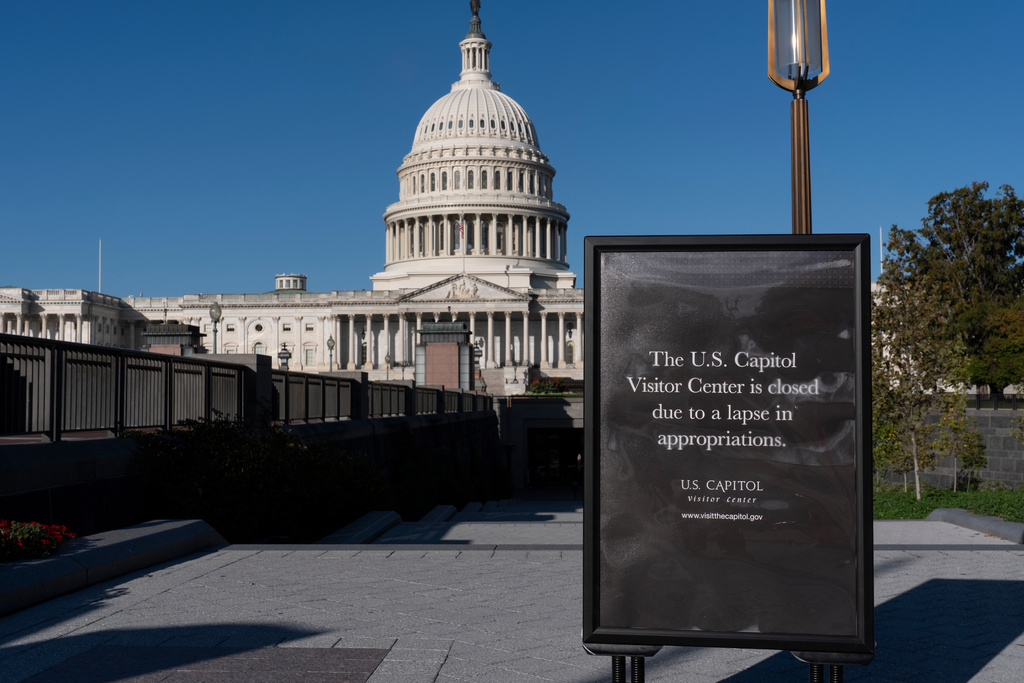
As U.S. Shutdown Approaches Historic Length, Public Sentiment Splits Along Party Lines
A government shutdown is, in theory, nobody’s first choice. Closed museums. Unpaid federal workers. Frozen programs. But in Washington, shutdowns have become a recurring drama in which the pain is real—and the politics, for some, are intoxicating. As the current impasse nears its 40th day, matching the record for the longest in U.S. history, a familiar pattern has re-emerged: voters, especially Democrats, say they want it to end—but many are quietly rooting for their side to hold out until they win concessions[rasmussenreports.com].
What’s truly unusual this time is how dug in the Democratic base has become. Recent Rasmussen surveys show 66% of Democrats actually approve of continuing the shutdown until their demands are met—far higher than the share of Republicans (47%) who want the closure to persist[5]. To put that in global context, such sustained public backing for a shutdown is rare in democracies, where public services are typically valued across the spectrum. In countries like France or Germany, prolonged federal closures would be unthinkable—and for good reason: the World Bank reports that the U.S. already spends a smaller portion of GDP on public administration than most advanced economies, making shutdowns here uniquely disruptive.
The Pressure Inside the Democratic Caucus
Most Americans—including 85% of Democrats—say ending the shutdown is important[rasmussenreports.com]. But the same surveys reveal a more complicated story. Nearly four in five Democratic voters demand Republicans yield to some or all of their priorities, especially the resumption of Obamacare subsidies that were previously suspended by Congress[1]. This policy demand has become a clear sticking point for negotiations, as Republicans continue to push for a “clean” spending bill without those provisions[apnews.com].
Behind closed doors, Democratic leaders are feeling intense pressure from their base not to fold. One unnamed insider confided, “We would have enough votes to reopen the government if the base wasn’t so adamant.” The fear, it seems, is not just about policy but also about politics: in today’s polarized climate, compromise can be a career hazard. House Speaker Mike Johnson (R-LA) put it bluntly at a recent press conference: “The American people would have an open government if Democrats were not terrified of their radical base.”
The View from Capitol Hill: A Duel of Narratives
On the Hill, both parties are locked in a high-stakes blame game. Senate Democrats, led by Chuck Schumer, have made at least two new offers in the past week, but Republicans have rejected them, arguing the proposals are “unserious” and “too costly”[nbcnews.com][cbs19news.com].
Democratic negotiators contend that their latest package represents a fair middle ground—adding back the subsidies, but with reforms. But the GOP, seeing an energized conservative base of their own, has swatted those overtures aside. “We’re not going to use the shutdown as leverage to resurrect bad policy,” said Senate Minority Leader John Thune.
With the House out of session for more than a month, the Senate remains the only functioning chamber, its corridors hushed but tense. Majority Leader Thune has indicated that if three more Democrats peel away from Schumer, the GOP could hit the 60-vote threshold to override the filibuster and reopen the government[punchbowl.news]. So far, though, those votes haven’t materialized.
What Shutdowns Mean for Ordinary Americans
It’s easy to talk about shutdowns as political theater. But the stakes are far higher outside the Beltway.
- Federal workers: Hundreds of thousands are either furloughed or working without pay. Many are dipping into savings, relying on food banks, or taking on side gigs.
- Contractors: Thousands of businesses, large and small, are seeing payments delayed or canceled, with ripple effects in local economies.
- Public services: National parks, FDA food inspections, IRS call centers, and veterans’ services are all disrupted.
The Bureau of Labor Statistics notes that in the previous record 2018–19 shutdown, the U.S. lost $11 billion in economic activity—a figure at risk of being surpassed this time.
Roughly a quarter of voters say they feel a “major impact” from the closure, while another third report a “minor impact”[2]. For most, though, the shutdown is a news story—one they’re following closely (by their own accounts), but one that hasn’t yet touched their day-to-day lives in a meaningful way[3].
How This Ends—If It Ends
There’s no easy off-ramp here. Every day the shutdown drags on, the political pain increases, but so does each party’s incentive to claim victory. Democrats, emboldened by their base, see an opportunity to reverse previous legislative losses. Republicans, mindful of their own base, are equally determined not to give ground.
Ironically, both parties’ voters overwhelmingly agree the shutdown should end soon—85% of Democrats and 81% of Republicans[rasmussenreports.com]. Yet both sides also believe their leaders should hold firm. This is the paradox of American politics in 2025: compromise is risky, and gridlock has become something close to the default.
Ultimately, the path out will likely require one side to blink—and someone to absorb the inevitable backlash. Until then, the nation waits, while the world watches: can a superpower really afford to keep its government shuttered for weeks on end? The answer, for now, is yes—at least until the pain exceeds the political gain.
🚨 HOLY CRAP! Speaker Johnson reveals Democrat insiders are admitting PRIVATELY they are “terrified” of getting the political “guillotine” if they reopen the government – under a simple clean CR.
“Another insider said, ‘We would have enough votes to reopen the government if… pic.twitter.com/0vr3jhPcTN
— Eric Daugherty (@EricLDaugh) October 21, 2025