Powell: Fed Rate Cuts Unlikely as Labor Market Remains Stable
Federal Reserve Signals Caution on Further Rate Cuts Amid Labor Market Resilience
WASHINGTON – The Federal Reserve is signaling a growing reluctance to pursue further interest rate cuts, even as it acknowledged a softening labor market and the lingering impact of recent economic headwinds. Recent commentary from Chairman Jerome Powell and dissenting voices within the Federal Open Market Committee (FOMC) suggest a pause – or even a potential end – to the easing cycle initiated earlier this year.
Diverging Views Within the Fed
The central bank last week lowered the benchmark federal funds rate by 25 basis points, bringing it to a range of 3.5% to 3.75%. This marked the third consecutive rate cut, but the accompanying “dot plot” – a summary of policymakers’ economic projections – revealed a significant shift in sentiment. The dot plot now projects only one further rate cut in 2026, a stark contrast to earlier expectations of more aggressive easing. This divergence highlights a growing divide within the Fed regarding the appropriate path for monetary policy.
Two policymakers, Chicago Fed President Austan Goolsbee and Kansas City Fed President Jeffrey Schmid, dissented from the decision, advocating for holding rates steady. Goolsbee argued that waiting for more data was the more prudent course, given the continued economic growth and a labor market that, while cooling, remains relatively balanced. Schmid echoed this sentiment, emphasizing that inflation remains above the Fed’s 2% target and the economy continues to demonstrate momentum.
Labor Market Nuances and Data Revisions
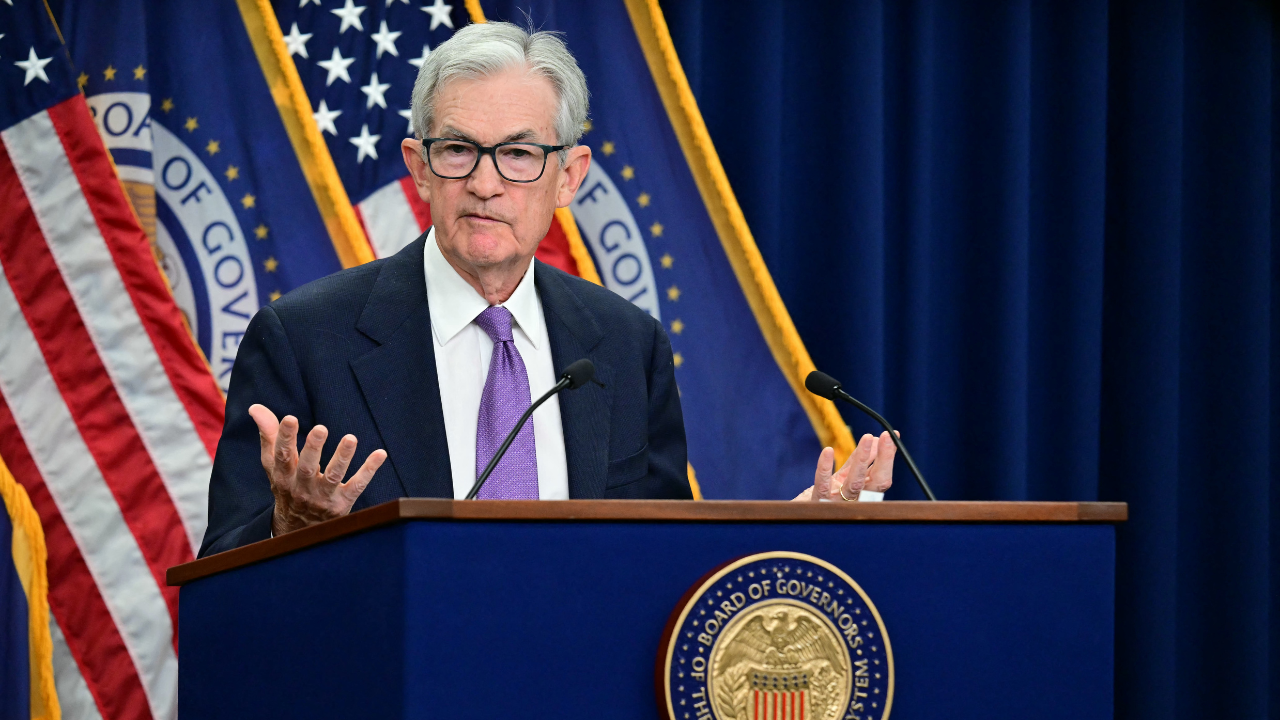
Powell, speaking at a press conference following the FOMC meeting, acknowledged the slowing pace of job growth. The Bureau of Labor Statistics (BLS) reported in September that the unemployment rate had edged up to 4.4%, and job gains had slowed significantly earlier in the year. However, Powell cautioned against interpreting this as a sign of imminent economic distress. He pointed to factors such as declining labor force participation – driven in part by lower immigration – and potential overstatements in the BLS’s monthly jobs figures.
“We expect it, and they correct it twice a year,” Powell said, referring to the BLS’s periodic revisions of its employment data. “The last time they corrected it, we thought the correction would be eight or nine hundred thousand… and that was exactly what happened. We think that has persisted.” This acknowledgement of potential data inaccuracies adds a layer of complexity to the interpretation of recent labor market trends.
Impact on Housing and Broader Economic Outlook
The Fed’s cautious approach is also informed by concerns about the limited impact of further rate cuts on certain sectors of the economy. Powell specifically noted that rate cuts are unlikely to provide a significant boost to the struggling housing sector. This suggests the Fed is prioritizing a broader assessment of economic conditions rather than targeting specific industries with monetary policy.
The upcoming November jobs report, scheduled for release on Tuesday, will be closely scrutinized by investors and economists. Economists surveyed by LSEG project that 40,000 jobs were added during the month. However, the BLS has announced it will not release a separate report for October, due to disruptions caused by the recent government shutdown. Data previously unavailable for October will be incorporated into the November report, potentially adding to its significance.
Global Implications and Fed Independence
Beyond domestic considerations, the Fed is also mindful of the potential global fallout from any perceived weakening of its independence. Kevin O’Leary, Chairman of O’Leary Ventures, recently warned about the dangers of political influence on the Fed, arguing that such interference could undermine confidence in the central bank and destabilize financial markets. Maintaining the Fed’s independence is crucial for ensuring its ability to make objective decisions based on economic data, rather than political pressures.
The global economic landscape remains fragile, with the International Monetary Fund (IMF) recently projecting global growth of 3.0% for both 2023 and 2024 – a rate significantly below the historical average. In this context, the Fed’s cautious approach to rate cuts reflects a broader concern about maintaining financial stability and avoiding unintended consequences.
For businesses, the Fed’s signaling suggests a period of continued, albeit moderate, interest rates. This environment will likely require companies to focus on operational efficiency and prudent financial management. Investors should anticipate continued volatility in financial markets as they assess the evolving economic outlook and the Fed’s policy response. Consumers can expect borrowing costs to remain relatively stable, but should also be prepared for a potentially slower pace of economic growth.