Pope León XIV in Turkey: Dialogue, Unity & Faith’s Roots in Iznik
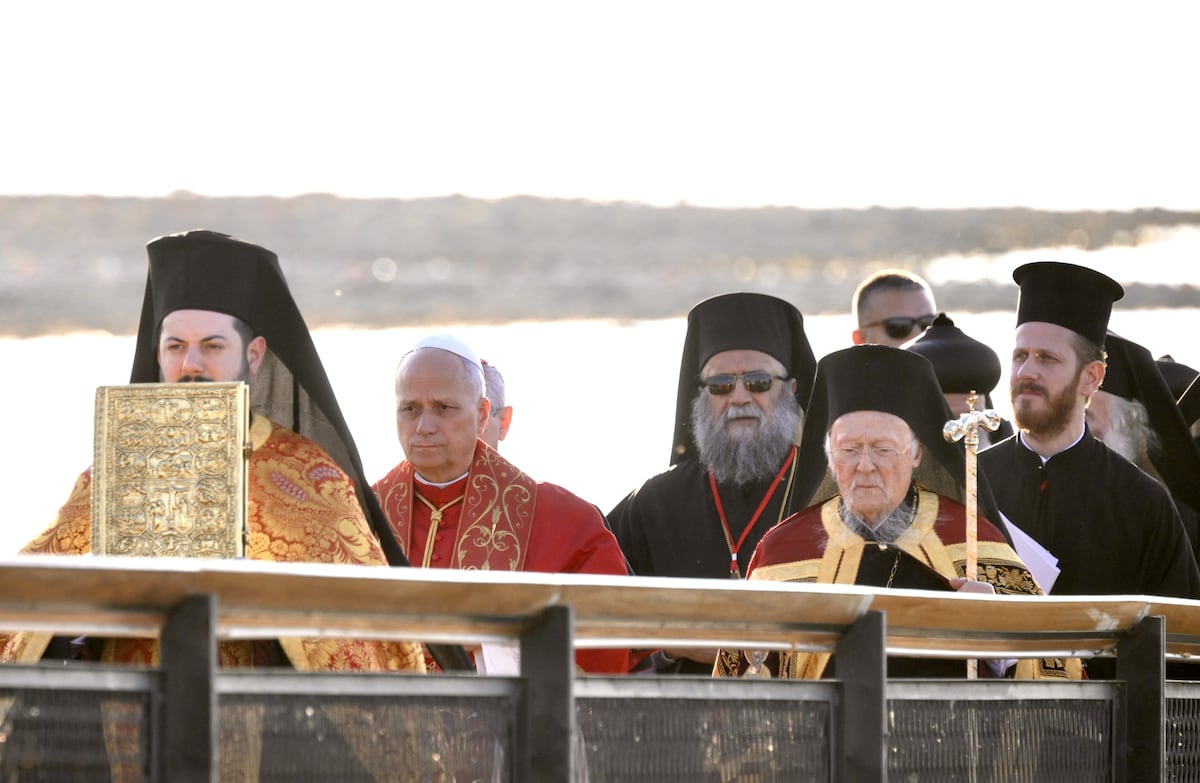
Pope Francis Seeks Common Ground in Turkey, Echoes of Ancient Divisions
IZNIK, Turkey – The scent of olives and the call to prayer hung in the air as Pope Francis became the first pontiff to visit the ancient city of Iznik, once known as Nicea, a location steeped in Christian history and shadowed by centuries of religious division. His visit, part of a larger trip encompassing Turkey and Lebanon, underscored a message of unity and interfaith dialogue, even as the world grapples with escalating conflicts and rising religious tensions.
A City Forged in Faith, Fractured by History
Iznik, a tranquil town nestled beside a shimmering lake, holds immense significance for Christians. It was here, in 325 AD, that the First Council of Nicaea convened, a pivotal moment in the development of Christian doctrine. The council, called by Roman Emperor Constantine, sought to resolve disputes over the nature of Christ – specifically, whether Jesus was divine or a created being. The resulting Nicene Creed, still recited by Christians worldwide, established a foundational statement of faith. Today, little remains of the original palace where the council met, but the foundations of the 5th-century Basilica of Saint Neophytos, remarkably preserved after centuries submerged in the lake, offer a tangible link to that era.
The Pope’s presence in Iznik wasn’t simply a historical pilgrimage. It was a deliberate act of ecumenical outreach. He celebrated a joint prayer service with Orthodox patriarchs, a symbolic gesture aimed at bridging the chasm that separated the Eastern and Western churches since the Great Schism of 1054. However, the path to reunification remains fraught with challenges, as evidenced by the absence of Patriarch Kirill of Moscow, a reflection of the deep divisions within Orthodoxy exacerbated by the ongoing war in Ukraine.
A Call for Dialogue Amidst Global Strife
Pope Francis’s message resonated with a plea for understanding and collaboration in a world increasingly defined by conflict. “There exists a universal brotherhood, regardless of ethnicity, nationality, religion or opinion,” he declared, emphasizing the responsibility of religious leaders to foster recognition and respect. He cautioned against the misuse of religion to justify violence, condemning “fundamentalism and fanaticism” in all its forms. This sentiment is particularly poignant given the current geopolitical landscape, where faith is often invoked to fuel conflict. According to a Pew Research Center study, religious tensions were a factor in 22% of armed conflicts globally in 2022.
The pontiff’s words also touched upon the delicate balance between preserving the core tenets of faith and adapting to evolving cultural contexts. He urged a distinction between the “essence of faith” and the “historical formulas” used to express it, acknowledging that these expressions are “always partial and provisional.” This nuanced approach aligns with his broader efforts to modernize the Catholic Church and foster a more inclusive dialogue with other faiths.
A Silence on Gaza, A Focus on Universal Values
While the Pope’s address touched on broad themes of peace and unity, some observers noted the absence of any direct mention of the ongoing crisis in Gaza. Turkish media outlets reportedly expressed disappointment at this omission, highlighting the sensitivity of the issue in the region. However, the Pope’s emphasis on universal brotherhood and the rejection of violence can be interpreted as a broader condemnation of all forms of conflict, including the one unfolding in the Middle East.
The historical weight of Nicaea also served as a reminder of the complex relationship between faith and power. Emperor Constantine’s convening of the council marked the first instance of imperial involvement in Christian affairs, a precedent that would shape the church’s trajectory for centuries. Constantine, seeking to unify his empire, recognized the potential of Christianity as a unifying force, but also sought to control its development. This historical dynamic underscores the ongoing tension between religious autonomy and political influence.
Echoes of the Past, Challenges for the Future
Pope Francis’s visit to Iznik wasn’t merely a symbolic gesture; it was a call to action. He invoked the spirit of the First Council of Nicaea, urging a return to the foundational principles of Christian faith while acknowledging the need for ongoing dialogue and adaptation. The challenges facing the global community – from armed conflicts to religious extremism – demand a renewed commitment to understanding, respect, and collaboration. As the Pope prepares to continue his journey to Lebanon, a nation grappling with its own set of complex challenges, his message of hope and unity carries particular resonance. The success of his mission, and the broader pursuit of interfaith harmony, will depend on the willingness of leaders and individuals alike to embrace the spirit of Nicaea – a spirit of seeking common ground amidst difference, and building bridges across divides.