Pope Amends Vatican Law After First Woman Appointed Governor
### Vatican Law Amended to Reflect Female Leadership
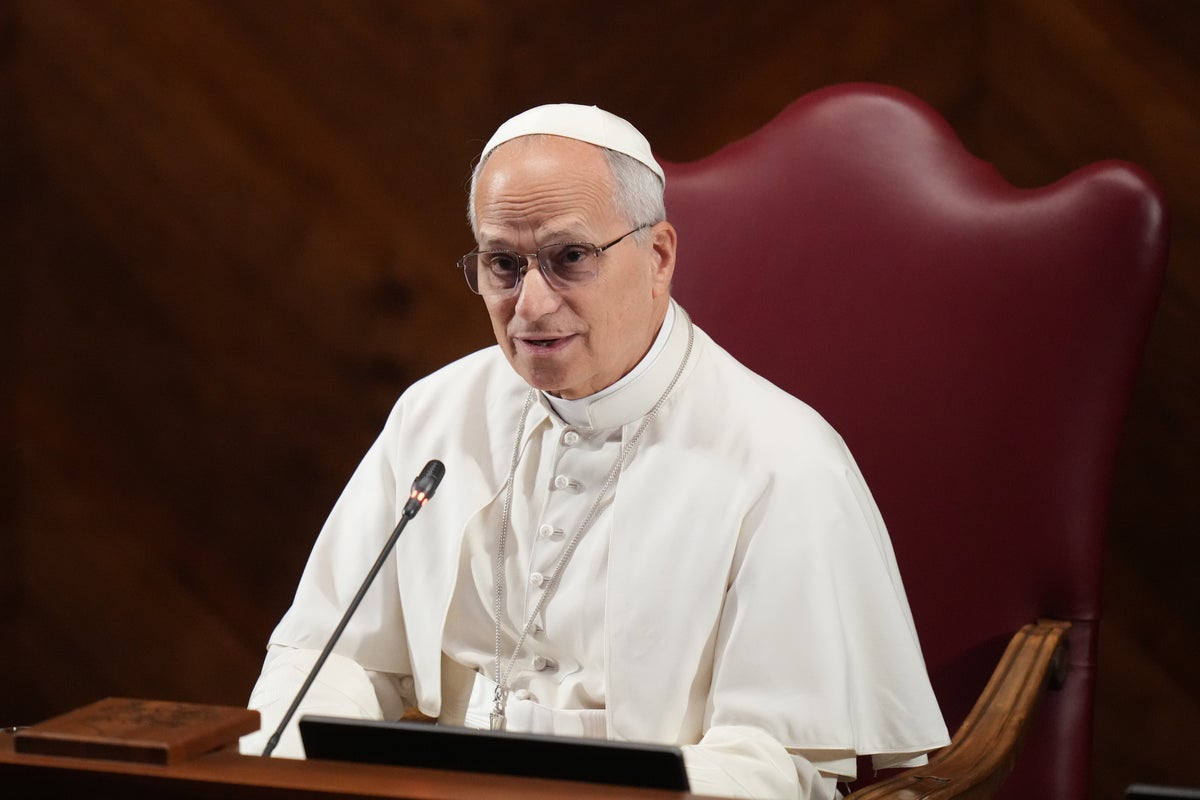
VATICAN CITY (AP) — Pope Leo XIV has signed a decree amending a Vatican law, a move that effectively cements the precedent set by Pope Francis in appointing women to high-ranking administrative roles within the Holy See. The most recent adjustment specifically addresses a technical oversight in a 2023 law that had stipulated the president of the Vatican City State administration must be a cardinal. This stipulation created an immediate challenge following Pope Francis’s February appointment of Sister Raffaella Petrini, a 56-year-old Italian nun, to lead the administration of the 44-hectare territory.
Petrini’s appointment, groundbreaking in its own right as the first time a woman has governed the Vatican City State, highlighted an administrative and legal quandary that had not previously existed. Her predecessors, without exception, had all been ordained priests who had also attained the rank of cardinal. This created an issue of access for Petrini to certain internal Vatican bodies, such as the closed-door meetings of cardinals that precede papal conclaves. For instance, Petrini was reportedly not invited to deliver the economic status report of the Vatican City State during the general congregations held in the spring, as these sessions are exclusively for cardinals.
The amendment, signed into effect on Friday, rectifies this specific legal snag, allowing a non-cardinal to hold the presidency of the Vatican administration. In his accompanying letter, Pope Leo XIV suggested that Petrini’s appointment was not a singular, exceptional event, but rather indicative of a broader shift. He emphasized that the governance of the territory is a form of service and responsibility that requires communion within the Church’s hierarchy.
“This form of shared responsibility makes it appropriate to consolidate certain solutions that have been developed so far in response to governance needs that are proving increasingly complex and pressing,” Pope Leo XIV wrote in his decree, referencing the ongoing efforts to adapt Vatican administration to contemporary challenges.
### Expanding Roles for Women Amidst Hierarchical Traditions
Sister Raffaella Petrini’s office oversees critical functions for the Vatican, including the revenue generation from institutions like the Vatican Museums. Her responsibilities also extend to managing the city state’s infrastructure, telecommunications, and healthcare services. Furthermore, the Vatican City State commission she chairs is tasked with approving legislation governing the territory, as well as endorsing its annual budgets and financial reports.
Pope Francis’s 12-year papacy has been marked by a discernible effort to elevate women to positions of greater influence within the Vatican’s decision-making structures. This includes their inclusion in various administrative bodies and committees. However, while these advancements have been noted in managerial and administrative spheres, there has been no indication of any shift in the Church’s long-standing tradition of reserving the priesthood exclusively for men. The hierarchy remains distinctly male, and rules barring women from ministerial ordination have not been altered.
### A Synodal Path Towards Broader Participation
These administrative adjustments by Pope Leo XIV echo the broader themes of synodality and co-responsibility that have been central to Pope Francis’s pontificate. The Synod on Synodality, a multi-year process initiated by Pope Francis, aims to foster greater participation and dialogue among all members of the Catholic Church, laity and clergy alike. The process, which began in 2021, has seen consultations and assemblies at diocesan, national, and continental levels, culminating in a global Synod of Bishops assembly in Rome.
The ultimate goal of this synodal journey is to discern how the Church can better live out its mission of communion, participation, and mission in the 21st century. A summary report from the Synod’s assembly in October 2023 proposed concrete reforms, including the establishment of new ministries for the laity and increased lay involvement in decision-making processes. It also called for improved processes to evaluate the performance of bishops and a refined approach to discerning “controversial” issues within the Church. The report emphasized that the Synod envisions a Church where all believers share a greater sense of co-responsibility in the evangelizing mission.
### Global Trends in Religious Leadership and Governance
The Vatican’s recent administrative adjustments and ongoing synodal process align with broader global trends in religious and institutional governance, where there is increasing pressure for greater inclusivity and representation. While the Catholic Church maintains distinct theological and structural traditions, the administrative changes reflect an awareness of evolving societal expectations and the need for effective governance in complex global environments.
The Vatican City State, a sovereign entity recognized internationally, operates within a unique geopolitical context. According to data from the World Bank, Vatican City has a population of approximately 800 people, making it one of the smallest sovereign states in the world. However, its influence extends far beyond its physical borders, making its internal governance and administrative decisions subjects of global interest. The inclusion of women in leadership roles, even in administrative capacities, signals a continued evolution in how this ancient institution navigates modernity and its own internal structures. The legal amendments introduced by Leo XIV underscore a pragmatic approach to governance, ensuring operational continuity and adapting to the reality of a female-led administration, while the synodal process invites a deeper reflection on the roles and participation of all the faithful in the Church’s mission.