One Flew Over the Cuckoo’s Nest: Michael Douglas on the Film’s Enduring Relevance
“Cuckoo’s Nest” Still Rages Against the Machine: Michael Douglas Reflects on a Timeless Rebellion
Fifty years after its release, One Flew Over the Cuckoo’s Nest remains a potent cultural touchstone, resonating with audiences in ways few films achieve. For Michael Douglas, the film isn’t just a career highlight – it’s a mirror reflecting contemporary anxieties about power, individuality, and the creeping influence of institutions. The actor-producer, now 81, spoke with worldys.news about the film’s enduring legacy, his father Kirk Douglas’s initial involvement, and the serendipitous casting that brought the story to life.
From Vietnam to the Ward: A Political Awakening
Douglas’s early career was steeped in the political turmoil of the Vietnam War era, with roles in films like Hail, Hero! and Summertree. This backdrop informed his decision to take the leap into producing with Cuckoo’s Nest, a story that felt inherently rebellious. “It’s about as classic a story as we’ll ever have and it seems timeless now, with what’s going on in our country politically, about man versus the machine and individuality versus the corporate world,” Douglas explained via Zoom from his home in Santa Barbara. He acknowledges the film’s relevance extends beyond American borders, observing a global rise in “autocratism” and a yearning for strong figures promising simple solutions during times of insecurity.
The film’s central conflict – the battle between the free-spirited Randle McMurphy (Jack Nicholson) and the controlling Nurse Ratched (Louise Fletcher) – continues to strike a nerve. Douglas doesn’t shy away from drawing parallels to current events, though he stops short of directly naming names. “Not just in America but we see autocratism continue around the world,” he said. “When we have insecurity, people tend to go to having an omnipotent figure that will solve everything.”
A Family Legacy and a Producer’s Fortuitous Rise
The story of Cuckoo’s Nest is inextricably linked to the Douglas family. Kirk Douglas, a Hollywood icon, had acquired the rights to Ken Kesey’s 1962 novel and even starred as McMurphy in a 1963 Broadway production. However, years of attempts to translate the story to the screen proved fruitless. Ultimately, he passed the torch to his son. “I never thought about producing but I said let me run with it and he was generous enough and kind enough to let that happen,” Douglas recalled. Remarkably, Douglas used half of his producing fee to compensate his father, resulting in Kirk Douglas earning more from Cuckoo’s Nest than from any other film in his illustrious career.
The production wasn’t without its challenges. Screenwriter Lawrence Hauben helped shape the script, and Douglas credits Czech director Miloš Forman with unlocking the film’s full potential. Forman, known for his humanistic approach, dissected the script with Douglas page by page, demonstrating a unique understanding of the material. The casting process was equally pivotal. Danny DeVito, a longtime friend of Douglas, was an early addition, but finding the right actor to portray Chief Bromden, the imposing Native American patient, proved more difficult.
Serendipity and Immersive Storytelling
The discovery of Will Sampson was pure chance. Douglas recounted a chance encounter with a used-car dealer and rodeo announcer who described a “biggest sonofabitch Indian” he’d ever seen. That led to Sampson, who embodied the character with a natural presence that captivated Douglas and Nicholson during their first meeting at Portland airport. “He looked at him and it was central casting,” Douglas said. “That was probably the most euphoric moment: how are we gonna find this guy, this character, and there he was.”
The production team further immersed themselves in the world of the film by shooting on location at an active psychiatric hospital in Oregon, even during the bleak midwinter months. Douglas emphasized the importance of authenticity, noting that the hospital director encouraged patient involvement in the crew. “We felt there was this need for the very verisimilitude and the cooperation,” he explained. The decision to integrate patients into the production, even employing an arsonist in the art department, was a calculated risk that ultimately enriched the film’s realism.
A Legacy of Rebellion and Artistic Triumph
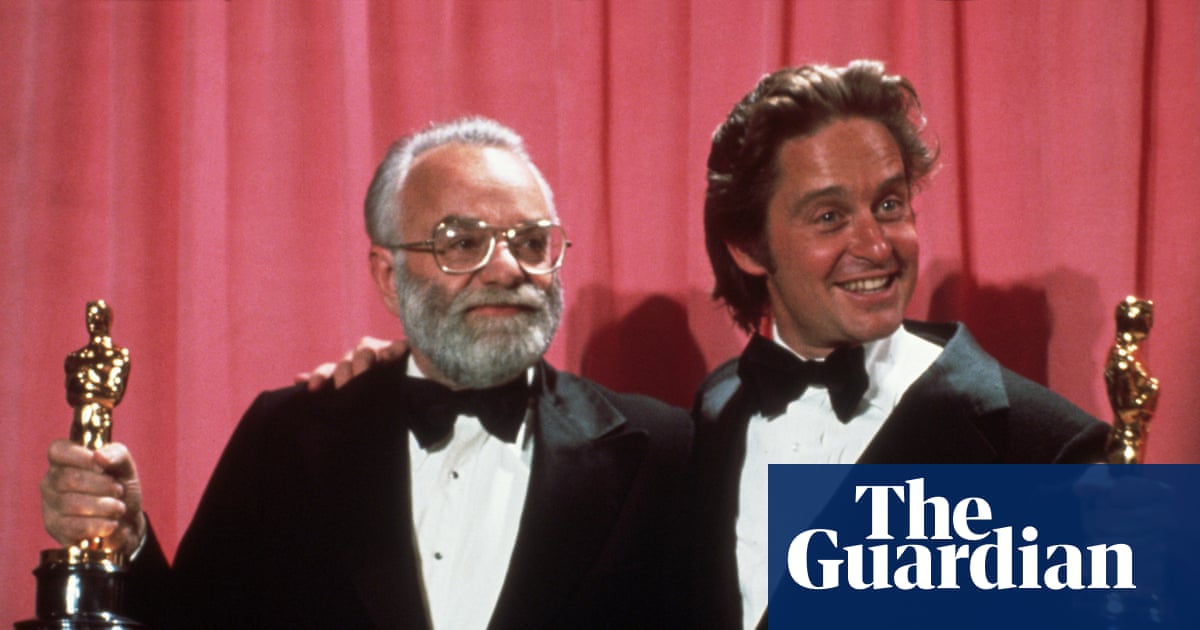
Despite being rejected by every major studio, One Flew Over the Cuckoo’s Nest went on to sweep the 50th Academy Awards, winning all five major categories: Best Picture, Director, Actor, Actress, and Screenplay. Steven Spielberg, whose Jaws was also a contender that year, recently admitted he would have voted for Cuckoo’s Nest.
The film’s impact extends beyond awards and accolades. According to Statista, One Flew Over the Cuckoo’s Nest grossed over $109 million domestically on a budget of just $4.4 million, solidifying its status as a box office success and a cultural phenomenon. Brad Dourif, who played Billy Bibbit, recalls Forman’s insistence on naturalistic performances, emphasizing the courage required for actors to be vulnerable and authentic. Dourif also highlighted Nicholson’s ability to foster a playful atmosphere on set, even during challenging scenes.
The film’s ending – McMurphy’s lobotomization and Chief Bromden’s defiant act of liberation – remains one of cinema’s most powerful and enduring moments. Douglas credits Jack Nitzsche’s haunting score and Christopher Lloyd’s emotionally resonant performance with amplifying the scene’s impact. “It was one of those pictures where we’re firing on all cylinders,” Douglas concluded. “We had a solid script, it was cast beautifully, very well directed, the score was great. My first movie as a producer, it lends me so much information for the rest of my career. I learned so much from that and I’m so proud to be sitting here talking to you about it 50 years later.”
Explore more on worldys.news: The Evolution of Mental Health Representation in Film