NASA Tests Mars Drones in Death Valley to Improve Navigation
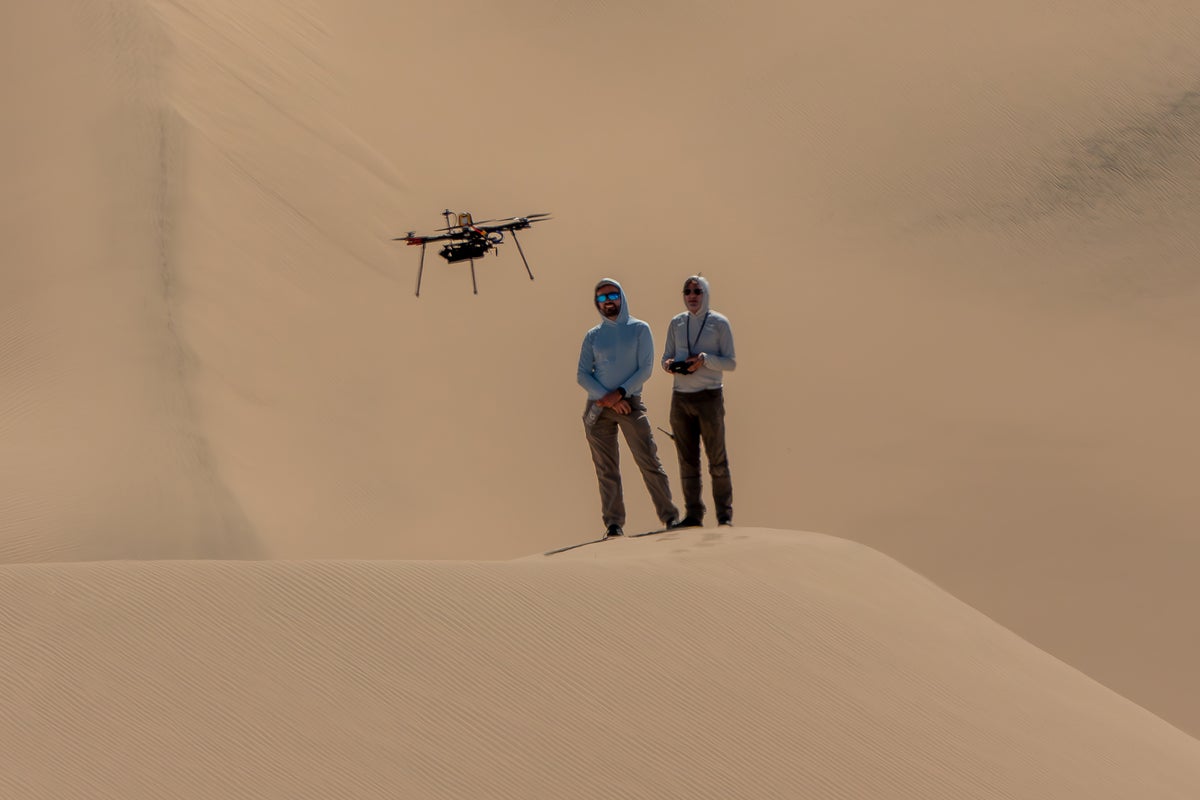
Dust and Determination: NASA’s Desert Trials Pave the Way for Future Martian Exploration
DEATH VALLEY NATIONAL PARK, California – The otherworldly landscape of Death Valley, a place synonymous with extremes, is once again serving as a crucial testing ground for NASA’s ambitions beyond Earth. In a continuation of a practice dating back to the Viking missions of the 1970s, engineers are subjecting next-generation drone technology to the harsh conditions of the Mojave Desert, meticulously preparing for the challenges of navigating the Red Planet. This isn’t simply about building better drones; it’s a testament to the enduring human drive to explore, adapt, and overcome the obstacles that lie between us and the stars.
The Ghosts of Flights Past: Learning from Ingenuity’s Legacy
The impetus for these latest trials stems directly from the experiences of Ingenuity, the small helicopter that accompanied the Perseverance rover to Mars in 2021. Ingenuity spectacularly exceeded expectations, completing 72 flights and proving the feasibility of powered, controlled flight in the thin Martian atmosphere. However, its mission ended in January 2024 after sustaining damage during a landing, a stark reminder of the unforgiving nature of the Martian terrain.
“Ingenuity was designed to fly over well-textured terrain, estimating its motion by looking at visual features on the ground,” explains Roland Brockers, a researcher and drone pilot at NASA’s Jet Propulsion Laboratory (JPL), in a recent statement. “But eventually it had to cross over blander areas where this became hard.” The featureless dunes, eerily similar to those found on Mars, proved particularly problematic, disrupting the helicopter’s ability to accurately assess its position and maintain stable flight. This vulnerability highlighted the need for more robust navigation systems capable of operating in visually monotonous environments.
Beyond the Dunes: A Multi-Park Approach to Martian Simulation
Death Valley isn’t the only US national park playing a role in this interplanetary preparation. NASA is leveraging the unique geological features of several protected areas to simulate a range of Martian conditions. At Mars Hill within Death Valley, a remnant of ancient lava flows provides a landscape reminiscent of volcanic regions on Mars. Meanwhile, researchers are also testing robotic systems at White Sands National Park in New Mexico, utilizing the park’s expansive dunes to evaluate the capabilities of legged robots like LASSIE-M – or “Legged Autonomous Surface Science In Analogue Environments for Mars.”
Lassie-M, a dog-like robot, is designed to scout potentially hazardous terrain, paving the way for safer rover exploration. Further east, at NASA’s Langley Research Center in Virginia, engineers are developing the Mars Electric Reusable Flyer, a large-scale drone with a propeller comparable in size to a small school bus. This ambitious project aims to create a versatile aerial platform capable of carrying substantial payloads across the Martian landscape.
The Geopolitical Stakes: A Renewed Space Race and the Pursuit of Resource Independence
This intensified focus on Martian exploration isn’t solely driven by scientific curiosity. A new space race is underway, fueled by both national prestige and the potential for resource acquisition. The United Nations Office for Outer Space Affairs (UNOOSA) estimates that the global space economy is projected to reach over $1 trillion by 2040, with a significant portion of that growth tied to the development of space-based resources.
Countries like China and India are rapidly expanding their space programs, challenging the long-held dominance of the United States and Russia. The ability to successfully navigate and utilize the resources of another planet – even if initially for scientific purposes – carries significant geopolitical weight. The development of advanced drone technology, as exemplified by NASA’s current testing, is therefore a critical component of maintaining a competitive edge in this evolving landscape.
Protecting Earth While Reaching for the Stars: A Symbiotic Relationship
The collaboration between NASA and the National Park Service underscores a broader principle: that advancements in space exploration can also benefit our understanding and preservation of Earth’s own fragile ecosystems. Death Valley National Park Superintendent Mike Reynolds emphasizes this point, stating that the park “is protected not just for its scenic beauty or recreational opportunities, but as a living laboratory that actively helps us understand desert environments and worlds beyond our own.”
The data gathered from these drone tests – particularly regarding the use of camera filters and new algorithms for safe landings – could also have applications for environmental monitoring and disaster response here on Earth. The same technologies used to navigate the challenging terrain of Mars could be adapted to assess damage after natural disasters, monitor remote ecosystems, or even assist in search and rescue operations.
As NASA continues to push the boundaries of space exploration, the lessons learned in the deserts of Earth will undoubtedly prove invaluable. The pursuit of knowledge beyond our planet is not just about reaching for the stars; it’s about enriching our understanding of the world we already inhabit and ensuring a sustainable future for generations to come.