Max Whitlock: Olympic Champion to Target 2028 Los Angeles Games
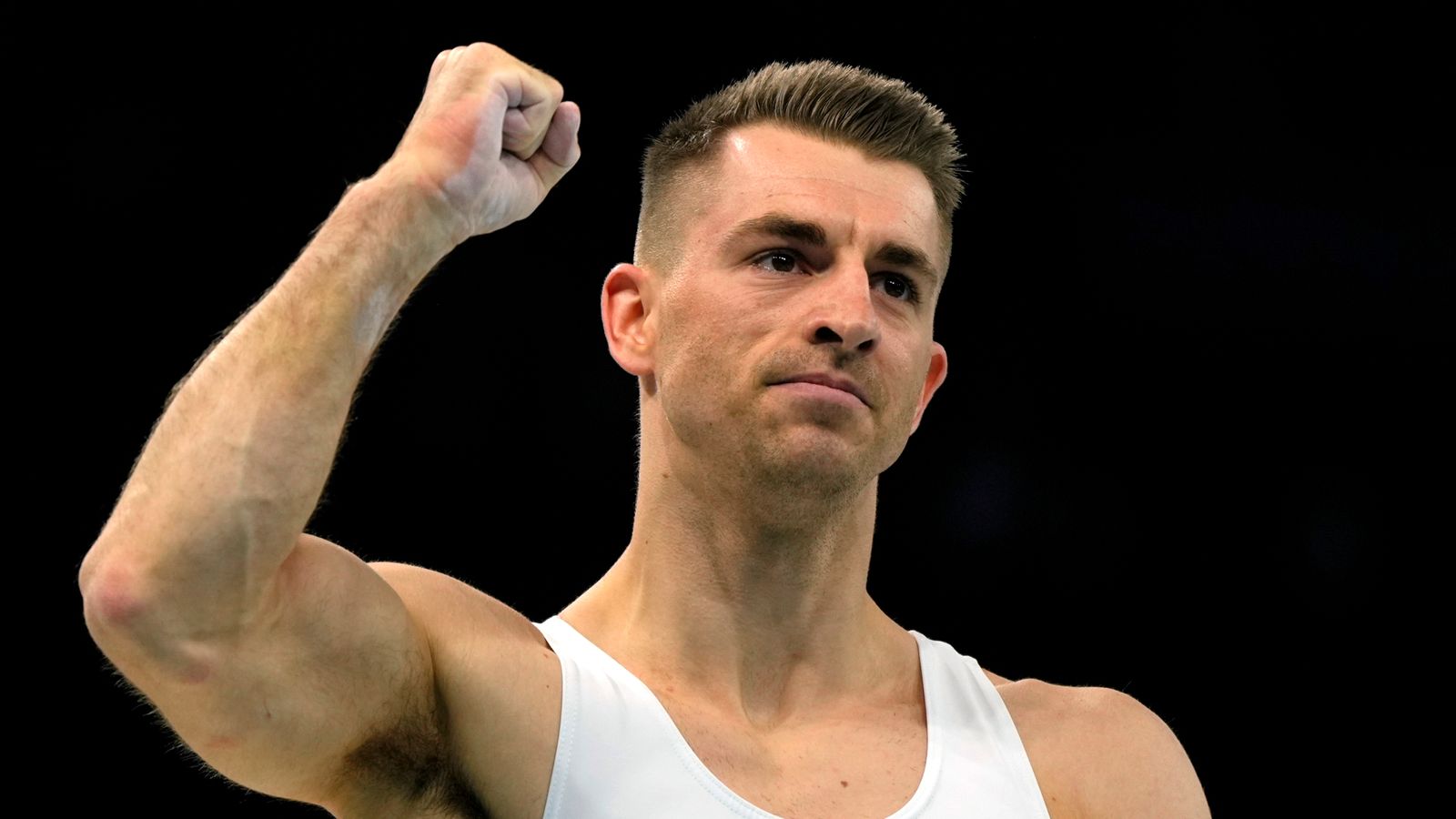
Whitlock Reverses Retirement, Sets Sights on 2028 Los Angeles Olympics
In a stunning reversal, Max Whitlock, Great Britain’s most decorated gymnast, has announced his intention to come out of retirement and compete at the 2028 Olympic Games in Los Angeles. The three-time Olympic gold medalist initially declared the 2024 Paris Games as his farewell, but a sense of unfinished business and lingering ambition have prompted a remarkable return to the elite level.
Whitlock’s decision comes after a performance in Paris that, while solid, didn’t yield the additional medal success he craved. The 31-year-old admitted the immediate aftermath of the Games sparked a feeling of dissatisfaction. “I was sitting in a station with my family… and I said to them, ‘I’m not done, I can’t finish it like that’,” Whitlock told The Times. “It was the raw emotion of getting back to the UK and just feeling like I can’t end it like that. Something just didn’t feel right.”
A Legacy Forged in Gold: Reflecting on Whitlock’s Achievements
Whitlock’s impact on British gymnastics is undeniable. He burst onto the scene at the 2012 London Olympics, securing bronze medals in the team all-around and on the pommel horse, contributing significantly to the host nation’s golden summer. However, it was in Rio de Janeiro in 2016 where he cemented his status as a global superstar. He became Britain’s first individual Olympic gold medalist in artistic gymnastics, triumphing in both the pommel horse and floor exercise. Adding to his Rio haul, Whitlock also secured a bronze medal in the all-around competition, a first for Great Britain in 108 years. He then successfully defended his pommel horse title at the delayed Tokyo 2020 Games in 2021.
Beyond the Olympics, Whitlock boasts an impressive collection of 32 major international medals, including three World Championship golds, four European Championship titles, and four Commonwealth Games triumphs. His consistency and dedication have made him a role model for aspiring gymnasts across the UK and beyond. His success has coincided with a period of significant growth for British Gymnastics, with increased participation and investment in the sport. You can find more information about British Gymnastics here.
The Challenge Ahead: A Younger Generation and a Competitive Landscape
The road to Los Angeles will be challenging. Whitlock will be 35 by the time the Games arrive, placing him among the elder statesmen of the sport. He will need to contend with a rising generation of gymnasts, including reigning world champion Jake Jarman, who is nine years his junior. Jarman’s emergence signals a shift in the landscape of British gymnastics, and Whitlock will need to demonstrate he can still compete at the highest level against these younger, dynamic athletes. The competition within the International Gymnastics Federation (FIG) is fierce, with athletes from nations like China, Russia (competing under a neutral flag), and the United States consistently pushing the boundaries of the sport.
Tactically, Whitlock’s strength lies in his exceptional pommel horse routine, renowned for its difficulty and precision. However, maintaining that level of performance requires relentless training and a meticulous attention to detail. The pommel horse is arguably the most technically demanding apparatus in men’s gymnastics, requiring immense core strength, flexibility, and spatial awareness. Whitlock’s ability to consistently execute complex sequences with minimal deductions has been the key to his success. He will also need to refine his routines on other apparatus to remain a competitive all-arounder, or strategically focus on his strongest events to maximize his medal potential.
Mental Fortitude and the Pursuit of Completion
Whitlock’s decision to return also speaks to his mental resilience. Following his Olympic triumph in Tokyo, he took an 18-month break from competition to address mental health struggles, a testament to the pressures faced by elite athletes. His willingness to prioritize his well-being and seek support is commendable, and his return to the sport demonstrates a renewed sense of purpose and determination.
“Unfinished is the exact word,” Whitlock stated, emphasizing his desire to conclude his career on his own terms. “My career’s just not complete. I thought, ‘It’s the right time for me to retire but it’s not the right way’.” This sentiment underscores the emotional investment athletes have in their sport and the difficulty of letting go when they feel they have more to give. According to Statista, gymnastics consistently ranks among the most-watched Olympic sports, drawing a global audience of hundreds of millions, highlighting the public’s enduring fascination with the discipline.
Whitlock’s return is not just a personal quest; it’s a potential boost for the entire British Gymnastics program. His presence will undoubtedly inspire younger athletes and elevate the profile of the sport in the UK. The journey to Los Angeles will be arduous, but if anyone can overcome the challenges, it’s Max Whitlock, a gymnast who has consistently defied expectations and rewritten the record books.