Lost Trojan War Story Found in Ancient British Mosaic
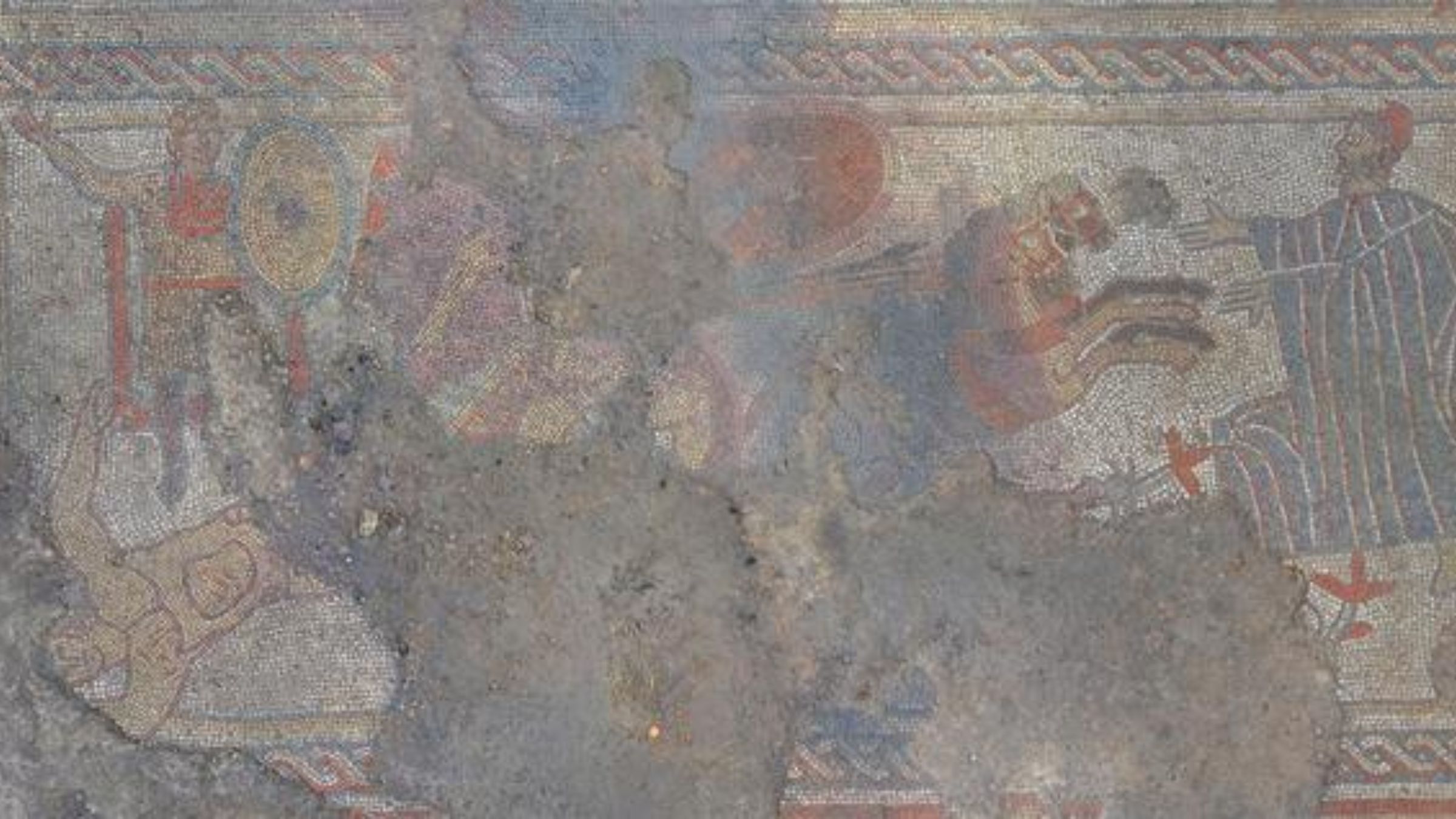
Lost Trojan War Tale Unearthed in British Mosaic Offers New Insights into Ancient Storytelling – and the Power of Narrative on Wellbeing
A stunning Roman mosaic discovered in Britain isn’t just a beautiful artifact; it’s a window into how stories – even those millennia old – shape our understanding of conflict, loss, and resilience. The mosaic, dubbed the Ketton Mosaic, depicts scenes from the Trojan War, but deviates from the well-known account in Homer’s Iliad, instead drawing inspiration from a lesser-known tragedy by the Athenian playwright Aeschylus, titled “Phrygians.” This discovery highlights the enduring human need for narrative, and subtly, the impact storytelling has on our psychological wellbeing.
Beyond Homer: A Different Perspective on Ancient Grief
For centuries, Homer’s Iliad has been the definitive telling of the Trojan War, a tale of gods, heroes, and a decade-long siege. However, the Ketton Mosaic reveals that other versions of the story circulated in the ancient world, offering alternative interpretations of key events. Researchers, led by historian Jane Masseglia at the University of Leicester, found discrepancies between the mosaic’s depictions and Homer’s epic. Specifically, the mosaic portrays Achilles accepting gold as ransom for Hector’s body – a detail explicitly rejected by Achilles in the Iliad – and shows Achilles dragging Hector’s body around Patroclus’ tomb, rather than the city walls of Troy as Homer describes.
These differences aren’t mere artistic license. They point to Aeschylus’ “Phrygians,” a play now existing only in fragments, as the source material. “This is an exciting piece of research, untangling the ways in which the stories of the Greek heroes Achilles and Hector were transmitted not just through texts but through a repertoire of images,” explains Hella Eckhardt, an archaeologist at the University of Reading, who was not involved in the study. The mosaic, measuring 33 feet by 17 feet and likely adorning the dining room of a large Roman villa, suggests that even in Roman Britain, individuals were engaging with diverse interpretations of classical mythology.
The Psychological Impact of Narrative: Why Stories Matter
While seemingly an archaeological curiosity, the Ketton Mosaic offers a fascinating parallel to modern understandings of the power of narrative. Psychologists have long recognized the crucial role stories play in human cognition and emotional processing. Narratives help us make sense of the world, understand complex emotions, and develop empathy. The different versions of the Trojan War, as exemplified by Homer and Aeschylus, demonstrate how the same events can be framed in ways that elicit different emotional responses.
Consider the impact of grief, a central theme in the Trojan War saga. Both the Iliad and “Phrygians” grapple with the loss of Hector and Patroclus, but the nuances in their portrayals – particularly regarding Achilles’ acceptance of ransom – likely shaped how audiences understood and processed the characters’ grief. This is relevant today, as the Centers for Disease Control and Prevention (CDC) emphasizes the importance of healthy coping mechanisms for grief, including finding meaning and connection through shared stories and support networks.
Roman Britain and the Wider Classical World: A Connected Culture
The mosaic’s artistic style further supports its connection to Aeschylus. Researchers found that the top panel of the mosaic was based on a design used on a Greek pot dating back to Aeschylus’ time – 800 years before the mosaic was created. Other elements incorporated designs from older silverware, coins, and pottery from Greece, Turkey, and Gaul. This demonstrates that Romano-British craftspeople weren’t isolated but were part of a broader network of artistic and cultural exchange.
“Romano-British craftspeople weren’t isolated from the rest of the ancient world, but were part of this wider network of trades passing their pattern catalogues down the generations,” explains Masseglia. “At Ketton, we’ve got Roman British craftsmanship but a Mediterranean heritage of design.” This interconnectedness highlights the importance of cultural exchange in shaping artistic expression and, by extension, the narratives that define a society.
The Enduring Relevance of Ancient Stories for Modern Wellbeing
The discovery of the Ketton Mosaic serves as a potent reminder of the enduring power of storytelling. In a world grappling with increasing rates of mental health challenges – the World Health Organization estimates that nearly one billion people live with a mental disorder – the ability to connect with narratives that explore universal themes of love, loss, and resilience is more crucial than ever. The Ketton Mosaic isn’t just a glimpse into the past; it’s a testament to the timeless human need for stories that help us understand ourselves and the world around us. For more information on supporting your mental wellbeing, explore resources available on worldys.news/mental-health.