Lancia Ypsilon’s European Flop: High Prices, Lost Identity
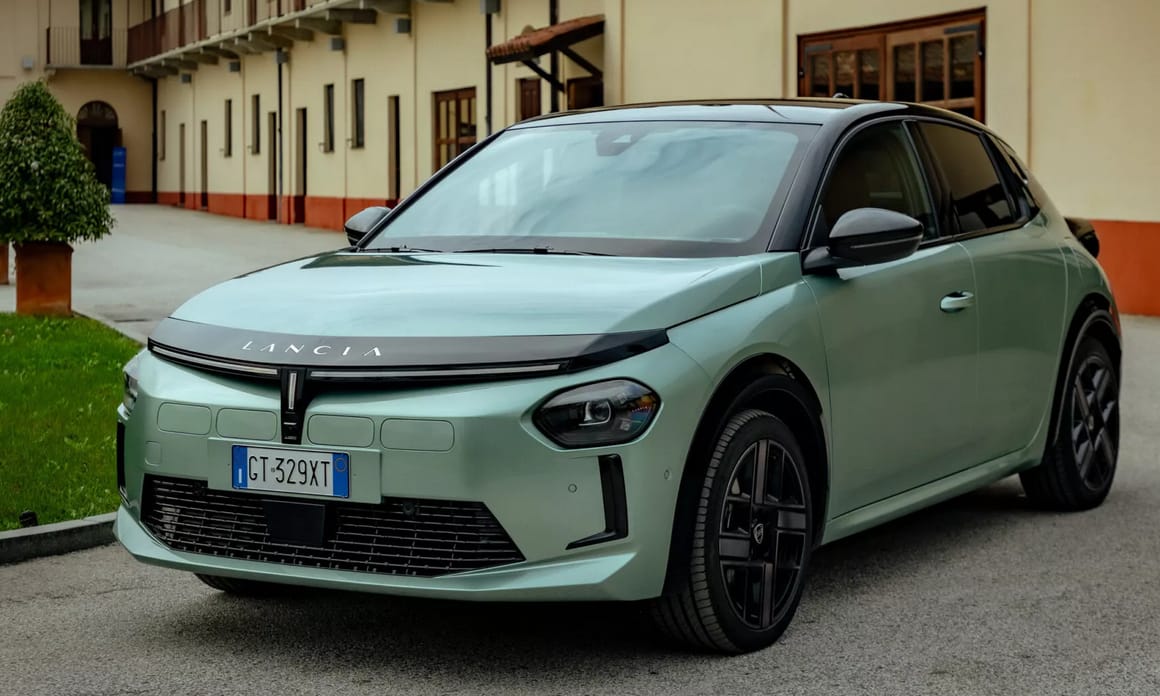
Lancia’s Ypsilon Relaunch Stumbles as Pricing and Identity Concerns Mount
MILAN – The much-anticipated return of Italian automotive marque Lancia to the European stage with its new Ypsilon model has hit an early snag. Initial sales figures for its reintroduction year, 2025, paint a stark picture, with just 8,713 units sold across Europe. Compounding the challenge, more than 80% of these sales were confined to Lancia’s home market in Italy, raising questions about its ambitious pan-European revival.
Market analysts point to a cocktail of factors hindering the Ypsilon’s broader appeal: an ambitious pricing strategy, muddled brand positioning, and a notably constrained product offering. For a brand that once epitomized Italian elegance and motorsport prowess, its re-entry into the crucial compact car segment demands a clear and compelling proposition, which experts say is currently lacking.
Price Tag Shock for Small Car Segment
At the heart of Lancia’s struggle appears to be its pricing. The top-tier Cassina variant of the new Ypsilon commands a price tag nearing €40,000. This figure has reportedly “shocked” consumers, especially within the small car segment where value for money is often the decisive factor for buyers.
The absence of more accessible entry-level models further exacerbates the issue, effectively narrowing the target demographic. Prospective buyers looking for options under €20,000 will likely have to wait until 2026, a delay that could prove costly in a fast-moving market. Meanwhile, the car’s underlying technology, featuring a PureTech engine, and its refreshed design have yet to fully win over either industry critics or the brand’s loyalists, many of whom feel the new Ypsilon has strayed from Lancia’s distinctive historical character.
An Identity Crisis Beyond Borders
The brand’s efforts at international expansion have faced significant headwinds. A decision to relocate production to Spain and a perceived shift in the model’s identity have led many to suggest that Lancia is losing touch with its Italian roots. Dealerships across Europe are reporting lukewarm interest, with consumers often gravitating towards more established and familiar competitors.
The European compact car market is fiercely competitive, dominated by well-known and trusted models. Vehicles like the Skoda Fabia, Peugeot 208, and Opel Corsa continue to comfortably outsell the new Ypsilon, highlighting the scale of the challenge for Lancia to carve out its own space and justify its premium.
The Path Forward: Reimagining Strategy
For Lancia to navigate this early turbulence and solidify its place as a genuine European contender, industry experts believe a fundamental rethink is necessary. A revised pricing strategy is paramount, coupled with a clearer, more coherent communication of what Lancia represents in the modern automotive landscape.
Recommendations include:
- Introducing more affordable, accessible variants: Crucial for penetrating the price-sensitive small car segment.
- Developing a more distinctive stylistic direction: To reconnect with the brand’s heritage while appealing to contemporary tastes.
- Clarifying brand values: Articulating a strong identity that resonates with consumers beyond Italy.
The coming months will be critical for Lancia as it seeks to move beyond its domestic strongholds and prove that its grand return can translate into sustainable success across Europe. The brand’s ability to adapt its strategy will not only define the Ypsilon’s future but also the broader prospects for one of Italy’s most storied automotive names in a rapidly evolving global market.