Karnataka CM Race: D K Shivakumar to Replace Siddaramaiah After Winter Session?
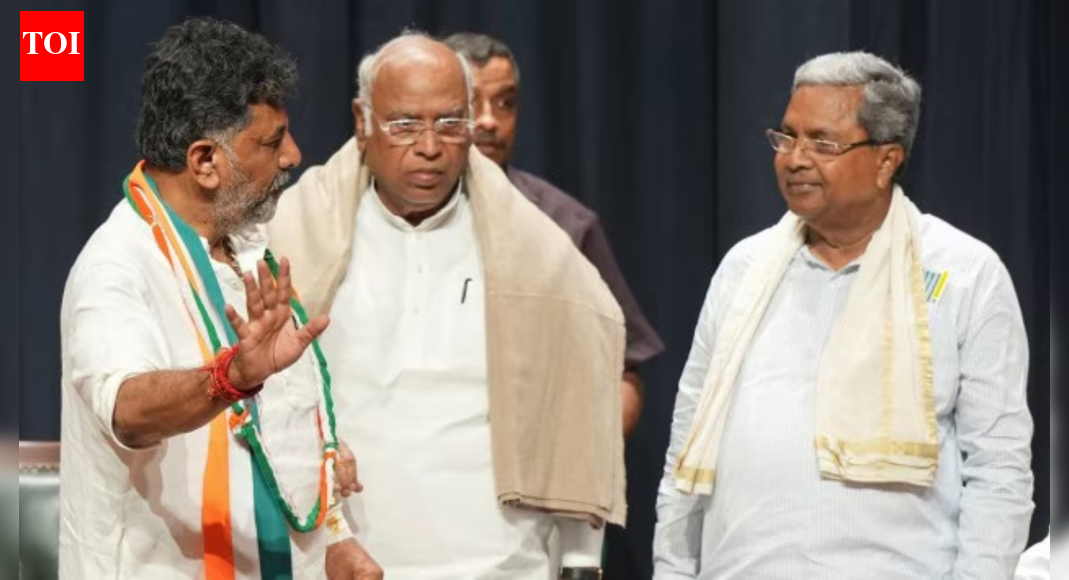
Karnataka’s Shifting Sands: Deputy CM’s Ambitions Stir Political Currents in India
Bengaluru, India – A quiet dinner amongst Karnataka state legislators has ignited a fresh wave of speculation regarding a potential change in leadership within the southern Indian state. Deputy Chief Minister D.K. Shivakumar, a prominent figure in the Indian National Congress party, is increasingly being touted as a future Chief Minister, with some within the ruling party openly predicting his ascension after the current winter session of the state legislature concludes. The subtle power play unfolding in Karnataka offers a fascinating glimpse into the complex dynamics of Indian regional politics, and the delicate balance of power within one of the country’s most significant states.
A Dinner and a Declaration: Fueling the Succession Talk
The catalyst for the renewed speculation was a late-night gathering on Thursday, attended by over 50 Congress legislators, including several ministers, and notably, two former Bharatiya Janata Party (BJP) MLAs who recently defected to the Congress. While officially downplayed as a casual social event, the dinner hosted by Shivakumar has been interpreted by many as a demonstration of support and a subtle flexing of political muscle. Iqbal Hussain, a Congress MLA from Ramanagara, publicly stated his belief that Shivakumar will become Chief Minister immediately following the legislative session, adding significant weight to the growing narrative.
“He will become (CM) after the session, he will become,” Hussain declared to reporters, dismissing any suggestion that the gathering was merely a friendly get-together. “What’s wrong with it?” This bold pronouncement, coming from a sitting MLA, underscores the undercurrent of ambition and positioning within the Karnataka Congress. The timing is particularly noteworthy, coinciding with the government surpassing the halfway mark of its five-year term on November 20th – a moment many had anticipated would trigger discussions about a potential leadership transition.
The situation is further complicated by a long-standing understanding, reportedly brokered during the 2023 state elections, that suggested a possible power-sharing arrangement between current Chief Minister Siddaramaiah and Shivakumar. While never formally acknowledged, this perceived agreement has fueled speculation about a rotational leadership model. The Hindu reports that the dinner included attendees like K H Muniyappa, Mankal Vaidya, and Dr M C Sudhakar, highlighting the breadth of support Shivakumar appears to command.
Beyond Domestic Politics: The Geopolitical Significance of Karnataka
Karnataka isn’t simply a regional political battleground; it’s a crucial economic engine for India and a strategically important state. As a major hub for information technology, biotechnology, and manufacturing, Karnataka contributes significantly to India’s GDP. Its political stability – or lack thereof – has ripple effects across the Indian economy and impacts foreign investment. According to Statista, Karnataka’s Gross State Domestic Product (GSDP) was estimated at approximately 23.5 trillion Indian rupees in fiscal year 2023, representing roughly 5.8% of India’s total GDP. This makes it the sixth-largest state economy in India.
Furthermore, Karnataka shares borders with several other Indian states, and its political climate can influence regional dynamics. A smooth leadership transition is therefore vital not only for the state’s internal stability but also for maintaining broader regional harmony. The presence of former BJP MLAs at the dinner raises questions about shifting alliances and the potential for further political realignment in the state, a trend increasingly common in Indian politics.
The High Command’s Balancing Act: Maintaining Party Discipline
Recognizing the potential for disruption, the Congress high command in Delhi has been actively attempting to manage the internal tensions. Recent breakfast meetings between Siddaramaiah and Shivakumar, orchestrated by the central leadership, were widely interpreted as a signal of restraint and a desire to project an image of unity. However, these gestures appear to have done little to quell the underlying ambitions and strategic maneuvering.
Hussain emphasized the importance of party discipline, stating that the final decision rests with the central leadership and that all members must abide by their ruling. This underscores the hierarchical nature of the Indian National Congress and the significant influence wielded by the high command. The party’s ability to navigate this delicate situation will be a crucial test of its leadership and its capacity to maintain cohesion in the face of internal competition. The Congress party, historically a dominant force in Indian politics, is currently attempting to regain its national prominence, and a stable Karnataka is vital to that ambition.
A Global Trend: The Fragility of Coalition Governments
The political maneuvering in Karnataka reflects a broader global trend: the increasing fragility of coalition governments and the challenges of managing competing ambitions within ruling parties. Across the world, from Israel to Italy, we are witnessing instances of internal strife and power struggles that threaten political stability. According to a World Bank report on governance, countries with weak political institutions and high levels of corruption are particularly vulnerable to these types of challenges.
The situation in Karnataka, while specific to its local context, serves as a microcosm of these global dynamics. The interplay of personal ambition, regional interests, and central control highlights the complexities of governing in a diverse and rapidly changing world. The coming weeks will be critical in determining whether the Congress party can successfully navigate this internal challenge and maintain its grip on power in this strategically important Indian state.
The winter session of the Karnataka legislature, scheduled to conclude on December 19th, will undoubtedly be closely watched, not just by political observers in India, but by those interested in the evolving landscape of Indian politics and its implications for the region and beyond.