Japan Earthquake: 7.5 Magnitude Quake Triggers Tsunami, Injuries Reported
Japan Braces for Aftershocks Following Powerful Offshore Earthquake
TOKYO – A strong 7.5-magnitude earthquake rattled northern Japan late Monday, triggering a small tsunami and leaving more than two dozen people injured, prompting authorities to warn of potential aftershocks and the possibility of a larger, more devastating quake. The tremor, felt keenly across a wide swathe of the country, has reignited anxieties still raw from the 2011 disaster that crippled the Fukushima Daiichi nuclear power plant and claimed nearly 20,000 lives.
The earthquake struck at approximately 11:15 p.m. local time (1415 GMT) in the Pacific Ocean, roughly 80 kilometers (50 miles) off the coast of Aomori prefecture, Japan’s northernmost region. While initially reported as a 7.6 magnitude quake, the Japan Meteorological Agency (JMA) revised the figure down slightly. Despite the downgrade, the event served as a stark reminder of the seismic vulnerability of the island nation, situated along the volatile “Ring of Fire.”
Coastal Communities Assess Tsunami Damage
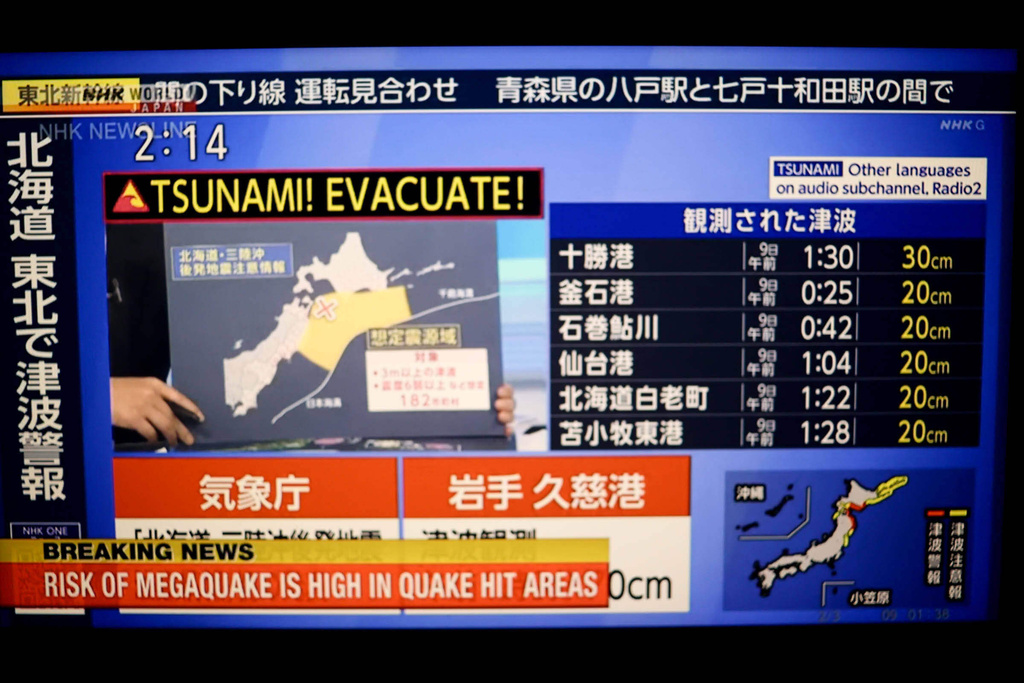
The immediate aftermath saw a tsunami of up to 70 centimeters (28 inches) wash ashore in Pacific coastal communities. Kuji port in Iwate prefecture, south of Aomori, recorded the highest wave, while other areas experienced surges of up to 50 centimeters. Authorities swiftly issued tsunami advisories, urging residents to evacuate to higher ground. Chief Cabinet Secretary Minoru Kihara emphasized the importance of heeding these warnings, noting that approximately 800 homes were left without power and transportation networks, including Shinkansen bullet trains, were temporarily suspended.
“I’ve never experienced such a big shaking,” Nobuo Yamada, a convenience store owner in Hachinohe, Aomori prefecture, told public broadcaster NHK. His experience echoes the sentiments of many residents who described a prolonged and intense shaking. Fortunately, power lines in his area remained operational, a crucial factor in maintaining communication and emergency services.
Nuclear Facilities Under Scrutiny, Minimal Impact Reported
Given Japan’s history with nuclear disasters, the safety of power plants was an immediate concern. Authorities confirmed that nuclear facilities in the region initiated standard safety checks. The Nuclear Regulation Authority reported a minor spill of approximately 450 liters (118 gallons) of water from a spent fuel cooling area at the Rokkasho fuel reprocessing plant in Aomori. However, officials were quick to assure the public that water levels remained within safe parameters and posed no immediate threat. This incident, while minor, underscores the constant vigilance required in a seismically active zone.
A Nation Prepared, Yet Anxious
The response to the earthquake demonstrated Japan’s well-honed disaster preparedness. Around 480 residents sought shelter at Hachinohe Air Base, and 18 defense helicopters were mobilized to assess damage across the affected areas. Approximately 200 passengers were stranded overnight at New Chitose Airport in Hokkaido, highlighting the disruption to travel. However, beyond the logistical challenges, a sense of unease permeated the region.
The JMA cautioned that aftershocks are likely in the coming days and, critically, raised the possibility of a magnitude 8-level quake occurring along Japan’s northeastern coast, stretching from Chiba, near Tokyo, to Hokkaido. This warning prompted the agency to urge residents in 182 municipalities to review their emergency preparedness plans. According to the United Nations’ Global Assessment Report on Disaster Risk Reduction 2023, approximately 40% of global disaster deaths occur in Asia, highlighting the region’s disproportionate vulnerability to natural hazards.
Echoes of 2011 and a Renewed Call for Vigilance
The location of this latest earthquake, just north of the area devastated by the 2011 Tohoku earthquake and tsunami, is particularly unsettling. That catastrophic event not only resulted in nearly 20,000 fatalities but also triggered the meltdown at the Fukushima Daiichi nuclear plant, leading to widespread contamination and long-term displacement. Satoshi Harada, an official with the JMA’s earthquake and volcano division, stressed the importance of preparing for the possibility of a similar disaster. “You need to prepare, assuming that a disaster like that could happen again,” he stated.
Prime Minister Sanae Takaichi has convened an emergency task force to assess the extent of the damage and coordinate relief efforts. “We are putting people’s lives first and doing everything we can,” she assured reporters. Her call for residents to remain vigilant and evacuate promptly upon feeling tremors underscores the ongoing threat and the need for continued preparedness in a country perpetually living with the risk of earthquakes.
This latest event serves as a potent reminder that while Japan has made significant strides in disaster mitigation, the forces of nature remain unpredictable and powerful. The nation’s resilience will be tested once again as it navigates the aftermath of this earthquake and prepares for the possibility of further tremors.