Jamaica Hurricane: Women Rebuild After Devastating Storm
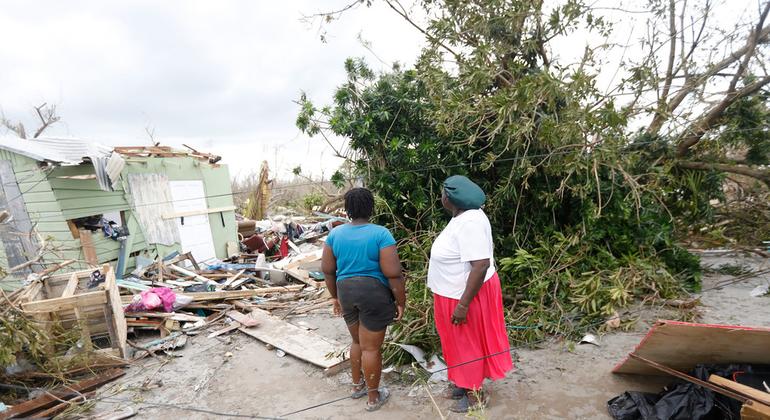
Jamaica’s Mothers Face Long Road After Hurricane Melissa’s Fury
Negril, Jamaica – The scent of mud and decay hangs heavy in the air in western Jamaica, a grim reminder of Hurricane Melissa’s devastating sweep across the Caribbean island in late October 2025. Beyond the splintered homes and washed-out roads, the storm has left a trail of broken livelihoods and profound uncertainty, particularly for women who are now tasked with rebuilding their lives and those of their families.
A Community Upended
The scale of the damage is staggering. Hurricane Melissa left 36 percent of houses in the western part of Jamaica either damaged or destroyed, according to initial assessments. Schools, normally bustling with students, have been transformed into temporary shelters, offering a fragile haven for nearly half a million people displaced by the storm. Roads became rivers, cutting off communities for days and disrupting essential services like power and communication.
The International Organization for Migration (IOM) has been on the ground since the immediate aftermath, working alongside the Jamaican government and other United Nations agencies to deliver critical aid. Teams are distributing tarpaulins, shelter repair materials, hygiene kits, and generators to families struggling to cope with the loss of their homes and possessions. But aid, while vital, is only a first step.
“The immediate needs are being met, but the long-term recovery will be a monumental task,” says a spokesperson for the IOM in Kingston. “We’re looking at years of rebuilding, not just structures, but also lives and livelihoods.”
“I Have a Key But No House”
Rose*, a cruise ship dispatcher in the tourist hub of Negril, knows this all too well. She and her two children sought shelter in a friend’s concrete home as Melissa approached. When they returned the next morning, their small wooden house – a donated structure that had been their refuge for nine years – was simply gone. “The house was gone,” she recounts, her voice barely a whisper. “I didn’t even see the roof, just a piece of lumber.”
The loss extends beyond the physical structure. Rose and her son, who worked as a hotel photographer, both lost their jobs when the tourism industry ground to a halt in the wake of the hurricane. Jamaica’s economy is heavily reliant on tourism, accounting for approximately 8.4 percent of the country’s GDP in 2022, making the sector’s disruption particularly devastating.
“I have a key to the house but no house,” Rose says, clutching the useless metal in her hand. The air around the foundation of her former home is thick with the smell of mud and decay, a constant reminder of everything she’s lost.
A school serves a temporary shelter for people whose lives were upended by Hurricane Melissa.
Fragile Connections in the Shelters
A few classrooms away, in the same school serving as a shelter, Sharon* is facing a similar struggle. Her home, and her father’s, both collapsed during the storm. She arrived with her two small children, now sleeping on desks in the sweltering heat. Before Melissa, Sharon worked as a gas station supervisor, a job that is now indefinitely suspended.
The shelters are a microcosm of Jamaican society, a place where families share what little they have – a meal, a blanket, a few words of comfort. Amidst the overwhelming loss, small acts of kindness are creating fragile connections, offering a glimmer of hope in the darkness.
Sonia*, another mother seeking refuge in the school, fled her coastal home with her grandson, who has a heart condition. “I can’t swim, so I grabbed him and ran,” she recalls, her voice trembling with the memory of the terrifying escape. She now waits, along with over 1,100 others, for a more permanent solution, while over 120,000 households across Jamaica require urgent repairs.
The Weight of Uncertainty
The situation highlights a growing global trend: the disproportionate impact of climate-related disasters on vulnerable populations, particularly women and children. According to the UN Women, women are often more exposed to the risks of climate change due to existing inequalities and their roles in providing for their families and communities.
The road to recovery will be long and arduous. Beyond the immediate need for shelter and supplies, there’s the challenge of restoring livelihoods, rebuilding infrastructure, and addressing the psychological trauma inflicted by the storm. The Jamaican government, with the support of international organizations like the IOM and the UN, is working to develop a comprehensive recovery plan, but the scale of the challenge is immense.
For Rose, Sharon, and Sonia, each day is a test of endurance and solidarity. Their homes may be gone, but their spirit remains unbroken. Their lives, once separate, are now inextricably linked by loss, uncertainty, and the slow, painstaking process of rebuilding – not just their homes, but their futures.
*Names changed to protect identities