Hong Kong Fire: 13 Dead in High-Rise Apartment Blaze
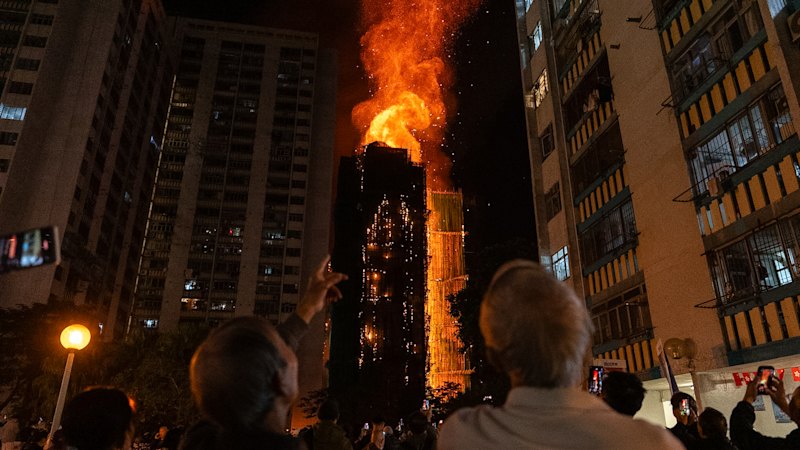
Hong Kong Housing Complex Fire Claims Thirteen Lives, Traps Residents in Blazing Towers
TAI PO, Hong Kong – A devastating fire ripped through a sprawling housing complex in Hong Kong’s Tai Po district on Wednesday, claiming the lives of thirteen people and leaving countless others trapped within the inferno. The blaze, which engulfed multiple towers of the Wang Fuk Court estate, has sparked a massive emergency response and raised serious questions about fire safety regulations in the densely populated city.
The fire services department confirmed that nine people were initially pronounced dead at the scene, with four more succumbing to their injuries in hospital. Tragically, one firefighter also lost his life battling the blaze, and another was treated for heat exhaustion. The Wang Fuk Court estate, comprised of eight blocks and nearly 2,000 apartments, is home to approximately 4,800 residents. The sheer scale of the complex and the rapid spread of the fire presented immediate challenges for emergency responders.
Bystanders look on as flames engulf the buildings.Credit: AP
A City Built Upward: The Challenges of Density
Hong Kong is renowned for its incredibly high population density, a characteristic that has driven its economic success but also presents unique challenges in terms of public safety. With limited land available, the city has built upwards, creating a landscape dominated by towering residential buildings. This vertical urbanism, while efficient, can quickly turn a fire into a catastrophic event. According to the World Bank, China’s urban population has grown by an average of 1% per year since 1980, placing immense strain on infrastructure and emergency services in cities like Hong Kong.
The Wang Fuk Court estate, built in the 1980s, was undergoing exterior renovations at the time of the fire, with bamboo scaffolding and construction netting completely enveloping several of the towers. These materials, while necessary for maintenance, are highly flammable and are believed to have contributed significantly to the rapid spread of the flames. Video footage from the scene showed flames leaping from window to window, fueled by the scaffolding and netting, creating a terrifying spectacle for onlookers.
Elderly Residents Particularly Vulnerable
Local officials have expressed particular concern for the elderly residents of the complex, many of whom are believed to be among those trapped. Lo Hiu-fung, a Tai Po District Council member, told local television station TVB that a disproportionate number of those unable to evacuate were seniors. Hong Kong has a rapidly aging population; in 2023, over 19% of the population was aged 65 or older, according to Hong Kong Census and Statistics Department data. This demographic shift presents unique challenges for emergency preparedness and response.
The difficulties faced by elderly residents highlight the importance of accessible evacuation plans and targeted support for vulnerable populations in high-rise buildings. Many elderly individuals may have mobility issues or require assistance to navigate complex evacuation procedures, making them particularly susceptible during emergencies.
Scrutiny of Fire Safety Regulations
The tragedy has already prompted calls for a thorough review of fire safety regulations in Hong Kong. While the city has stringent building codes, questions are being raised about the adequacy of fire prevention measures in older buildings and the oversight of renovation work. The use of flammable materials in exterior scaffolding and the potential for these materials to exacerbate fires will undoubtedly be a key focus of the investigation.
The Hong Kong Fire Services Department has a long and proud history of responding to complex emergencies, but the scale of this fire has stretched its resources to the limit. The department’s director, Andy Yeung, confirmed that firefighters were facing intense heat and challenging conditions as they worked to contain the blaze and rescue trapped residents. The loss of one firefighter underscores the inherent risks faced by emergency personnel in such situations.
Global Implications: Urban Fire Risk in a Changing Climate
The Hong Kong fire serves as a stark reminder of the growing threat of urban fires worldwide. As cities become increasingly dense and climate change exacerbates extreme weather events, the risk of large-scale fires is escalating. According to the United Nations Environment Programme (UNEP), wildfires are projected to increase by 30% globally by 2050 due to climate change, and this increase will disproportionately impact urban areas.
This tragedy underscores the urgent need for cities to invest in robust fire prevention measures, including stricter building codes, improved fire safety inspections, and enhanced emergency response capabilities. It also highlights the importance of community education and preparedness, ensuring that residents are aware of evacuation procedures and equipped to respond effectively in the event of a fire. The incident in Hong Kong is a sobering lesson for urban centers around the globe, demanding a proactive and comprehensive approach to fire safety in the face of a changing world.