Georgia: Laws Suppressing Protests & Right to Assembly – HRW
Georgia’s Democratic Backslide: Protests Met with Punitive Laws and a Growing Chill
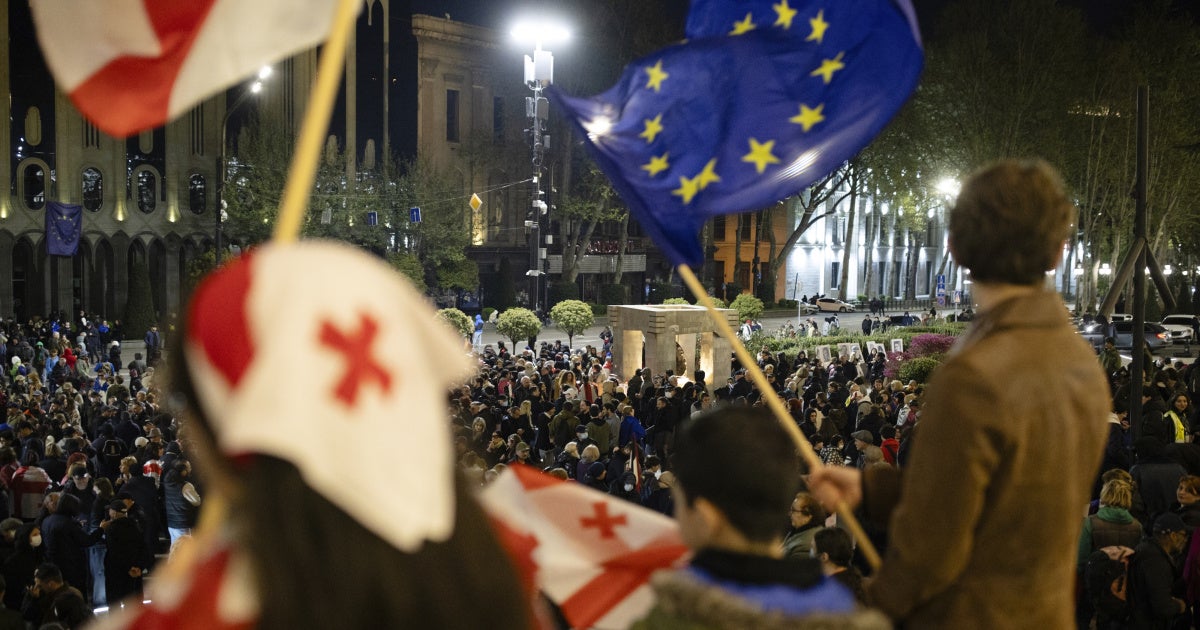
Tbilisi, Georgia – What began as widespread demonstrations over a perceived abandonment of European aspirations has spiralled into a concerning crackdown on dissent in Georgia, raising alarms among international observers and human rights groups. A series of increasingly restrictive laws, coupled with allegations of police brutality and disproportionate fines, are effectively stifling peaceful assembly and eroding fundamental freedoms in the small Caucasus nation.
The roots of the current crisis lie in November 2024, when the ruling Georgian Dream party reversed course on its long-stated goal of seeking membership in the European Union. This decision triggered a wave of protests, largely led by young people who see closer ties with Europe as vital for Georgia’s future. The government’s response, however, has been anything but conciliatory.
“The Georgian government is systematically dismantling protections for peaceful assembly and free expression,” says Giorgi Gogia, deputy Europe and Central Asia director at Human Rights Watch. “People are being detained or slapped with ruinous fines for exercising their fundamental rights.”
From Protest to Criminalization: A Legislative Tightening
Over the past year, the Georgian parliament has enacted a raft of amendments that progressively criminalize aspects of protest. Initially, the focus was on increasing financial penalties for relatively minor infractions. December 2024 amendments saw fines for actions like blocking building entrances, wearing masks, or even possessing laser pointers jump tenfold – from roughly $185 to $1,850. This is a staggering sum in a country where the average monthly income is around $820, according to Geostat, Georgia’s national statistics office.
The legislative creep continued into 2025. February amendments extended detention periods for administrative offenses – often used against protesters – from 15 to 60 days. New offenses, including “verbal insult” of officials, were added, punishable by up to 45 days’ detention. Perhaps most concerning, October amendments reclassified repeated minor offenses – wearing a mask, briefly stepping onto a roadway – as felonies, carrying potential prison sentences of up to two years, and even four years for organizers.
This escalation isn’t simply about maintaining order; it’s about creating a climate of fear. The laws are deliberately vague, granting police broad discretionary powers and making it difficult for citizens to know where the line is drawn.
The Weight of the Fine: Economic Coercion as a Tool of Suppression
The financial burden imposed by these laws is crippling for many Georgians. Gota Chanturia, a 36-year-old teacher and education researcher, was recently fined a total of $135,200 for 73 alleged instances of “road-blocking.” Police presented short surveillance videos showing Chanturia peacefully standing on the roadway near parliament. Her 60-year-old father has accumulated a similar amount in fines, even in situations where police had already closed the road. Courts, according to Chanturia’s lawyer, have offered no justification for these extreme penalties.
This pattern of disproportionate fines isn’t isolated. Philologist Rusudan Kobakhidze, 61, is already serving time for alleged administrative offenses and simultaneously faces three additional $1,185 fines, despite earning far less than that amount monthly. These cases highlight a disturbing trend: the use of economic coercion to silence dissent.
Surveillance and the Erosion of Privacy
Adding to the concerns is the increasing reliance on surveillance technology. Defense lawyers report that convictions often rely on video footage, including the use of facial recognition technology, to identify protesters. Crucially, officers identifying individuals from surveillance footage are rarely questioned in court, and judges routinely ignore procedural safeguards.
This raises serious questions about privacy and due process. The use of facial recognition technology, in particular, is deeply problematic, as it allows the government to track and monitor citizens engaged in legitimate forms of protest.
A Regional Pattern of Democratic Regression?
Georgia’s slide towards authoritarianism isn’t happening in a vacuum. It reflects a broader trend of democratic backsliding in Eastern Europe and the Caucasus. According to a 2024 Freedom House report, global freedom declined for the 17th consecutive year, with only 20% of the world’s population living in “free” countries.
The situation in Georgia is particularly concerning given its strategic location and its aspirations to integrate with the West. The country sits at a critical crossroads, bordering Russia and serving as a transit route for energy supplies. Its democratic trajectory has significant implications for regional stability.
The Council of Europe’s Venice Commission has already warned that the recent legislative changes undermine freedom of assembly, creating a “chilling effect” on participation. The Organization for Security and Co-operation in Europe (OSCE) has also voiced concerns about expanded detention powers and disproportionate sanctions.
The international community must now decide how to respond. Continued pressure on the Georgian government, coupled with support for civil society organizations, is essential to prevent further erosion of democratic norms and to ensure that the right to peaceful assembly remains protected. The future of Georgia’s democracy – and its place in Europe – hangs in the balance.