Cost of Thanksgiving Dinner Declines | News Release
Thanksgiving Dinner Costs Dip for Third Year, But Challenges Remain for Farmers
Americans can breathe a small sigh of relief this Thanksgiving: the cost of a traditional holiday feast is decreasing. The American Farm Bureau Federation (AFBF) reported a 5% drop in the national average cost of a Thanksgiving dinner for 10 people, landing at $55.18 – or $5.52 per person. This marks the third consecutive year of price declines, offering a welcome respite after the record-high $64.05 seen in 2022.
The Turkey Turnaround
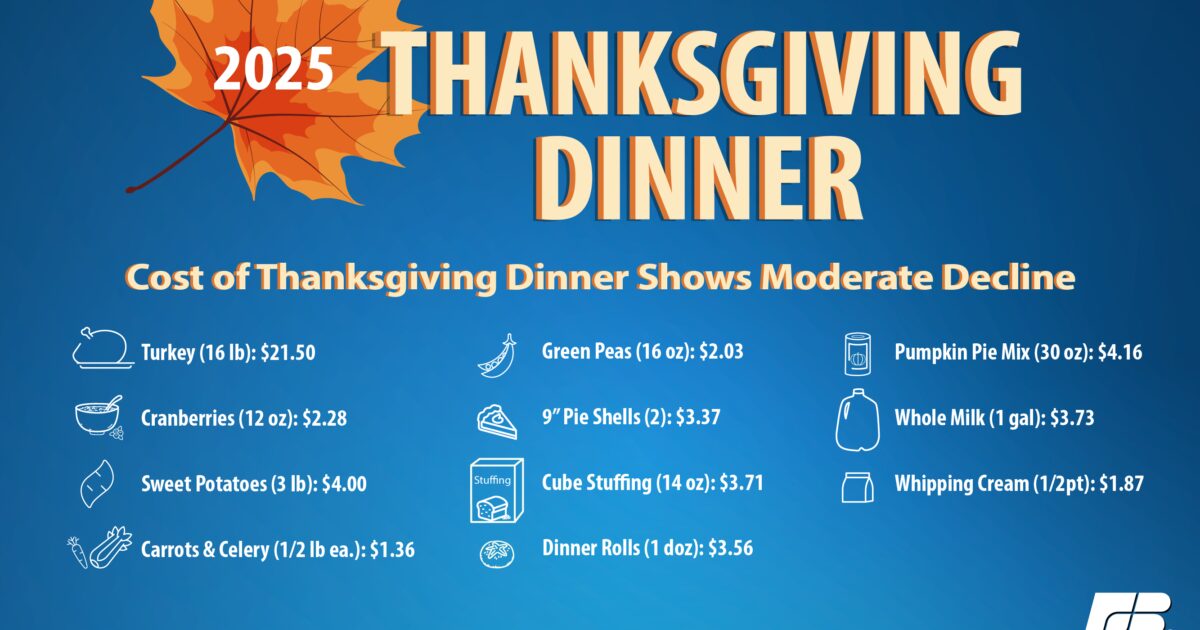
The most significant driver of this year’s cost reduction is a dramatic decrease in turkey prices. A 16-pound frozen turkey now averages $21.50, a 16.3% drop from last year, translating to just $1.34 per pound. While wholesale prices for fresh turkeys have actually increased, grocery stores are aggressively offering deals to entice consumers back to the holiday bird, effectively lowering retail prices. This is a crucial development, as the turkey traditionally represents the single most expensive item on the Thanksgiving table.
“It’s encouraging to see some relief in the price of turkeys, as it is typically the most expensive part of the meal,” said AFBF Economist Faith Parum, Ph.D. However, she cautioned that the lower prices aren’t solely due to increased supply. “Farmers are still working to rebuild turkey flocks that were devastated by avian influenza, but overall demand has also fallen.”
Beyond the Bird: A Mixed Bag of Prices
While turkey prices are down, the story isn’t uniform across the board. Some staples have become more expensive. Fresh vegetables, particularly those impacted by recent natural disasters, are seeing price increases. A veggie tray is up over 61%, and sweet potatoes have risen by 37%, largely due to hurricane damage in North Carolina, the nation’s leading sweet potato producer. These increases highlight the vulnerability of the food supply chain to weather events and logistical disruptions.
The ongoing shortage of farmworkers and rising farm wages are also contributing to higher produce costs. According to the Bureau of Labor Statistics, the agricultural sector continues to face significant labor challenges, impacting production and ultimately, consumer prices. In fact, globally, agriculture employs 28% of the world’s workforce, yet faces persistent labor shortages and wage stagnation in many regions, according to the International Labour Organization.
The Farmer’s Perspective: A Looming Crisis
Despite the slight easing of costs for consumers, the AFBF emphasizes the challenges facing American farmers. AFBF President Zippy Duvall stressed the importance of recognizing the precarious situation of the agricultural community. “We are blessed to live in a country that is capable of producing such an abundant food supply, and for that we should be thankful,” Duvall said. “Despite modest declines in the cost of a Thanksgiving meal, I know food prices are a real concern for many families, including in rural America.”
Duvall pointed to the loss of 15,000 farms in the past year, driven by low crop prices, high supply costs, and trade uncertainties. This trend raises concerns about the long-term sustainability of American agriculture and the potential for increased reliance on foreign food sources. The AFBF is urging Congress to address these economic pressures to ensure the continued viability of family farms.
Regional Variations and Expanding the Menu
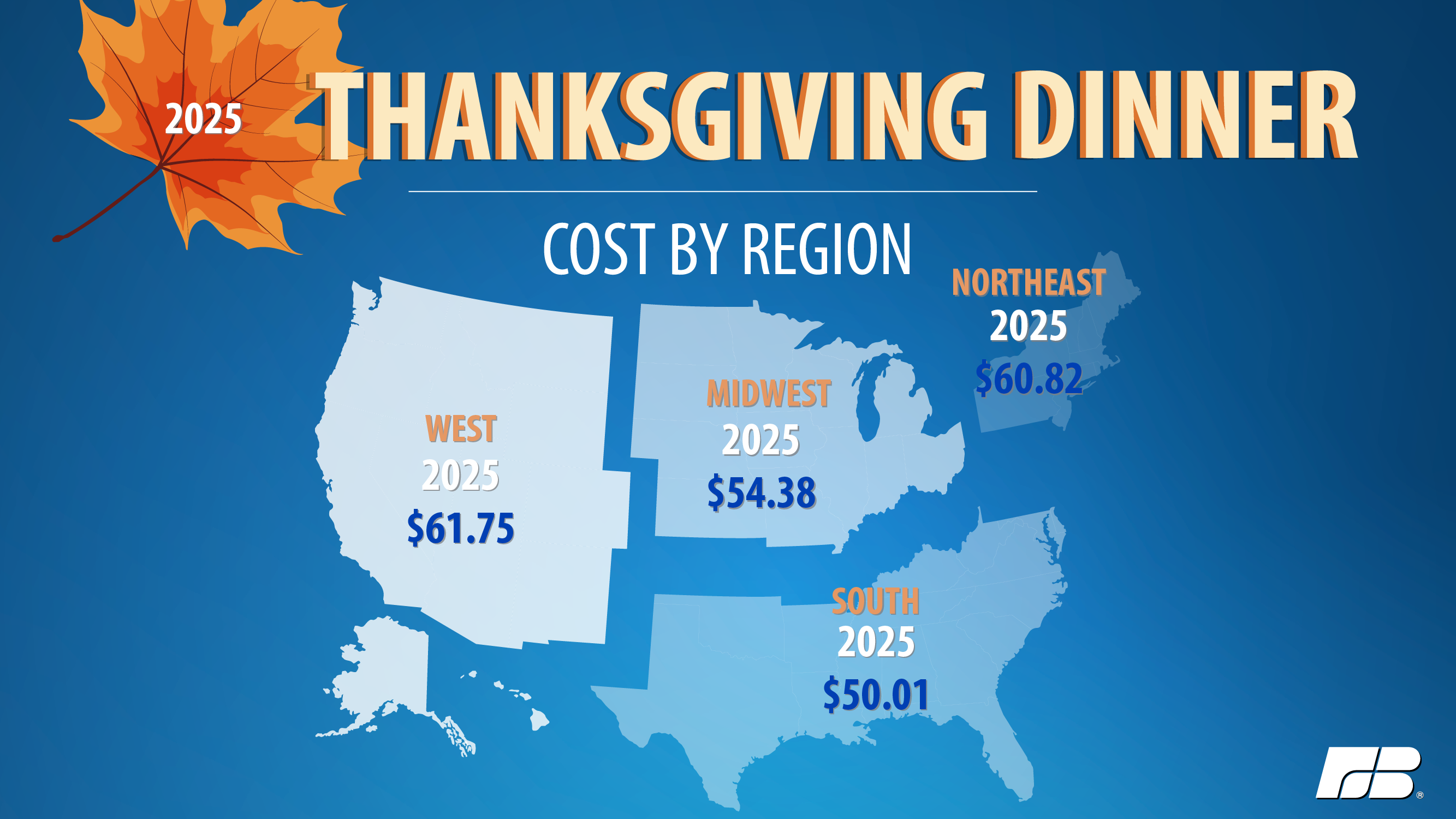
Thanksgiving dinner costs vary significantly depending on location. The South boasts the most affordable classic meal at $50.01, while the West faces the highest average cost at $61.75. The Midwest ($54.38) and Northeast ($60.82) fall in between.
For those who prefer a more expansive Thanksgiving spread, the AFBF also calculated the cost of adding boneless ham, Russet potatoes, and frozen green beans to the traditional menu. This expanded meal averages $77.09 nationally, with regional costs ranging from $71.20 in the South to $84.97 in the West.
As families gather around the table this Thanksgiving, it’s a moment to appreciate not only the bounty of the harvest but also the hard work and dedication of the farmers who make it possible. The current price declines offer a temporary reprieve, but the long-term health of American agriculture remains a critical issue that demands attention.
ARTICOL ORIGINAL:
Cooking a Thanksgiving dinner for your friends and family will cost less than last year, marking the third straight year of price declines. The American Farm Bureau Federation’s 40th annual Thanksgiving dinner survey provides a snapshot of the average cost of Thanksgiving staples that make up a classic holiday feast for 10, which is $55.18 or about $5.52 per person.
This is a 5% decrease from 2024. Three years of declines don’t fully erase dramatic increases that led to a record-high cost of $64.05 in 2022.
The centerpiece on most Thanksgiving tables – the turkey – dramatically decreased in price, which helped bring down the overall cost of dinner. The average price for a 16-pound frozen turkey is $21.50. That is $1.34 per pound, down more than 16% from last year. While the wholesale price for fresh turkey is up from 2024, grocery stores are featuring Thanksgiving deals and attempting to draw consumer demand back to turkey, leading to lower retail prices for a holiday bird.
Farm Bureau volunteer shoppers checked prices the first week of November. Grocery stores often feature whole turkeys at even lower prices in the days leading up to Thanksgiving. According to the most recent USDA Agricultural Marketing Service data, the average per-pound feature price for whole frozen turkeys declined further during the second week of November.
“It’s encouraging to see some relief in the price of turkeys, as it is typically the most expensive part of the meal,” said AFBF Economist Faith Parum, Ph.D. “Farmers are still working to rebuild turkey flocks that were devastated by avian influenza, but overall demand has also fallen. The combination will help ensure turkey will remain an affordable option for families celebrating Thanksgiving.”
The shopping list for Farm Bureau’s informal survey includes turkey, stuffing, sweet potatoes, rolls, peas, cranberries, a veggie tray, and pumpkin pie with whipped cream, all in quantities sufficient for 10 servings.
Half of the ingredients in the survey declined in price, including dinner rolls and stuffing. Low wheat prices helped bring down the cost of items requiring flour.
Items like fresh vegetables and sweet potatoes increased – a veggie tray is up more than 61% and sweet potatoes are up 37%. Natural disasters partly contributed to the increase. For example, North Carolina, which is the largest grower of the nation’s sweet potatoes, suffered hurricane damage. Additionally, fresh produce prices tend to be highly volatile, and even modest supply-chain disruptions, from weather, labor shortages, transportation delays or regional production setbacks, can trigger sharp, short-term spikes in prices. The continued shortage of farmworkers and rapidly increasing farm wages also played a role in rising produce costs. It’s important to note that fresh vegetables and potatoes are traditionally low-cost items, so an increase of just a few cents can dramatically affect the cost change percentage year-to-year.
“We are blessed to live in a country that is capable of producing such an abundant food supply, and for that we should be thankful,” said AFBF President Zippy Duvall. “Despite modest declines in the cost of a Thanksgiving meal, I know food prices are a real concern for many families, including in rural America. We lost 15,000 farms last year because of factors including historically low crop prices, high supply costs and trade uncertainty, which continue to squeeze farmers and ranchers. Every farm lost is another step toward consolidation and reliance on other countries for our food.
“We urge Congress to address the challenging economic conditions facing farmers to ensure farm families can continue growing the food we all rely on, not just on Thanksgiving, but every day of the year.”
In recognition of changes in Thanksgiving dinner traditions, the Farm Bureau price survey also includes boneless ham, Russet potatoes and frozen green beans, in an expanded menu. Adding these foods to the classic Thanksgiving menu increases the overall cost by $21.91, to $77.09.
This year’s national average cost was calculated using surveys completed with pricing data from all 50 states and Puerto Rico. Farm Bureau volunteer shoppers checked prices in person and online using grocery store apps and websites. They looked for the best possible prices without taking advantage of special promotional coupons or combined purchase deals.
The AFBF Thanksgiving dinner survey was first conducted in 1986. The informal survey provides a record of comparative holiday meal costs over the years. Farm Bureau’s classic survey menu has remained unchanged since 1986 to allow for consistent price comparisons.
Individual Prices
- 16-pound turkey: $21.50 or $1.34 per pound (down 16.3%)
- 14-ounces of cubed stuffing mix: $3.71 (down 9%)
- 2 frozen pie crusts: $3.37 (down .8%)
- Half pint of whipping cream: $1.87 (up 3.2%)
- 1 pound of frozen peas: $2.03 (up 17.2%)
- 1 dozen dinner rolls: $3.56 (down 14.6%)
- Misc. ingredients to prepare the meal: $3.61 (down 4.7%)
- 30-ounce can of pumpkin pie mix: $4.16 (up .1%)
- 1 gallon of whole milk: $3.73 (up 16.3%)
- 3 pounds of sweet potatoes: $4.00 (up 37%)
- 1-pound veggie tray (carrots & celery): $1.36 (up 61.3%)
- 12-ounce bag of fresh cranberries: $2.28 (down 2.8%)
Regional Averages
AFBF analysis revealed regional differences in the cost of the meal. The cost for the classic meal was the most affordable in the South at $50.01, followed by the Midwest at $54.38, the Northeast at $60.82, and the West at $61.75. The expanded meal (classic meal plus boneless ham, Russet potatoes and green beans) was the most affordable in the South at $71.20, the Midwest at $76.33, the Northeast at $82.97, and most expensive in the West at $84.97.
Read a full analysis of the 2025 Thanksgiving dinner cost survey in a Market Intel report here.
To download selected soundbites on the survey, click here.
AFBF also conducts an annual summer cookout survey in advance of the 4th of July holiday. Be sure to watch for that in late June 2026.
Press Contacts
Mike Tomko
Director, Communications
(202) 406-3642
miket@fb.org
Bailey Corwine
Communications Manager
(202) 406-3643
baileyc@fb.org