Chicxulub Crater: How an Asteroid Ended the Dinosaurs
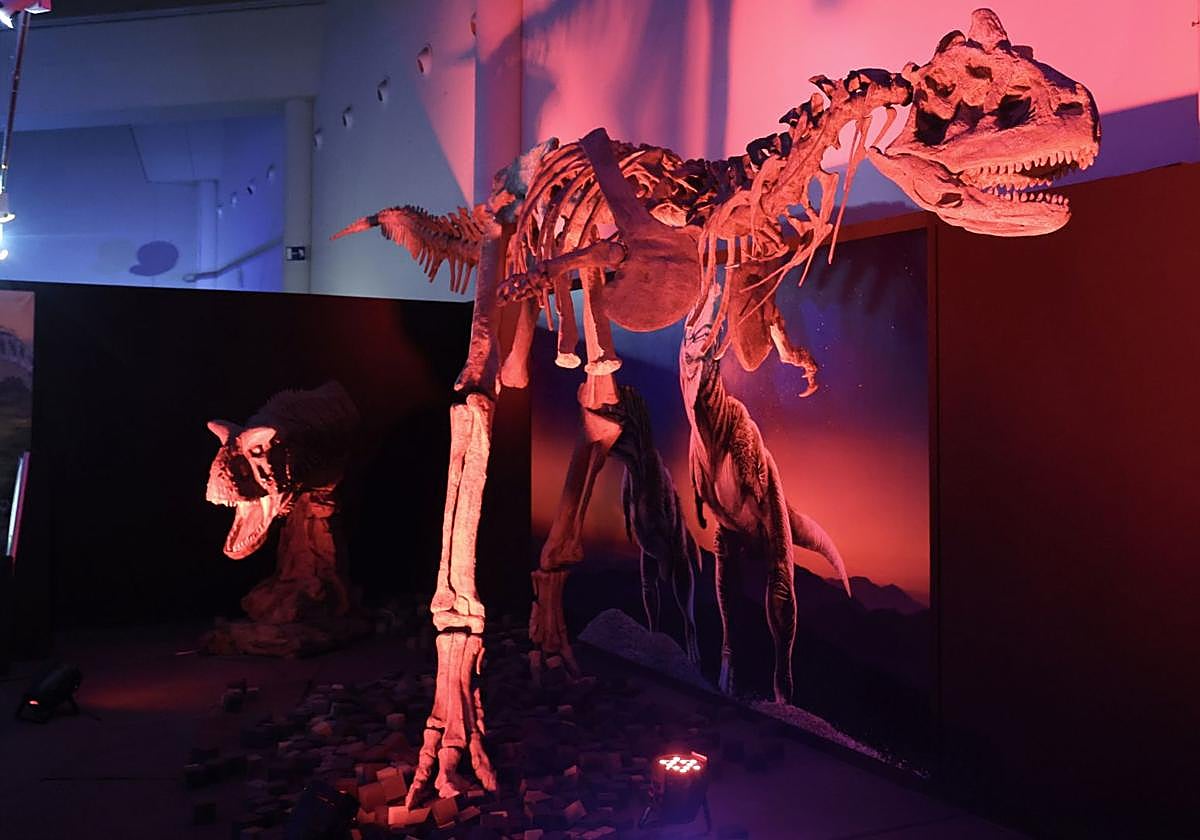
Dinosaur Echoes: New Exhibit Brings Giants to Life, Reveals Evolutionary Links
The age of dinosaurs, a period spanning over 180 million years, continues to captivate the human imagination. Now, a new exhibition offers a breathtaking glimpse into this lost world, bringing colossal creatures back to life with remarkably detailed, life-sized replicas.
“Gigantes de la Patagonia,” currently on display at the Museo de la Ciencia in Valladolid, Spain, transports visitors to a prehistoric landscape, focusing on the fossil-rich region of Patagonia – a land bridging Chile and Argentina. Once a lush, warm environment during the Mesozoic Era, Patagonia now holds crucial clues to understanding these ancient beings.
The exhibit isn’t just about size; it’s about understanding the diversity of dinosaurs. “People often picture enormous creatures, but the reality is there were dinosaurs of all sizes, from those exceeding thirty meters in length to those barely reaching a meter,” explains biologist José Antonio García, who leads guided tours of the exhibition.
The Chicxulub Impact: A Cataclysmic End
The story of the dinosaurs is inextricably linked to a single, devastating event: the impact of a massive asteroid approximately 66 million years ago. The impact crater, known as Chicxulub, lies buried beneath the Yucatán Peninsula in Mexico. Measuring 180 kilometers (roughly the distance between Valladolid and Soria), and 20 kilometers deep, it stands as stark evidence of a world-altering catastrophe.
Scientists believe this impact triggered widespread wildfires, tsunamis, and a prolonged period of darkness caused by dust blocking sunlight, ultimately disrupting the food chain and leading to the extinction of roughly 76% of plant and animal species on Earth. The evidence for this link is found in a globally-distributed layer of sediment, known as the K-Pg boundary, rich in iridium – an element rare on Earth but common in asteroids.
More Than Just Bones: Uncovering Dinosaur Life
The exhibition features 21 meticulously crafted replicas, including the fearsome Carnotaurus – a horned carnivore unique for its unusual head ornamentation – and the Megaraptor, a predator armed with enormous, 30-centimeter claws. Visitors can also marvel at a towering femur from a Titanosaurus, exceeding 2.5 meters in height, and learn about the Giganotosaurus, a contender for the title of largest terrestrial carnivore, even surpassing the famed Tyrannosaurus rex.
But the exhibit goes beyond simply displaying impressive skeletons. It delves into the intricacies of dinosaur life, exploring their posture, locomotion, and even their potential social behaviors. “Dinosaurs held their legs directly beneath their bodies, unlike lizards and modern reptiles. This allowed for more efficient movement and, in some cases, the evolution of wings,” García notes, highlighting the surprising connection between dinosaurs and modern birds.
A Legacy of Flight: The Dinosaur-Bird Connection
Indeed, the exhibition emphasizes that dinosaurs didn’t entirely disappear. The evolutionary lineage of birds can be traced back to theropod dinosaurs – a group of bipedal, mostly carnivorous dinosaurs. The discovery of Archaeopteryx, a feathered dinosaur dating back 150 million years, provided crucial evidence supporting this link.
“The evolution from dinosaurs to birds is a fascinating story,” García explains. “Features like feathers, articulated joints, and skeletal structures gradually evolved over time, ultimately leading to the birds we see today.”
Patagonia: A Fossil Paradise
The choice of Patagonia as the exhibit’s focal point is no accident. The region’s geological history, shaped by the formation of the Andes Mountains millions of years after the dinosaurs’ extinction, has created ideal conditions for fossil preservation. Flooding and wind action have repeatedly covered and uncovered fossils, making Patagonia a haven for paleontologists.
The exhibition, open until March 15th, offers a compelling blend of scientific accuracy and immersive storytelling, reminding us of the incredible history of life on Earth and the enduring legacy of the dinosaurs.
Exhibit Details:
- Location: Museo de la Ciencia, Valladolid, Spain
- Dates: Now through March 15th
- Hours: Tuesday-Friday 10:00 AM – 6:00 PM, Saturday 10:00 AM – 7:00 PM, Sunday 10:00 AM – 3:00 PM (Closed Mondays, except holidays)