Anger mounts in Hong Kong over apartment fires as Beijing warns against ‘anti-China disruptors’ | Hong Kong apartment fires
Hong Kong Reels From Deadly Fire, Sparking Outrage and Calls for Accountability
HONG KONG – Grief and anger continue to grip Hong Kong following a devastating fire that ripped through a high-rise apartment complex in the Tai Po district, leaving at least 128 people dead and approximately 150 still missing. The blaze, which erupted on Wednesday afternoon and quickly engulfed seven of the eight 32-story buildings undergoing renovations, is the deadliest in the city since a 1948 warehouse fire claimed 176 lives.
A City’s Scars and a Government’s Response
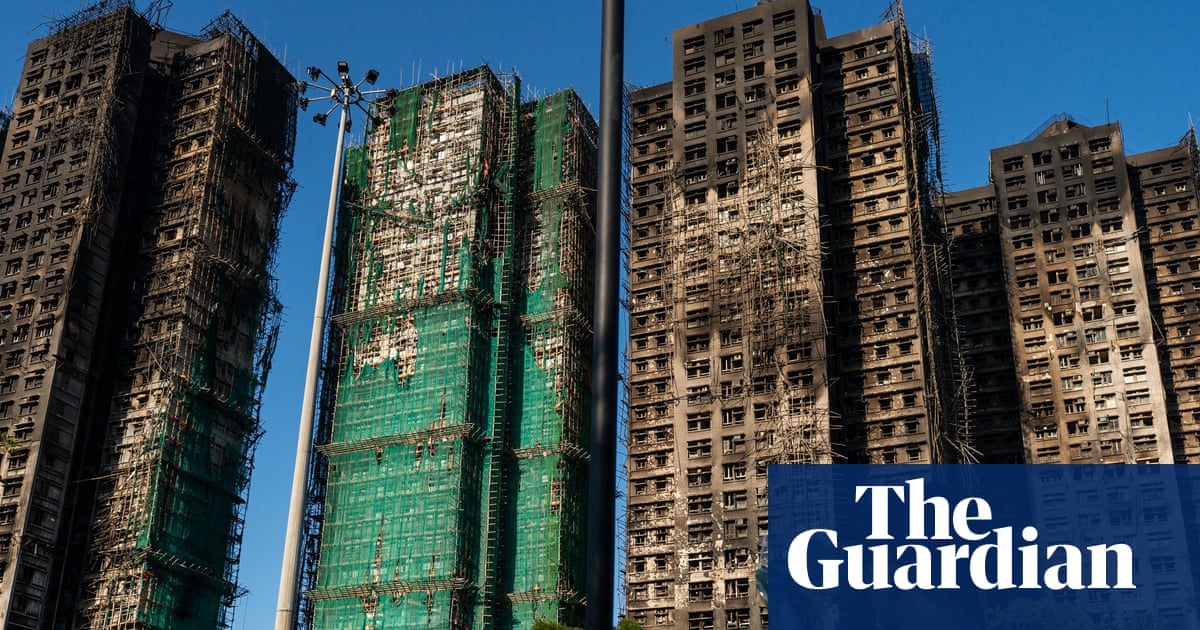
The Wang Fuk Court complex, home to over 4,600 residents, was shrouded in bamboo scaffolding and green mesh, layered with foam insulation – materials now under intense scrutiny as investigators probe the cause of the inferno. The speed with which the fire spread has raised serious questions about building safety regulations and oversight, particularly concerning the use of potentially flammable materials during the renovation work. Authorities have arrested 11 people in connection with the blaze, focusing on potential corruption and safety violations.
The tragedy has ignited public fury, with residents demanding answers and accountability from both the building management and the government. A petition calling for an independent investigation, proper resettlement for displaced residents, and a comprehensive review of construction oversight garnered over 10,000 signatures before being taken down. A second petition, launched by a Hong Kong resident now living abroad, quickly gained traction, demonstrating the widespread desire for transparency and justice. “Hongkongers demand the truth and justice,” one commenter wrote on the new petition, echoing the sentiment of many.
However, the expression of dissent has not been without consequence. University student Miles Kwan, 24, was arrested on suspicion of inciting sedition in relation to the fire, according to the South China Morning Post. This arrest, along with Beijing’s stern warning against attempts to “disrupt Hong Kong through disaster,” has raised concerns about the shrinking space for political expression in the city, particularly in the wake of the 2019 pro-democracy protests and the subsequent imposition of a national security law.
Renovation Concerns Ignored?
Adding to the outrage, it has emerged that residents of Wang Fuk Court voiced concerns about fire hazards related to the renovations as early as September 2024. They specifically flagged the potential flammability of the protective green mesh used to cover the bamboo scaffolding, according to a spokesperson for the city’s Labour Department. Despite these warnings, authorities reportedly assured residents last year that the complex faced “relatively low fire risks.” This revelation has fueled accusations of negligence and a disregard for public safety.
The fact that the fire alarms within the complex were not functioning properly at the time of the blaze further exacerbates these concerns. The lack of a working alarm system undoubtedly hampered evacuation efforts and contributed to the high number of casualties.
A Global Pattern of Urban Fire Risks
Urban fires, particularly in densely populated areas undergoing renovation, are a growing global concern. According to the United Nations Environment Programme, rapid urbanization and inadequate building safety standards contribute to a significant increase in fire-related deaths and economic losses worldwide. In fact, approximately 480,000 people die each year from unintentional fires, with the majority of these deaths occurring in low- and middle-income countries.
The use of flammable materials in construction and renovation projects is a recurring theme in these tragedies. The Grenfell Tower fire in London in 2017, which claimed 72 lives, similarly highlighted the dangers of using combustible cladding on high-rise buildings. These incidents underscore the urgent need for stricter building codes, rigorous enforcement of safety regulations, and a greater emphasis on fire prevention measures.
Beyond the Immediate Aftermath
As rescue operations concluded on Friday, with teams recovering three cats and a turtle alongside the search for human remains, the focus is now shifting towards providing support for the survivors and investigating the full extent of the tragedy. Donations have been pouring in from companies and individuals alike, demonstrating a widespread outpouring of sympathy and solidarity.
However, the long-term implications of the fire extend beyond immediate relief efforts. The incident has exposed deep-seated vulnerabilities in Hong Kong’s building safety regulations and raised fundamental questions about the balance between economic development and public safety. The coming weeks and months will be crucial in determining whether the tragedy leads to meaningful reforms and a renewed commitment to protecting the lives of Hong Kong’s residents. The shadow of this disaster will undoubtedly linger, serving as a stark reminder of the devastating consequences of negligence and the importance of prioritizing safety above all else.
ARTICOL ORIGINAL:
Anger over a deadly blaze at a Hong Kong high-rise apartment complex simmered on Sunday as Beijing warned against attempts to use the disaster to disrupt the city, while people across the financial hub continued to mourn for the more than 128 victims.
Police on Saturday detained one person who was part of a group that launched a petition demanding government accountability, an independent probe into possible corruption, proper resettlement for residents, and a review of construction oversight, two sources familiar with the matter said.
University student Miles Kwan, 24, was arrested on suspicion of trying to incite sedition in relation to the blaze in the Wang Fuk Court complex in the northern Tai Po district, the South China Morning Post reported. Hong Kong police did not respond on Sunday to a request for comment.
The online petition promoted by the group had attracted more than 10,000 signatures by Saturday afternoon before it was closed.
A second petition with the same demands has been launched by a Tai Po resident who is now living overseas.
“Hongkongers demand the truth and justice,” wrote KY in the comment section of the new online petition.
The blaze that ripped through seven high-rise residential blocks near the border with mainland China has stunned Hong Kong and authorities have launched criminal and corruption investigations as anger and dismay grow.
The cause of the blaze, which killed 128 people and left 150 still missing, is still to be determined.
Authorities are on tenterhooks to avoid any broader public backlash after pro-democracy protests roiled the city in 2019, leading to a Beijing-imposed national security law.
China’s national security authorities on Saturday warned individuals against using the disaster to disrupt the city.
“We sternly warn the anti-China disruptors who attempt to ‘disrupt Hong Kong through disaster’. No matter what methods you use, you will certainly be held accountable and strictly punished under the Hong Kong national security law and the Safeguarding National Security Ordinance.”
Authorities have arrested 11 people in connection with the city’s worst blaze in nearly 80 years as they investigate possible corruption and the use of unsafe materials during renovations at the Wang Fuk Court complex.
Rescue operations at the site concluded on Friday, although police say they may find more bodies as they comb through the hazardous, burnt-out buildings.
Hundreds of officers deployed to search for remains found no further bodies but rescued three cats and a turtle, police officials told a press conference.
The fire started on Wednesday afternoon and rapidly engulfed seven of the eight 32-storey blocks at the complex that were wrapped in bamboo scaffolding and green mesh and layered with foam insulation for the renovations.
Donations have poured in from large and small companies as well as other groups to assist the victims.
Authorities have said the fire alarms at the Wang Fuk Court estate, home to over 4,600 people, had not been working properly.
The fire is Hong Kong’s deadliest since 1948, when 176 people died in a warehouse blaze.
Residents of Wang Fuk Court were told by authorities last year they faced “relatively low fire risks” after complaining about fire hazards posed by the renovation, the city’s Labour Department said.
The residents raised concerns in September 2024, including about the potential flammability of the protective green mesh contractors used to cover the bamboo scaffolding, a department spokesperson said.