Warner Bros Bidding War: Paramount, Netflix & Kushner’s Role | France 24
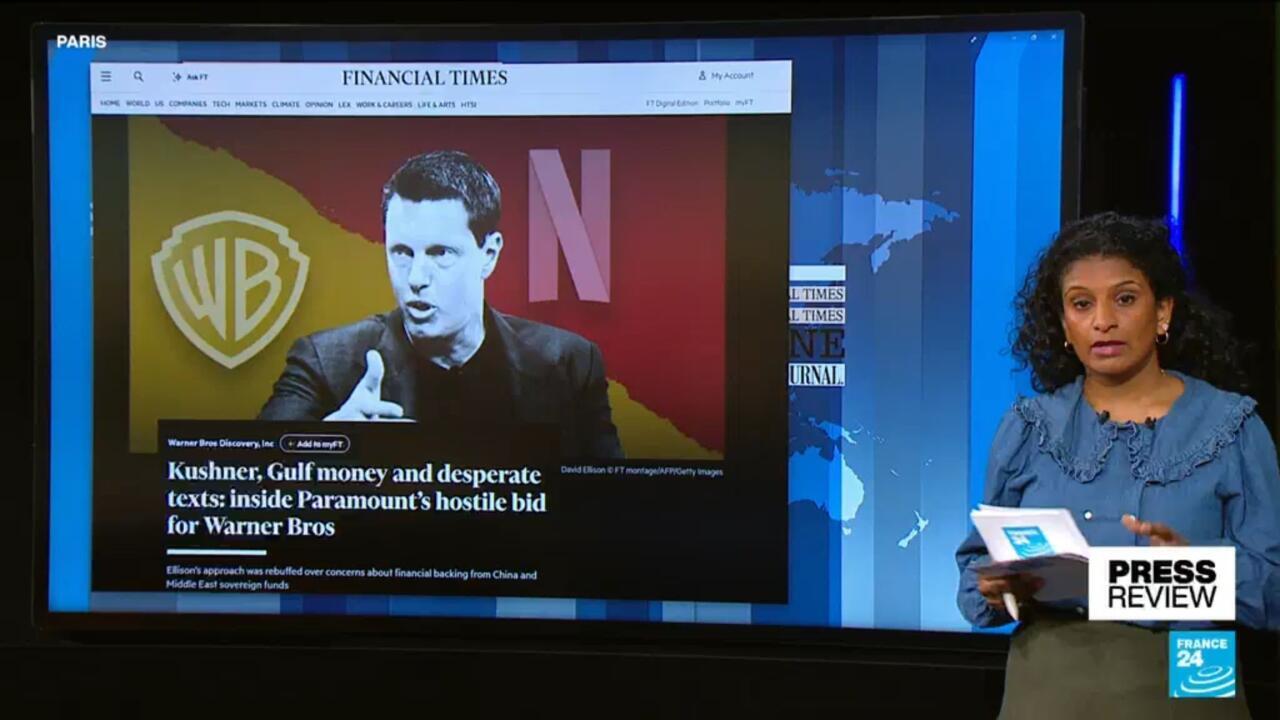
Hollywood Power Struggle: Paramount’s Bold Bid for Warner Bros. Discovery Ignites Media War
The global entertainment landscape is bracing for a seismic shift as Paramount Global launched a dramatic, $108 billion hostile takeover bid for Warner Bros. Discovery (WBD), just days after WBD shareholders tentatively agreed to a $82.7 billion deal with Netflix. The move, described by the Financial Times as one of the most audacious in corporate history, throws the future of iconic brands like CNN and the vast Warner Bros. film and television library into uncertainty.
This isn’t simply a business transaction; it’s a high-stakes power play with potential ramifications for the future of media consolidation and the balance between streaming services and traditional entertainment. The bidding war underscores the intense pressure facing media companies to scale up in the face of fierce competition and evolving consumer habits. According to a recent Statista report, global streaming market revenue is projected to reach $342.70 billion in 2024, highlighting the enormous financial stakes involved.
Paramount’s offer, significantly exceeding Netflix’s, is backed by a complex financial arrangement spearheaded by Oracle founder Larry Ellison, alongside Middle Eastern sovereign wealth funds and a private equity firm led by Jared Kushner, former President Donald Trump’s son-in-law. This unusual funding structure has already raised eyebrows, particularly concerning potential national security implications, as WBD reportedly expressed concerns about scrutiny from US investment review committees. The Wall Street Journal wryly observed that both Paramount and Netflix CEOs have been “courting Trump like contestants on the Bachelorette,” acknowledging the former president’s potential influence on the outcome.
The saga reveals a deeper tension within Hollywood. Paramount has pledged to maintain a robust film release schedule – aiming for 30 or more theatrical releases annually – in an attempt to alleviate fears that a Netflix acquisition would prioritize streaming over the cinematic experience. This commitment speaks to the ongoing debate about the future of movie theaters and the value of the traditional theatrical window.
Gaza’s Shifting Borders: Israel Redefines the Demarcation Line
Beyond the boardroom battles of Hollywood, geopolitical tensions remain sharply focused on the Middle East. Israel has declared the “yellow line” demarcation in Gaza, established as part of the recent US-brokered ceasefire agreement, as a new border. This assertion, reported by The Guardian, is directly linked to the Trump administration’s 2020 peace plan, which envisioned a phased withdrawal of Israeli forces from Gaza, ultimately leaving Israel in control of significant portions of the territory.
However, Israel’s current stance, as articulated by Chief of General Staff Eyal Zamir, indicates a refusal to fully relinquish control of key border crossings and agricultural land. Maps published by the pan-Arab newspaper al-Quds al-Araby illustrate the shrinking territory allocated to Palestinians under the proposed plan, with Gazans potentially left with only 20% of the land. The paper’s headline, “the yellow line of death,” underscores the perceived threat to Palestinian sovereignty.
This move is particularly sensitive given the ongoing humanitarian crisis in Gaza. According to the United Nations Relief and Works Agency for Palestine Refugees in the Near East (UNRWA), over 70% of Gaza’s population are refugees, and the region faces severe shortages of food, water, and medical supplies. The redefinition of borders, therefore, has profound implications for the future stability and well-being of the Palestinian population.
Japan’s Growing Footprint in India: A Cultural and Economic Shift
While geopolitical conflicts dominate headlines, quieter, yet significant, shifts are occurring in global demographics and economic partnerships. The number of Japanese citizens living in India has surged nearly fourfold since 2005, reaching over 8,000 in 2023, as highlighted by The Washington Post. This influx is largely driven by Japanese companies, such as Panasonic and Toyota, expanding their operations in India’s burgeoning economy.
Gurgaon, a major financial and tech hub near New Delhi, has become a focal point for this growing Japanese community. The presence of Japanese restaurants, mahjong rooms, and a rising interest in Japanese culture – including anime and Studio Ghibli films – demonstrates a fascinating cultural exchange. This trend reflects India’s increasing economic importance and its attractiveness as a destination for foreign investment and skilled workers.
The Rise of AI Reality TV: A Glimpse into the Future of Entertainment
Finally, the entertainment industry is pushing the boundaries of reality with the launch of “Non Player Combat,” the world’s first AI-powered reality TV show on YouTube. Created by AiMation Studios, the series features six virtual contestants battling for survival in a hyper-realistic, “Hunger Games”-style competition.
The London Evening Standard reports that each AI character is programmed with a complex backstory, complete with personal tragedies and motivations, adding a layer of psychological depth to the competition. The show’s blend of virtual reality, artificial intelligence, and the popular reality TV format offers a tantalizing glimpse into the future of entertainment, raising questions about the ethical implications of creating simulated suffering and the blurring lines between reality and virtuality.
The convergence of these seemingly disparate stories – a media empire at stake, a contested border, a growing economic partnership, and a technological leap – underscores the interconnectedness of the modern world. They are all threads in a complex tapestry of global events, each with the potential to shape the future in profound ways.