2026 World Cup Draw: Groups of Death & Key Storylines
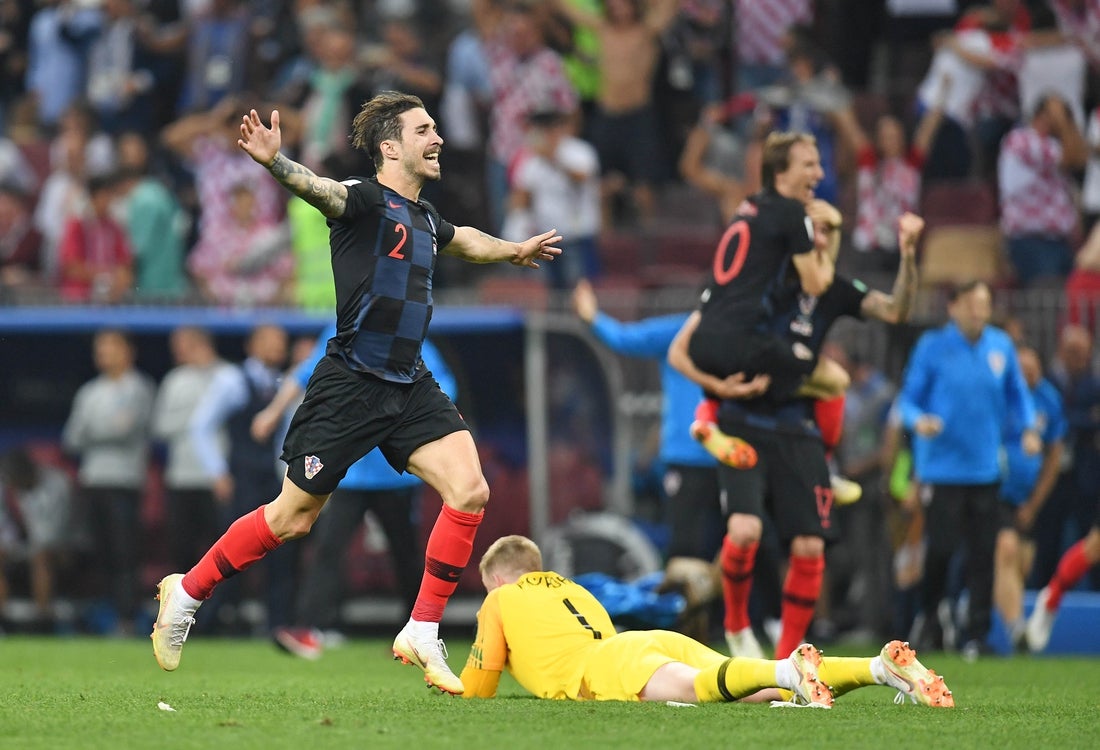
2026 World Cup Draw: England Faces Croatia Again in Group of Death
The expanded 48-team format of the 2026 FIFA World Cup is now taking shape following Friday’s draw, revealing a tournament landscape ripe with compelling narratives and challenging group dynamics. While six qualification spots remain contested – four from European qualifying and two via intercontinental playoffs in March – the bulk of the field is set, promising a month-long spectacle across the United States, Canada, and Mexico next summer.
The draw immediately highlighted several groups poised for intense competition, but none more so than Group L, pitting England against Croatia, Ghana, and Panama. This reunion of the 2018 semi-finalists immediately elevates the group to “Group of Death” status, demanding tactical flexibility and mental fortitude from all involved.
England and Croatia: A Familiar Rivalry
The pairing of England and Croatia evokes immediate memories of the dramatic 2018 World Cup semi-final in Moscow, where Croatia emerged victorious after extra time. That match, a 2-1 win for the *Vatreni*, marked a significant milestone for Croatian football and a painful setback for the Three Lions. This will be the fourth meeting between the two nations at a major international tournament since 2004, suggesting a burgeoning rivalry. England, currently ranked fourth in the FIFA World Ranking, will be eager to avenge their 2018 defeat, but Croatia, despite a recent dip in form, remains a formidable opponent with a core of experienced players.
Tactically, England manager Gareth Southgate will need to account for Croatia’s midfield mastery, led by Luka Modrić, and their ability to control possession. England’s attacking prowess, spearheaded by Harry Kane, will be crucial, but they must also address defensive vulnerabilities exposed in recent tournaments. Croatia, under new management, will likely adopt a pragmatic approach, prioritizing defensive solidity and exploiting counter-attacking opportunities.
Ghana and Panama: Dark Horses with Potential
While England and Croatia are the clear favorites, Ghana and Panama should not be underestimated. Ghana, ranked 72nd, possesses a growing contingent of talented players based in Europe, particularly in the English Premier League. Their athleticism and attacking flair could pose a threat to both European powerhouses. Panama, consistently among the top four teams in CONCACAF, has proven its ability to compete with higher-ranked opponents. Their physicality and tactical discipline make them a difficult team to break down.
The CONCACAF region has seen significant growth in recent years, with teams like Panama and the United States becoming increasingly competitive on the global stage. According to Statista, MLS attendance has steadily increased over the past decade, reflecting a growing interest in soccer within North America. This increased exposure and investment in youth development are contributing to the overall improvement of CONCACAF teams.
Other Groups to Watch
Beyond Group L, several other groups present intriguing storylines. Co-host Canada’s Group B could become a battleground if Italy successfully navigates its playoff against Turkey. The USA’s Group D will be significantly impacted by the outcome of the Turkey playoff, with Turkiye adding a dynamic and passionate element to the competition. Group I, featuring France, Norway, and Senegal, is another potential powder keg, with all three teams capable of reaching the knockout stages. France, the 2018 champions, will face a stern test from Norway, boasting the prolific Erling Haaland, and Senegal, the reigning African Cup of Nations champions.
Group G, featuring Belgium, Egypt, Iran, and New Zealand, has been dubbed the “Group of Life,” but it shouldn’t be considered an easy path. Belgium is undergoing a period of transition, while Egypt and Iran will see this as an opportunity to make a statement on the world stage. New Zealand, despite being the lowest-ranked team in the group, will be determined to cause an upset and reach the knockout stages for the first time.
Storylines Beyond the Pitch
The 2026 World Cup draw has also unearthed several compelling off-field narratives. Scotland’s return to the tournament after a 28-year absence will see them face Brazil and Morocco, mirroring their group stage opponents from the 1998 World Cup. The clash between France and Senegal carries historical weight, representing a meeting between a former colonial power and one of its former colonies. Algeria will have the chance to seek revenge against Austria, recalling the controversial 1982 World Cup match that saw the North Africans eliminated under suspicious circumstances. And if Italy qualifies, their match against Canada in Toronto promises to be a celebration of Italian-Canadian culture, with Toronto boasting a significant Italian population.
The expanded format of the 2026 World Cup aims to broaden the global reach of the tournament and provide more opportunities for emerging footballing nations. However, it also raises concerns about the potential dilution of quality and the logistical challenges of hosting a tournament across three countries. The coming months will be crucial as teams prepare for the tournament and fans eagerly anticipate what promises to be a historic and unforgettable World Cup.