Thyssenkrupp Share Price Falls on Loss Prediction & Restructuring
German Industrial Giant Thyssenkrupp Braces for Losses, Signals Broader European Economic Woes
FRANKFURT – Shares in German industrial conglomerate Thyssenkrupp plummeted on Tuesday, a stark indicator of the pressures mounting on Europe’s manufacturing heartland. The company’s forecast of significant losses for the current and upcoming fiscal years has sent ripples through financial markets and reignited concerns about the competitiveness of German industry in a rapidly changing global landscape.
The stock closed down 8.85% in Frankfurt trading, after experiencing even steeper declines earlier in the day. This downturn reflects investor anxiety over Thyssenkrupp’s prediction of negative free cash flow between €300 million and €600 million for the fiscal year ending September 30, 2026, and a loss of between €400 million and €800 million for the current fiscal year. While the company insists it met financial targets for the previous year – generating positive free cash flow of €363 million and sales of €32.8 billion – the outlook is decidedly grim.
A Symptom of Systemic Challenges
Thyssenkrupp’s struggles aren’t isolated. The company has become a bellwether for the broader challenges facing German manufacturing, a sector traditionally seen as the engine of Europe’s economic prosperity. The confluence of factors – soaring energy prices exacerbated by the war in Ukraine, fierce competition from Asian producers, and sluggish demand in key European markets – is creating a perfect storm. Carmakers, a major customer base for Thyssenkrupp’s steel and automotive components, have significantly reduced their orders, further squeezing margins.
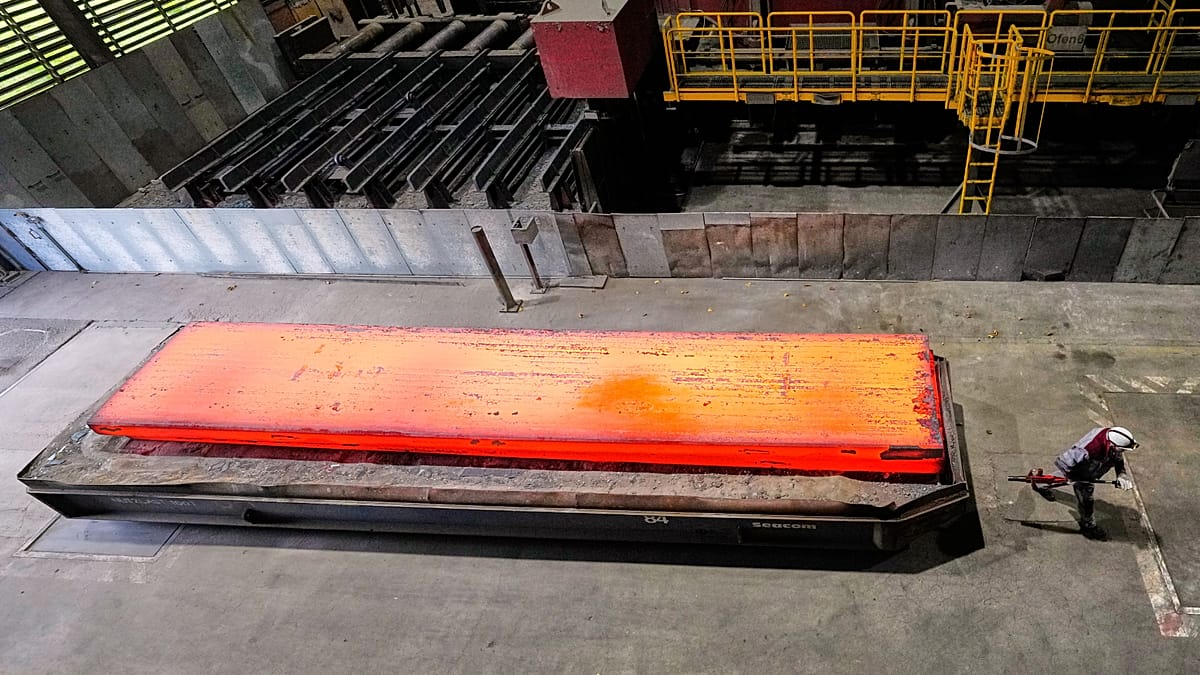
“Our forecast takes account of the persistently challenging market conditions and of the efficiency and restructuring measures in our segments,” explained Dr. Axel Hamann, Thyssenkrupp’s chief financial officer. The emphasis on “restructuring” is telling. The company is embarking on a painful process of streamlining operations and cutting costs, including the elimination of 11,000 jobs – a staggering 40% of the workforce at its steel plants – and a reduction in steel production of up to 2.8 million tonnes, roughly 25%.
Decarbonization and the Future of Steel
The restructuring isn’t solely driven by economic pressures. Thyssenkrupp’s steel unit is under immense pressure to decarbonize its operations, a critical step towards meeting increasingly stringent environmental regulations and appealing to environmentally conscious customers. The company is already investing in low-carbon manufacturing methods, but the transition is costly and complex.
This push for sustainability comes at a time when the global steel industry is facing a fundamental shift. According to the World Steel Association, global steel demand is expected to grow by only 2.0% in 2024, a significant slowdown compared to previous years. This subdued demand, coupled with overcapacity in some regions, is intensifying competition and putting downward pressure on prices.
A Potential Takeover and the Search for Stability
Amidst this turmoil, Thyssenkrupp is actively seeking strategic solutions for its steel division. Indian conglomerate Jindal Steel is currently considering a takeover bid, stepping in after Czech billionaire Daniel Křetínský withdrew his interest earlier this year. Křetínský had previously acquired a 20% stake in the steel unit but abandoned plans to increase his holding to 50%. The uncertainty surrounding the steel division’s future adds another layer of complexity to Thyssenkrupp’s overall situation.
The company has already begun to dismantle parts of its sprawling empire, successfully listing its marine division, TKMS, on the Frankfurt Stock Exchange earlier this year. This move is part of a broader strategy to focus on core businesses and unlock value by spinning off underperforming assets.
Geopolitical Implications and the European Economy
Thyssenkrupp’s woes have broader geopolitical implications. Germany, as Europe’s largest economy, plays a crucial role in the continent’s economic stability. A weakening of German industry could have cascading effects across the Eurozone, potentially hindering the region’s recovery from recent economic shocks. The European Union is currently grappling with a complex set of challenges, including the ongoing war in Ukraine, rising inflation, and the need to accelerate the green transition. A strong and competitive German manufacturing sector is essential for the EU to navigate these challenges effectively.
Furthermore, the potential takeover of Thyssenkrupp’s steel unit by an Indian company highlights the shifting dynamics of global trade and investment. As Western economies face structural challenges, emerging markets are increasingly asserting themselves as key players in the global economy. According to the International Monetary Fund, emerging and developing economies are expected to account for over 80% of global growth in the coming years. This trend underscores the need for Europe to adapt to a more multipolar world and strengthen its economic resilience.
The situation at Thyssenkrupp serves as a potent reminder that even industrial giants are vulnerable to the forces of globalization, technological change, and geopolitical instability. The company’s future, and indeed the future of German manufacturing, hinges on its ability to adapt, innovate, and navigate these complex challenges.