ISS: Record-Breaking Congestion & Future of Space Stations
ISS Reaches Capacity, Signals Shift in Space Exploration
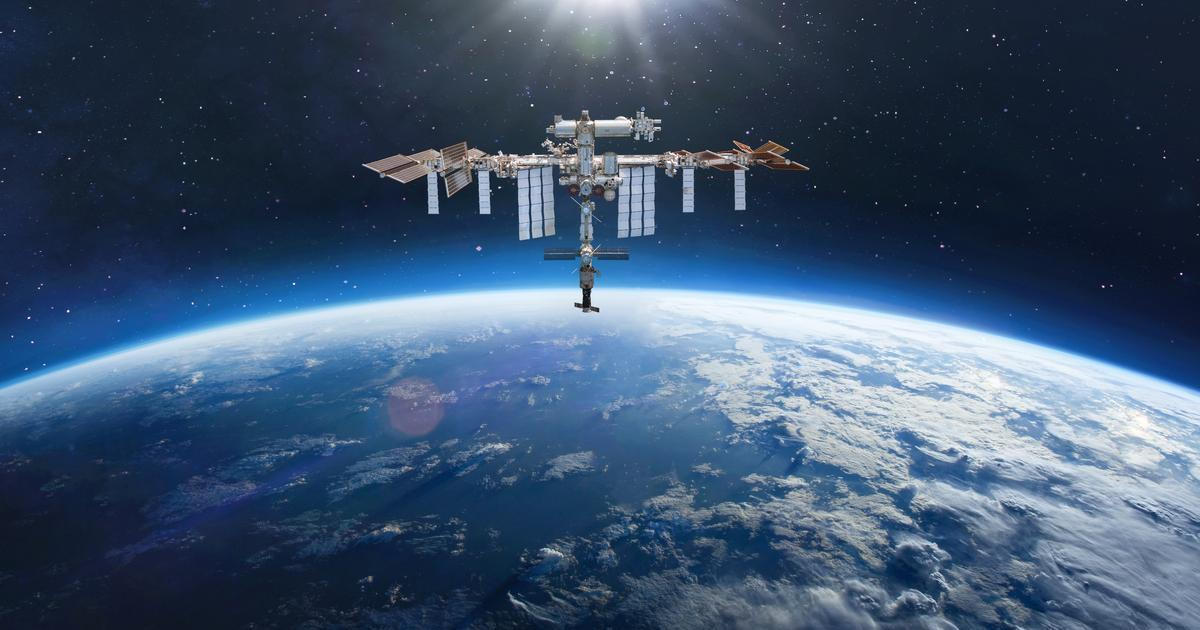
The International Space Station (ISS) recently experienced an unprecedented moment – a full house. Eight spacecraft, representing a global collaboration of space agencies and commercial partners, were simultaneously docked at the orbiting laboratory, testing the limits of coordination and logistical planning.
The congestion included Northrop Grumman’s Cygnus XL cargo ship, two Russian Soyuz MS-27 and MS-28 crew vehicles, Japan’s HTV-X1 resupply vessel, two Russian Progress 92 and 93 freighters, and two SpaceX Dragon capsules – Crew-11 (crewed) and CRS-33 (cargo). The situation required a delicate ballet of maneuvers, including temporarily repositioning the Cygnus XL using the Canadarm2 robotic arm to create a safe approach path for the incoming Soyuz MS-28 carrying a new crew.
A Logistical Triumph, and a Glimpse of the Future
“It was a really tight situation,” explained a source familiar with ISS operations, who requested anonymity due to mission sensitivity. “Every docking and undocking had to be meticulously timed. It highlighted the incredible complexity of maintaining a continuously inhabited space station.”
The peak occupancy was short-lived. On December 8th, the Soyuz MS-27 returned to Earth, bringing NASA astronaut Jonny Kim and Russian cosmonauts Sergei Ryzhikov and Alexei Zubritskiy home after an eight-month mission. This reduced the station’s population from ten to the standard seven, initiating Expedition 74. Further crew rotations are planned throughout the coming year, with NASA and SpaceX’s Crew-11 mission set to return three astronauts and one cosmonaut to Earth via the Crew Dragon.
This logistical challenge isn’t merely an operational hurdle; it’s a preview of the future of space travel. As commercial space stations and projects like NASA’s lunar Gateway program – a planned outpost orbiting the Moon as part of the Artemis program – move closer to reality, the ability to manage complex orbital traffic will become paramount. The Gateway, for example, is envisioned as a staging point for lunar landings and future deep-space missions.
The End of an Era Looms
The ISS, a symbol of international cooperation in space for over two decades, is nearing the end of its operational life. NASA currently anticipates ending ISS operations within the next five years, citing concerns about the station’s structural integrity and the increasing risks associated with its aging components.
When the time comes, the ISS will be deliberately deorbited, guided to a watery grave in the remote Pacific Ocean region known as Point Nemo – a spacecraft cemetery. This will mark the end of an era, but not the end of human presence in low Earth orbit.
Several private companies are already developing commercial space stations, aiming to take over where the ISS leaves off. These ventures, backed by both government and private investment, represent a shift towards a more commercially driven space economy. According to the Space Foundation, global space economy revenue reached $87.8 billion in 2022, demonstrating the growing economic importance of space activities.
The recent crowding of the ISS isn’t just a technical feat; it’s a signpost indicating a transition. The era of government-led, monolithic space stations is giving way to a more dynamic, multi-faceted future, where collaboration and commercial enterprise will shape the next chapter of space exploration.